Trump Says Enriched Uranium Renunciation Is Not a Condition for Lifting Sanctions on Iran
- Input
- 2026-05-28 03:25:31
- Updated
- 2026-05-28 03:25:31
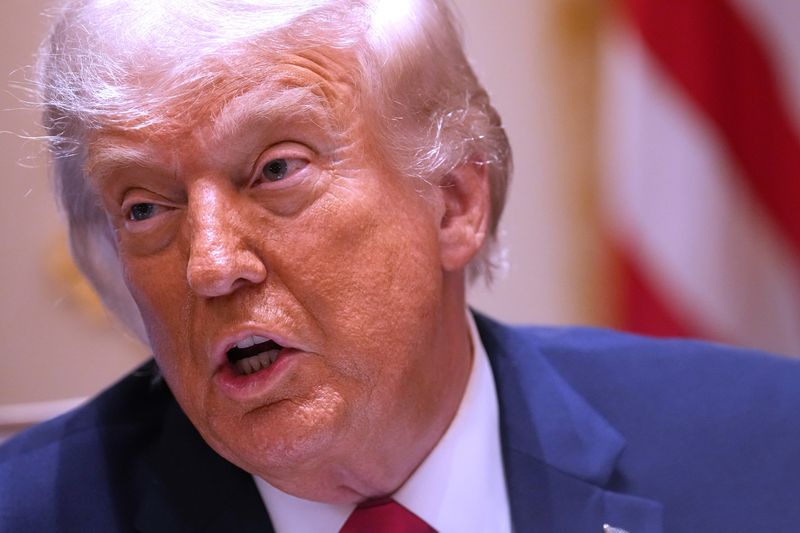
On the 27th (local time), U.S. President Donald Trump said that sanctions would not be lifted even if Iran gave up its highly enriched uranium. As Iran pushes for a ceasefire deal tied to sanctions relief, including the unfreezing of overseas assets, Trump made clear that pressure on Iran would continue.
In a brief phone interview with Public Broadcasting Service (PBS) that day, Trump waved off the idea, saying, "No, no, absolutely not. There will be no sanctions relief. No." He was responding to a question about whether the deal meant Iran would give up highly enriched uranium in exchange for sanctions relief.
Trump added, "They will give up their highly enriched uranium, but that is not the price of sanctions relief. Absolutely not."
Trump has said that the top conditions for a ceasefire deal are Iran’s abandonment of its nuclear weapons program and the removal of its stockpile of highly enriched uranium, enriched to 60%.
However, he dropped his earlier demand that the highly enriched uranium be handed over to the United States and offered a concession on the 25th. He said it could be dismantled on site through coordination with Iran, or destroyed at a third location in the presence of the U.S. Atomic Energy Commission and others.
Meanwhile, Trump also pressured Mohammed bin Salman Al Saud (MbS), the crown prince of Saudi Arabia, to agree to the Abraham Accords.
He had previously stressed in phone calls over the weekend with the leaders of Saudi Arabia, Jordan, Egypt and other Arab countries that joining the Abraham Accords was "mandatory." The Abraham Accords were signed in 2020 during Trump’s first term by the United Arab Emirates (UAE) and Bahrain, followed later by Sudan and Morocco. The agreement aims to curb Iran’s regional influence and nuclear weapons development while strengthening security ties with the United States. In practical terms, it focused on easing regional tensions through the normalization of diplomatic relations with Israel. At the time, Saudi Arabia said it could not join the accord before Palestine was recognized as a state.
When asked why MbS should join the Abraham Accords, which do not guarantee the establishment of a Palestinian state, Trump only said, "It is very good for Saudi Arabia. It is very good for Saudi Arabia."
He had previously stressed in phone calls over the weekend with the leaders of Saudi Arabia, Jordan, Egypt and other Arab countries that joining the Abraham Accords was "mandatory." The Abraham Accords were signed in 2020 during Trump’s first term by the United Arab Emirates (UAE) and Bahrain, followed later by Sudan and Morocco. The agreement aims to curb Iran’s regional influence and nuclear weapons development while strengthening security ties with the United States. In practical terms, it focused on easing regional tensions through the normalization of diplomatic relations with Israel. At the time, Saudi Arabia said it could not join the accord before Palestine was recognized as a state.
When asked why MbS should join the Abraham Accords, which do not guarantee the establishment of a Palestinian state, Trump only said, "It is very good for Saudi Arabia. It is very good for Saudi Arabia."
[email protected] Song Kyung-jae Reporter