"Korean Manufacturing Strength Meets Japanese Technology" South Korea and Japan Redraw the Semiconductor Supply Chain
- Input
- 2026-05-27 15:56:58
- Updated
- 2026-05-27 15:56:58
[Financial News, Tokyo = Correspondent Seo Hye-jin] As the global semiconductor supply chain is being rapidly reshaped by the spread of artificial intelligence, South Korea has stepped up efforts to expand cooperation with Japanese materials, parts and equipment companies by presenting large-scale semiconductor investment plans and manufacturing AI strategies. The idea is to build a new supply chain ecosystem by combining Korea's manufacturing and memory strengths with Japan's materials and equipment technologies.
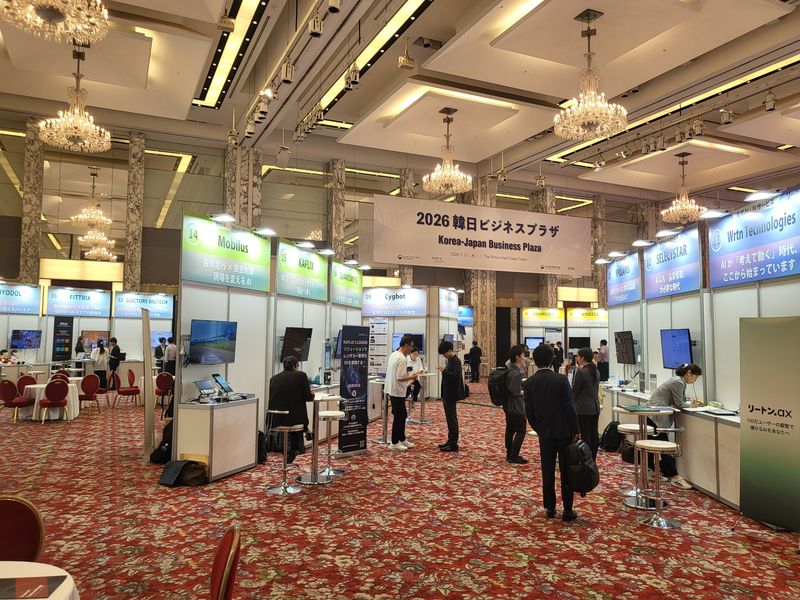
At the 2026 Korea-Japan Business Plaza, hosted on the 27th by the Ministry of Trade, Industry and Energy and Korea Trade-Investment Promotion Agency (KOTRA) at The Prince Park Tower Tokyo in Tokyo, supply chain changes in the AI era and semiconductor cooperation strategies emerged as key topics.
One of the day's programs, a semiconductor investment briefing, was held to attract investment from Korea for more than 100 materials, parts and equipment companies.
In a presentation titled "The Direction of Change in Korea's Industry and New Investment Opportunities," Kim Tae Hyung, head of Invest Korea, said, "If supply chains in the past were centered on cost and efficiency optimization, stability and resilience are now the core competitive advantages."
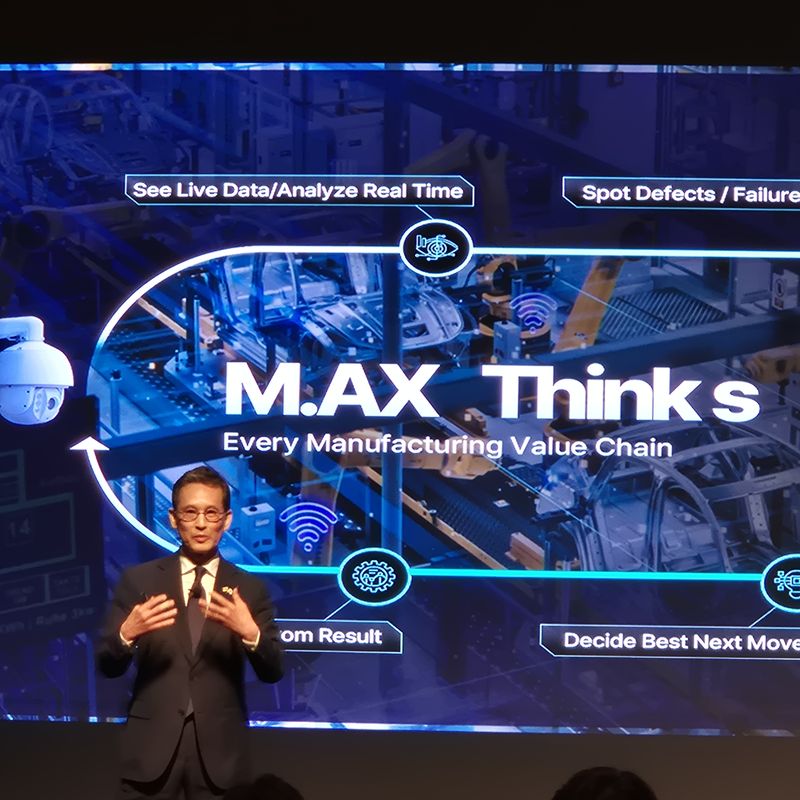
He noted that AI is emerging as a key factor determining manufacturing competitiveness, and said the Korean government is promoting the MAX Project, a manufacturing AI strategy.
The goal of the MAX Project is to raise manufacturing productivity by 30% over the next five years. Since manufacturing accounts for 27.4% of Korea's economy, the company said productivity gains would have a broad impact across the economy.
Kim also outlined the foundation that allows Korea to pursue a manufacturing AI strategy. He said Korea invests about 5% of its Gross Domestic Product (GDP) in Research and Development (R&D), and has 9.5 researchers per 1,000 people, one of the highest levels in the Organisation for Economic Co-operation and Development (OECD).
He also emphasized that Korea has competitiveness in the global memory market and in High Bandwidth Memory (HBM). He said the semiconductor base and manufacturing infrastructure that will serve as core infrastructure in the AI era are already in place.
The direction of Korea's semiconductor industry policy was also introduced in detail.
Kim Ki-hoon, an official in the Semiconductor Division, Ministry of Trade, Industry and Energy, said, "In the AI era, the importance of HBM, advanced packaging and on-device AI semiconductors will grow even further," and explained the Korean government's strategy for responding to structural changes in the industry.
Korea is pursuing the expansion of system semiconductors, materials, parts and equipment, talent, and regional ecosystems while maintaining its memory competitiveness.
In particular, it plans to create the world's largest semiconductor cluster by 2047 based on about 700 trillion won in private investment. Regionally, it is also pushing to build innovation belts by developing Gwangju Metropolitan City as a hub for advanced packaging, Busan as a center for power semiconductors, and Gumi as a base for materials and parts.
Kim also highlighted the possibility of Japanese companies taking part. "Korea has world-class memory production capabilities and diverse demand industries such as automobiles, electronics and robotics," he said. "Companies that invest in Korea can also take part in production, R&D and supply chain upgrading."
The need for Korea-Japan cooperation was also backed by numbers.
Kim Yang-pyeong, a senior researcher at the Korea Institute for Industrial Economics & Trade (KIET), said Korea's semiconductor industry accounts for about 10% of total manufacturing output and about 20% of exports. He added that the importance of the semiconductor industry is likely to grow further, as the AI market is projected to expand at an average annual rate of 9.5% over the next five years.
"Korea has manufacturing and mass-production capabilities, while Japan has strengths in materials and equipment," he said. "Since each country has limits in creating economies of scale on its own, supply chains need to be built through cooperation."
Technology cooperation also continued at the event. At the AI cooperation forum and exhibition-consultation session, 42 Korean AI technology companies held one-on-one export and investment consultations, technology demonstrations and startup pitches with major Japanese companies such as Mizuho and SoftBank Group Corp., as well as seven local governments and venture capital firms, resulting in six technology cooperation outcomes.
At a separate one-on-one matching session in the robotics and power sectors, 33 Korean companies met with major firms including Tokyo Electric Power Company (TEPCO) and more than 90 vendors from Japan, signing three export contracts worth a combined $4.1 million.
A representative from a Korean technology company that took part in the event said, "The atmosphere on site was even hotter than last year." The representative added, "As the event has continued every year, networks and trust have grown, and local buyers are increasingly taking part."
Kang Kyung-sung, president and CEO of KOTRA, said, "We will connect the growing momentum for economic cooperation between the two countries with business partnerships between companies to strengthen industrial competitiveness and help address shared challenges."
[email protected] Seo Hye-jin Reporter