Samsung Electronics shareholder group warns of lawsuit over "illegal dividend"...eyes on possible foreign shareholder involvement
- Input
- 2026-05-27 16:36:13
- Updated
- 2026-05-27 16:36:13
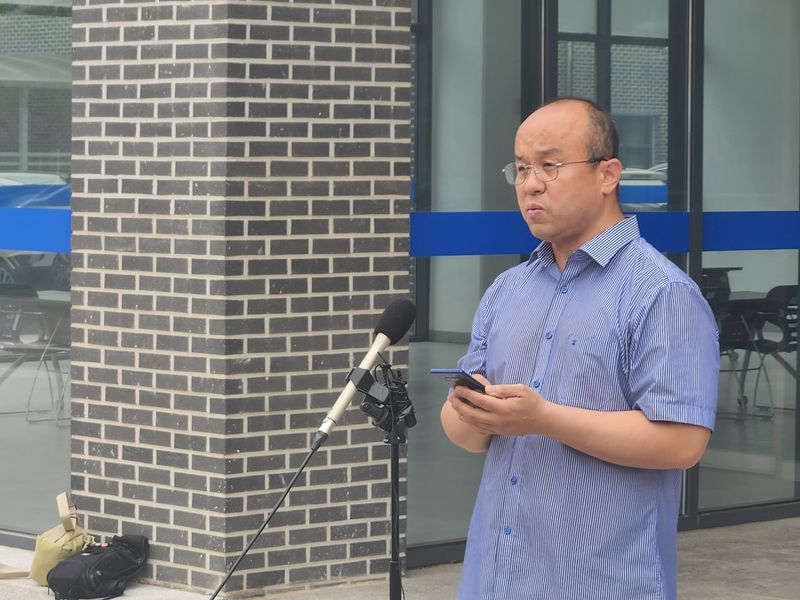
Min Kyung-kwon, head of Korea Shareholder Action Headquarters, issued a public statement on the 27th in front of the Gyeonggi Regional Labor Relations Commission in Yeongtong-gu, Suwon, Gyeonggi Province. He argued that the tentative agreement between Samsung Electronics and its labor union was only a wage deal in form, but in substance amounted to an outflow of company funds. He called it a disguised illegal dividend that bypassed the dividend procedures under the Commercial Act.
Min argued that when the special management performance bonus and the excess profit incentive (OPI) are combined, about 12% of pretax operating profit is effectively allocated as bonus funds.
He said, "Operating profit becomes distributable only after taxes such as corporate income tax are deducted," and added, "Pre-allocating a portion of pretax operating profit is a way of bypassing the state's tax collection rights." He continued, "Any outflow of company funds that does not go through the dividend-available profit calculation process stipulated in Article 462(1) of the Commercial Act and a resolution by the General Meeting of Shareholders is illegal," and stressed, "The outflow of company funds cannot be subject to autonomous labor-management bargaining."
The shareholder action headquarters plans to begin full-scale exercise of shareholder rights. It has already requested access to and copies of the shareholder registry from Samsung Electronics and is negotiating with the company over whether shareholder email information will be provided. The group said it will recruit shareholders who hold shares and formally demand an extraordinary general meeting if it secures more than a 1.5% stake. It is also reportedly preparing additional lawsuits separate from the Donghaeng Labor Union.
Min said, "We need a complete shareholder registry to exercise shareholder rights," and announced plans to pursue, in sequence, a lawsuit to invalidate the profit-sharing portion, an injunction and claim to stop illegal acts, a shareholder derivative suit over directors' breach of fiduciary duty, and damages claims in the event of an illegal strike. The shareholder action headquarters sees the key issue in the case as a violation of laws and regulations through infringement of the authority of the General Meeting of Shareholders. Min explained, "The core issues before the court will be whether the authority of the General Meeting of Shareholders was infringed and whether laws were violated," adding that the bonus structure based on pretax operating profit and the attempt to bypass the dividend-available profit calculation process will be major points of contention.
Business circles are watching closely for the possibility that the controversy could spread beyond some retail shareholders and draw in major foreign investors. As of the 22nd, foreign ownership in Samsung Electronics stood at 48.32%, close to half of total shares. With global institutional investors, including BlackRock, Samsung Electronics' third-largest shareholder, recently becoming more sensitive to shareholder return policies, governance, and board accountability at Korean companies, analysts say the dispute could have broader repercussions if it drags on.
Meanwhile, the shareholder action headquarters said it plans to apply the same standards to labor agreements at other listed companies, starting with Samsung Electronics. It is reportedly also reviewing the possibility of legal action over performance bonus systems at some listed firms, including Kakao.
[email protected] Lee Dong-hyeok Reporter