The United States and Iran each claim victory as memorandum terms are being worked out... The 27th looms as a critical date
- Input
- 2026-05-27 14:35:06
- Updated
- 2026-05-27 14:35:06
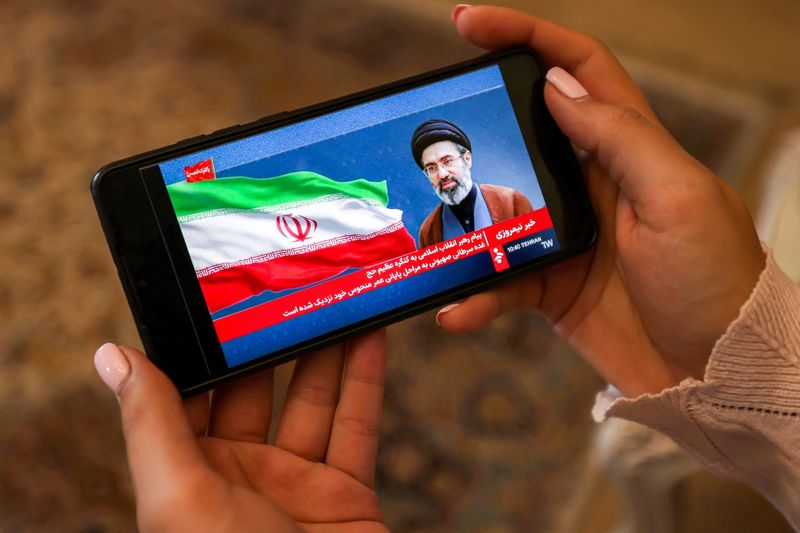
[Financial News] As ceasefire talks between the United States and Iran drag on without a clear end in sight, both sides are scrambling to appear as the winner. With defeat leaving both governments politically cornered, they are said to be focusing on propaganda and on fine-tuning the wording of the agreement to avoid giving their publics the impression that they lost.
The United States bristles at Iran's 'victory' narrative
In a statement sent to the state-run IRNA on the 26th (local time), Ayatollah Sayyid Mojtaba Hosseini Khamenei claimed that Iran had effectively won. He said, "Iran's brave warriors and martyrdom-seeking army, together with the fighters of the resistance front (the axis of resistance), especially our dear Lebanon (Hezbollah), have achieved a dazzling victory against the armed-to-the-teeth terrorist army of the United States and the Zionists (Israel)." He then referred to U.S. military bases in the Middle East and argued that "the United States will no longer secure safe areas in this region to provoke unrest and station military bases, and it will continue to decline from its former standing." Earlier, on the 24th, Esmail Baghaei, spokesman for Iran's Foreign Ministry, posted a doctored image on X suggesting that the United States had lost to Iran.U.S. President Donald Trump, who launched attacks on Iran alongside Israel starting on February 28, had already said in a speech on March 11, "We won." He also claimed after announcing a ceasefire with Iran on the 7th of last month that "the ceasefire agreement with Iran is a complete victory for the United States" and that there was "no doubt" about it. In an interview on the 30th of last month, Trump said, "We have already won, but I want to win by a bigger margin."
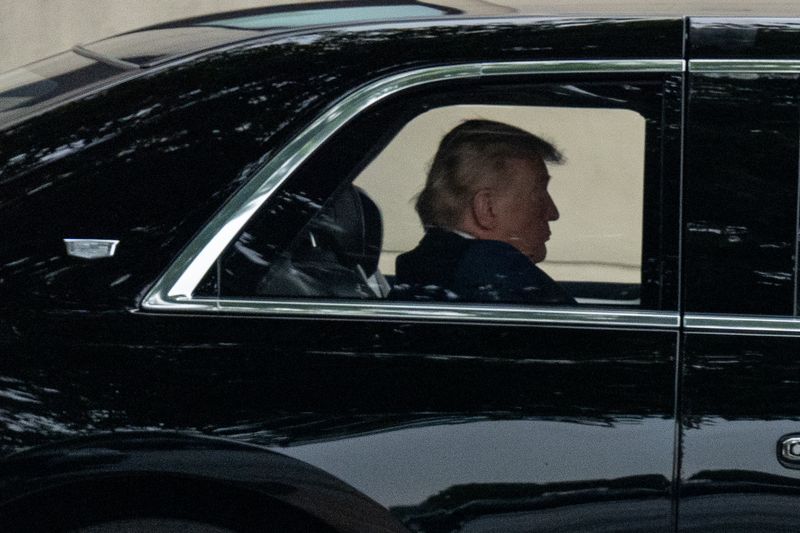
Even after Trump's remarks, fighting continued around Iran. Among ordinary Americans and hard-line Republicans, frustration with the Trump administration is growing as a clear peace deal continues to be delayed. In a report on the 23rd, the U.S. political outlet Axios said the two sides were preparing a memorandum of understanding that would include a 60-day extension of the ceasefire, denuclearization, and an agreement to keep the Strait of Hormuz open.
In response, Trump posted on Truth Social on the 26th and called the New York Times, The Wall Street Journal, and CNN "fake media." He said those outlets would "report that Iran 'won a great and dazzling victory over the United States, the contest was never close,' even if the Iranian military waved a white flag and Iran's leadership signed every 'surrender document.'"
Focus on the memorandum format, Cabinet meeting on the 27th
Aaron David Miller, a senior fellow at the Carnegie Endowment for International Peace, told The Hill on the 26th that Trump's room to maneuver had narrowed. He noted that the memorandum under discussion between the United States and Iran would not be legally binding. Miller said, "Trump cannot tolerate looking like a loser, but this is not something he can simply fix." He added that Trump had "very few options" when it came to denuclearization and the Strait of Hormuz.Miller also said that "the wording matters a great deal for both the United States and Iran," adding that "the victory claims each side is putting forward are aimed at domestic supporters and regional allies, knowing that the other side is also claiming victory." He explained that both Trump and Mojtaba must understand that "neither can be a complete winner."
If the two governments want to claim victory, the wording and conditions of the memorandum will be crucial. Trump said on Truth Social on the 26th that he would hold a Cabinet meeting at the White House the following day. It will be the 12th Cabinet meeting since the start of Trump's second administration. A White House official said the meeting would discuss economic achievements, but the New York Post claimed the main topic would be the war with Iran.
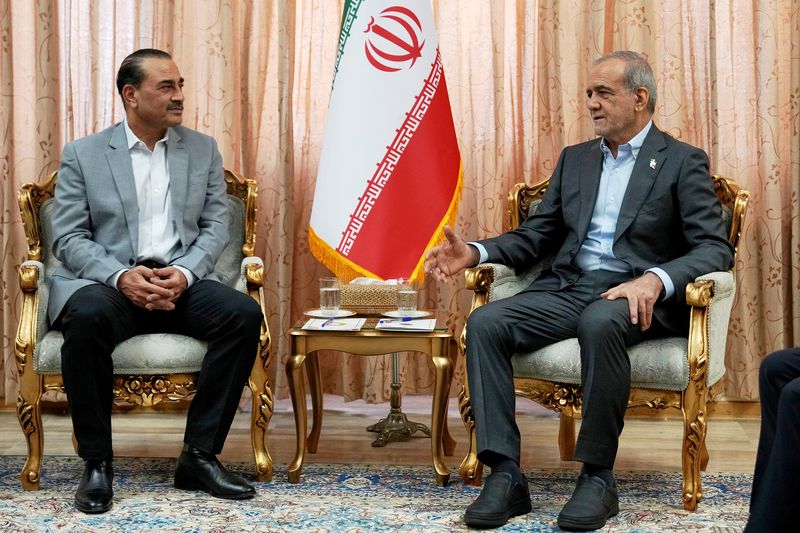
That same day, Iranian President Masoud Pezeshkian told Qatar's Emir Tamim bin Hamad Al Thani in a phone call that Iran was ready to complete the work needed to end conflict and tension in the Middle East. He also said that "serious efforts are under way to finalize the document and its clauses." In a series of calls that day with the leaders of Egypt, Turkey, and Oman, Pezeshkian stressed that he was ready to reach a "dignified agreement" to end the war.
Meanwhile, on the 26th, West Texas Intermediate crude oil futures fell 2.8% from the previous session to $93.89 per barrel in the U.S. market. Brent crude futures, by contrast, rose 3.6% to $99.58 per barrel.
[email protected] Park Jong-won Reporter