Will Latin America's Rightward Shift Hit a Brake? Eyes Turn to Colombia and Brazil
- Input
- 2026-05-27 16:46:10
- Updated
- 2026-05-27 16:46:10
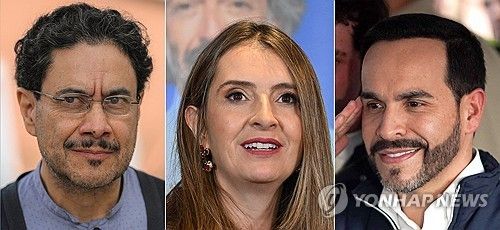
"Give Farms to the Poor" vs. "10 Prisons in the Jungle" ... Colombia's Polarized Presidential Race
In the first round of Colombia's presidential election on the 31st local time, the leading candidate is Senator Iván Cepeda, who is running as the ruling party's nominee. He entered this year's race in place of President Gustavo Petro, who cannot seek reelection because of term limits. Cepeda served as a member of the lower house and the Senate before becoming Petro's chief aide. Petro was Colombia's first leftist president.Cepeda comes from a prominent leftist family. His father was Manuel Cepeda, a left-wing leader who once dreamed of becoming president before being assassinated. The younger Cepeda is a committed Marxist. He has said he wants to redistribute farms to the poor and pursue peace talks aimed at disarming cocaine-smuggling groups. He also argues for sharply increasing social spending while blocking interest-rate hikes by the central bank. He is also a leftist theorist who has long supported Antonio Gramsci's theory of hegemony, which holds that power must be won through culture and institutions rather than force.
Critics say Cepeda is a hardline Marxist who would lead Colombia down the path of Venezuela or Cuba. But as Colombia's economy has held up better than expected under Petro, public support has been leaning toward the ruling party. Last year, The Economist ranked Colombia fourth among 36 wealthy countries after analyzing growth, inflation, unemployment, and the stock market. Riding on Petro's momentum, Cepeda is also leading opinion polls with support of around 40 percent.
Despite Cepeda's lead, the right-wing challengers remain formidable.
Abelardo de la Espriella, the candidate for the far-right Patriots for the Homeland party, has recently maintained a sharp rise in support and is nearing 30 percent. A former criminal defense lawyer, he models himself on El Salvador's strongman president Nayib Bukele. Saying that Colombia is suffering from a "security pandemic," he has promised to build about 10 massive prisons in the jungle, similar to El Salvador's flagship Terrorism Confinement Center. He has also called for a Bukele-style state of emergency, saying that "temporary constitutional measures that grant broad powers to the president and the military will be necessary."
Senator Paloma Valencia, who has remained stuck below the so-called "20 percent barrier," comes from a conservative family that represents Colombia's mainstream elite. She is the granddaughter of former President Guillermo León Valencia. Her campaign pledges include strengthening the market economy, creating cooperatives for bulk purchasing, prioritizing education, and improving public security. In particular, she has promised to improve ties with the United States, following in the footsteps of her pro-U.S. grandfather. She has also vowed to reform the public education system, lamenting that "graduates of public education cannot even read or write." To stage a late comeback, she has been meeting with Venezuelan opposition leader and Nobel Peace Prize laureate María Corina Machado and replacing her campaign strategist, throwing everything into a final push to rally voters.
"Will the Leftist Icon Lula Be Shaken? Health Setback Looms Over Brazil's Election Race"
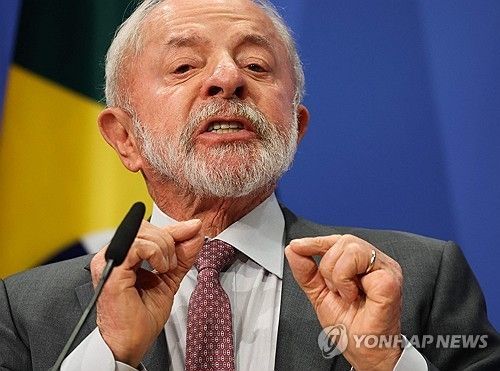
Meanwhile, in Brazil, concerns are growing among supporters after signs of trouble emerged in President Luiz Inácio Lula da Silva's health ahead of his bid for a fourth term in October. According to Folha de S.Paulo and other Brazilian media outlets on the 26th, Lula, who was born in 1945 and is 81 years old, began radiation therapy the previous day to treat basal cell carcinoma, a type of skin cancer. The treatment follows surgery last month to remove a skin lesion.In recent polls, Lula has been ahead of Senator Flávio Bolsonaro, but the skin cancer diagnosis is increasingly likely to become a negative factor in the presidential race. Bolsonaro, the leading opposition contender, is 45 years old and young enough to be Lula's son.
This is not the first time Lula's health has come under scrutiny. Throughout his career, he has overcome a wide range of illnesses and still won the presidency three times. He lost the little finger on his left hand in a workplace accident in 1964. While serving as a federal lawmaker in 1988, he underwent surgery for acute appendicitis and had his appendix removed. In 2005, he had surgery to remove a nasal polyp. He was diagnosed with laryngeal cancer in 2011 and endured chemotherapy.
In 2022, he underwent minimally invasive surgery for leukoplakia, a condition marked by white patches on the larynx. In 2023, he was diagnosed with hip arthritis and went back into surgery. In 2024, he slipped while trimming his toenails, hit the back of his head, and suffered bleeding between the brain and the skull. Last year, he also underwent brain surgery to drain accumulated blood and fluid. This year, he has had cataract surgery, skin cancer surgery, and radiation therapy.
Because of this medical history, local commentators say that "the health of Lula, Brazil's oldest sitting president in history, could become a target for opposition attacks in the October election." With foreign media outlets long warning about the absence of a left-wing successor after Lula, attention is now turning to whether this election will be more than a simple reelection bid and instead serve as a test case for the post-Lula era.
[email protected] Hong Chaewan Reporter