Greer Signals Extension of 10% Universal Tariff Set to End in July
- Input
- 2026-05-27 10:25:57
- Updated
- 2026-05-27 10:25:57
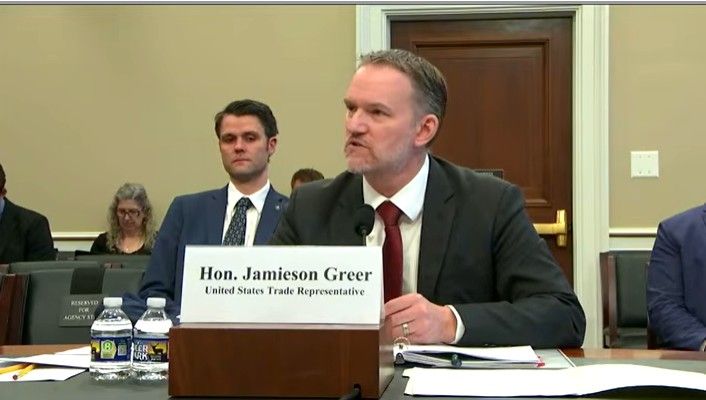
[Financial News] There is growing speculation that the Trump administration's proposed 10% universal global tariff could be imposed again even after its legal deadline expires in July. The reason is that Section 122 of the Trade Act of 1974 does not contain any explicit provision barring it from being reactivated after expiration.
On the 26th local time, The Wall Street Journal (WSJ) reported that Jamieson Greer, head of the Office of the United States Trade Representative (USTR), said at an event hosted by the Council on Foreign Relations (CFR) that the law does not explicitly prohibit Section 122 from being reactivated after it expires, and that tariffs could therefore be imposed again after July.
At the event, Greer said, "If you look at Section 122 of the Trade Act of 1974, it specifies the 'expiration date' of the tariff, but it does not place any limits on 'when it can be done again.'" He added that he believes there is legal authority to reimpose the tariff after it expires.
Earlier, after the U.S. Supreme Court ruled that President Donald Trump's existing reciprocal tariff measures were unlawful, Trump invoked Section 122 of the Trade Act of 1974 in February to impose a 10% global universal tariff. Tariffs under Section 122 can remain in place for up to 150 days unless Congress extends the deadline, so they are set to expire in July.
The Trump administration had previously said that when the Section 122 measure expires in July, it plans to impose replacement tariffs using other legal authorities. However, Greer's remarks suggest that, apart from any replacement tariffs, the option of reactivating the existing universal tariff under Section 122 remains available.
Greer declined to give a direct answer on whether the Trump administration would actually seek to extend the universal tariff, but he maintained a hard-line stance, saying, "Congress could not have intended to limit the president's authority to impose tariffs under Section 122 of the Trade Act to just once per term."
Greer added, however, that preparations for follow-up measures to replace the 10% universal tariff are also proceeding without disruption. He explained that USTR is currently conducting a close review of related investigations to impose replacement tariffs based on Section 301 of the Trade Act of 1974. He had previously said that replacement tariffs through Section 301 would be imposed sometime in July.
Greer also suggested that tariffs would be imposed on countries that are parties to the United States–Mexico–Canada Agreement (USMCA).
He said Canada in particular has trade issues with the United States, adding, "As long as there is a huge trade deficit, tariffs will remain in place for a long time."
jjyoon@fnnews.com Yoon Jae-jun Reporter