North Korea fires several short-range ballistic missiles toward the Yellow Sea near Jeongju, ROK JCS says (roundup)
- Input
- 2026-05-26 14:40:00
- Updated
- 2026-05-26 14:40:00
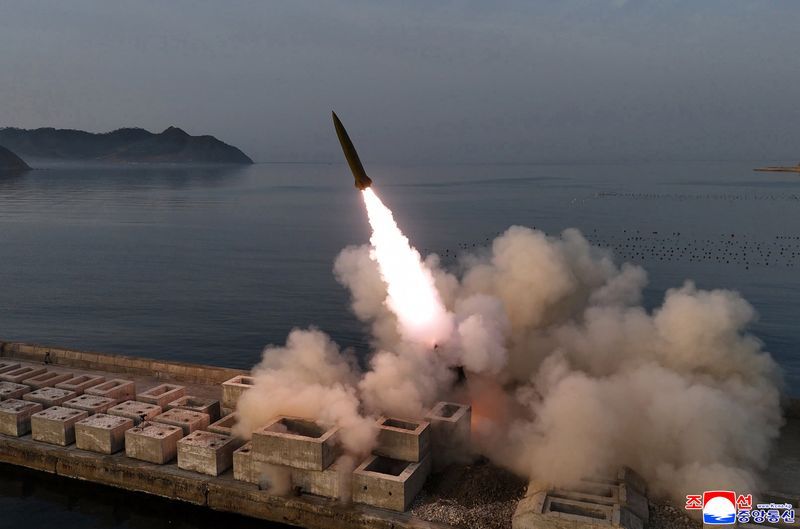
The Republic of Korea Joint Chiefs of Staff (ROK JCS) said it detected several short-range ballistic missiles (CRBM, Close-Range Ballistic Missile: typically with a range of 50 to 300 km) fired toward the Yellow Sea from the Jeongju area of North Pyongan Province around 1 p.m. on the 26th. The military is now closely analyzing the exact flight distance, altitude, speed, and other specifications of the projectiles. This latest provocation marks North Korea’s first ballistic-missile launch in 37 days and its eighth this year. The military said it has strengthened surveillance and alertness in preparation for additional launches, while South Korea, the United States, and Japan are closely sharing related information and maintaining full readiness.
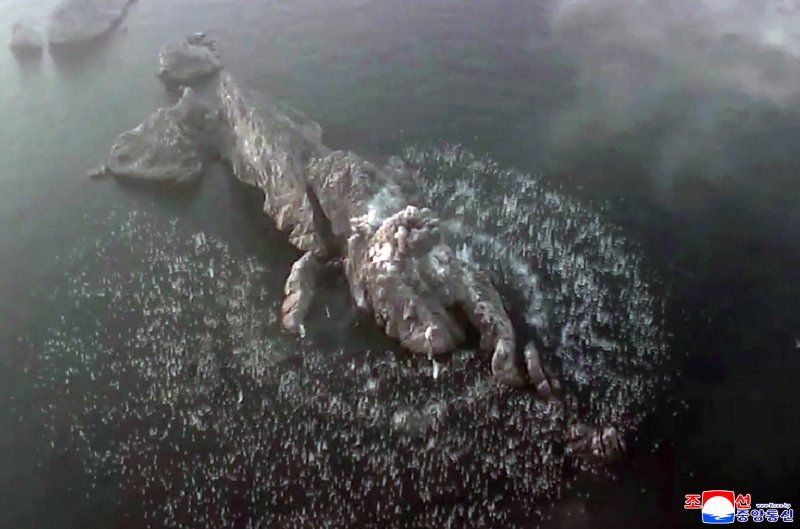
This provocation differs clearly from North Korea’s show of force in the East Sea last month in both launch location and target direction. On the 19th of last month, North Korea fired several short-range ballistic missiles (SRBM) into the East Sea from the Sinpo area of South Hamgyong Province. At the time, North Korea claimed through state media that the launch vehicles were Hwasong-11D missiles and that they were equipped with cluster warheads capable of devastating a wide area and striking a target island with high density.
Last month’s provocation also took place against a much broader security backdrop. At the time, China formed a large fleet centered on the aircraft carrier Liaoning (CV-16) to counter Exercise Balikatan 2026, a multinational joint military drill led by the United States, Japan, and the Philippines. The fleet moved through the East Sea and conducted combat patrols in international waters north of Japan. Russian Navy assets joined the operation, and North Korea also launched missiles into the East Sea, appearing to pressure the Pacific axis of the United States and Japan.
North Korea’s latest provocation, which broke a 37-day silence, was carried out in Jeongju, the forward edge of North Pyongan Province facing the Yellow Sea. The Jeongju area is a strategic point that can target the Seoul Capital Area, Camp Humphreys, a key base for USFK, and the waters around the North West Islands at the shortest distance.
After verifying the performance and destructive power of the Hwasong-11D cluster warhead in the East Sea last month, North Korea appears to have changed the launch axis to the Yellow Sea this time in an effort to show that it can conduct precise, standing strikes against key South Korean military assets. It is also seen as a military move aimed at blocking the maneuvering of Republic of Korea and U.S. Navy forces entering the Yellow Sea in a contingency and maximizing fatigue among friendly frontline units.
The surprise launch came as the Defense Acquisition Program Administration (DAPA) completed the integration of weapons for the Republic of Korea Marine Corps (ROKMC) Marine Attack Helicopter, accelerating efforts to strengthen forces in the North West Islands and the Yellow Sea. It underscores that military tensions on the Korean Peninsula remain high. The military is closely watching for further North Korean provocations and maintaining a thorough response posture based on close ROK-U.S. coordination.
[email protected] Lee Jong-yoon Reporter