Kakao Faces a Pivotal Week in Strike Talks as 5 Affiliates May Secure the Right to Stage a Public Dispute
- Input
- 2026-05-25 18:15:38
- Updated
- 2026-05-25 18:15:38
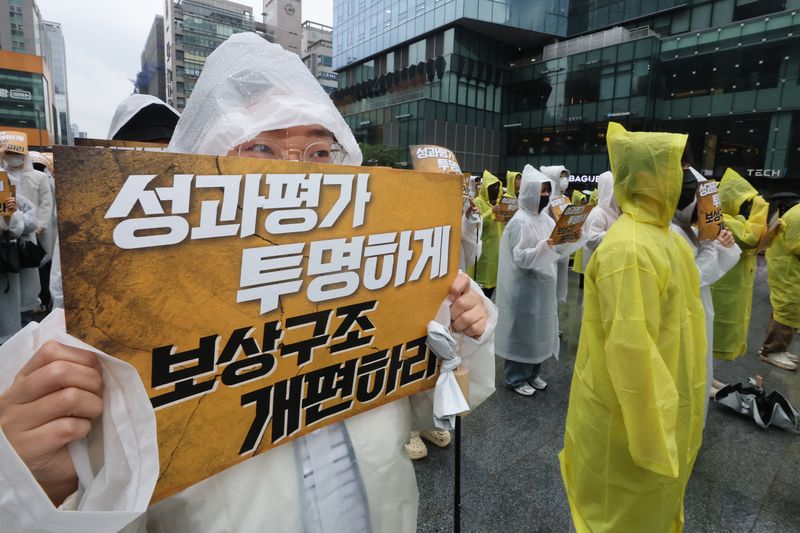
According to the IT industry on the 25th, a second mediation meeting between Kakao management and labor will be held on the 27th under the direction of the Gyeonggi Regional Labor Relations Commission. The two sides are currently going through mediation after failing to reach an agreement in this year’s negotiations over the compensation structure. If the final mediation fails, the Kakao labor union of the National Chemical, Textile and Food Industry Workers' Union could secure the legal right to strike and launch the first headquarters strike in Kakao’s history. Four affiliates under the Kakao group have already obtained strike rights, and the union said it has also approved strike action in votes held at five entities, including Kakao’s headquarters.
Kakao’s labor dispute appears to stem not only from the compensation system, but also from accumulated grievances over the past few years. In the past, the Pangyo Techno Valley IT scene had high turnover and a strong horizontal culture, so interest in unions was low. When Kakao’s labor union was first established in October 2018, the membership rate among all employees was still low. But after the COVID-19 endemic phase began, changes in working arrangements became the starting point of the conflict. Kakao, which had fully adopted remote work during the pandemic, drew backlash from employees when it revised its work system in 2023 to make office attendance the default.
As legal risks involving Kakao’s management surfaced, internal demands for reform grew out of control. As a result, the unionization rate at Kakao’s headquarters surpassed 50% in October 2024, giving the union a majority. Naver also reached majority union status at its headquarters in November of the same year, underscoring the growing strength of labor unions at major IT companies.
Last June, Kakao’s labor union staged the first strike in the Kakao ecosystem in seven years since its founding, after wage and collective bargaining talks broke down at Kakao Mobility Corp., a key affiliate of Kakao. Since then, the union has also raised its voice over issues such as the spin-off of AXZ, the in-house company that operated Daum, and the sale of Kakao Games.
As Kakao accelerates its business restructuring around artificial intelligence, how it resolves labor tensions is expected to have a significant impact on its competitiveness. In particular, Kakao has designated this year as a turning point for its AI transition and is expanding AI features across major services such as KakaoTalk. At a time when the company is betting heavily on improving its fundamentals, labor unrest could become a major risk. If management uncertainty deepens, it could also hurt external trust and investor sentiment.
[email protected] Reporter Joo Won-kyu Reporter