Will Xi Jinping Discuss North Korea's Nuclear Weapons with Kim Jong Un? Expectations and Concerns Rise Over Possible First Visit to North Korea in Seven Years
- Input
- 2026-05-25 12:12:20
- Updated
- 2026-05-25 12:12:20
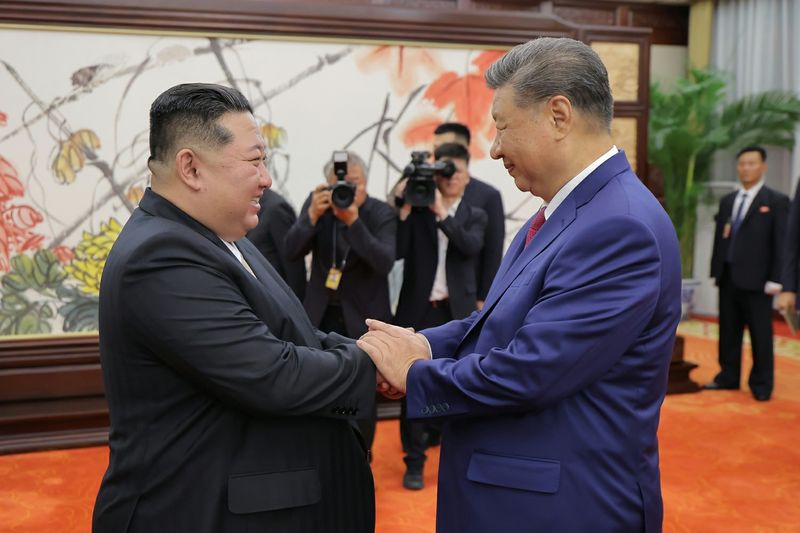
Xi is reportedly expected to visit North Korea as early as the end of this month or early next month and hold a summit with Kim.
According to diplomatic sources on the 25th, if Xi's visit to North Korea takes place, it would be the first in seven years, raising expectations that major discussions on the Korean Peninsula issue will follow. However, unlike expectations in the United States and the Republic of Korea, it appears unlikely that denuclearization talks on the Korean Peninsula will be held during Xi's visit. At the Treaty on the Non-Proliferation of Nuclear Weapons (NPT) review conference held on the 22nd at United Nations Headquarters in New York with 191 member states in attendance, North Korea's denuclearization was not adopted, fueling such views. The conference had been expected to adopt a consensus document to strengthen the NPT regime, but agreement fell apart amid clashes over nuclear issues involving North Korea and Iran.
The wording on North Korea's nuclear weapons was reportedly reduced from two paragraphs to one through the second and third drafts, before disappearing entirely in the fourth draft.
Ambassador Sangjin Kim, Deputy Representative to the United Nations, also expressed regret, saying, "It should have clearly stated that North Korea can never obtain nuclear-armed state status under the NPT regime, and that resolving this issue through negotiation and diplomacy is important."
North Korea has not returned for more than 20 years after declaring its withdrawal from the NPT.
At a press briefing, Do Hung Viet, Vietnam's ambassador to the United Nations and chair of the meeting, responded to criticism that the complete removal of references to North Korea's nuclear weapons could send the wrong message. He said, "The North Korea nuclear issue is an extremely complex matter that cannot be summed up in a single line," adding, "In the process of shortening the overall document, we had no choice but to boldly remove specific regional issues such as North Korea in order to make room for the NPT's three core pillars: disarmament, non-proliferation and peaceful use."
It was also reported that opposition from nuclear-armed states, including Russia, to specifying disarmament obligations in detail contributed to the failure to reach an agreement.
As a result, North Korea is expected to further solidify its claim to nuclear-armed state status. Recently, North Korea clarified Kim's authority over the use of nuclear weapons through a constitutional revision. The country revised the party rules at the Party Congress in February and amended the Constitution of the Democratic People's Republic of Korea in March at a session of the Supreme People's Assembly, the equivalent of the legislature in the South.
North Korea is expected to further reinforce this stance by convening a Plenary Meeting of the Central Committee of the Workers' Party of Korea in late next month. The plenary meeting comes as follow-up measures continue after the 9th Congress of the Workers' Party of Korea, the country's biggest political event, held in February. It is also drawing attention because it was convened ahead of the recent U.S.-China summit and Xi's planned visit to North Korea. The meeting will review the first half of the year and discuss major tasks for the second half. It may also announce important decisions on external policy, including relations with the South and the United States.
rainman@fnnews.com Kim Kyung-soo Reporter