Lim Gwang-hyun, Commissioner of the National Tax Service, says tax audits will be launched if misuse of high-priced corporate vehicles for private purposes is confirmed
- Input
- 2026-05-25 11:20:48
- Updated
- 2026-05-25 11:20:48
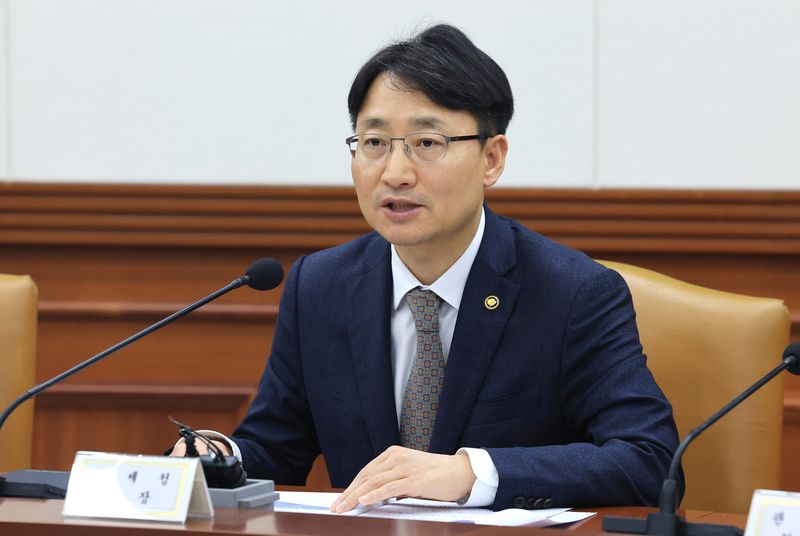
[Financial News] On the 25th, Lim Gwang-hyun, Commissioner of the National Tax Service, said, "The National Tax Service is currently thoroughly analyzing and verifying the acquisition, operation, and expense processing records of high-priced corporate vehicles. If any suspicion of private use by an owner’s family is confirmed, we will conduct a strict tax audit."
On the same day, Lim said via social networking service (SNS), "Through this, we will build a fair society in which the majority who follow the rules are respected, rather than a few who benefit from loopholes and privileges."
Lim noted, "People may have looked at ultra-expensive sports cars with green license plates parked at golf courses or resorts on weekends and wondered, 'Is that vehicle really for business use?' In fact, some wealthy individuals have bought supercars worth hundreds of millions of won in a company’s name, then used them for private purposes such as family outings, golf, and visits to entertainment venues, while booking the expenses to the company and evading taxes. Using a supercar should be financed with personal money, not company money. Buying it with company funds and treating it as an expense is like having the state, meaning your taxes, pay part of that cost."
Lim also explained, "In 2020, we carried out a large-scale tax audit of such evasion practices and raised public awareness. After that, a system was introduced requiring green license plates for corporate vehicles worth more than 80 million won, and the number of registrations for high-priced corporate vehicles temporarily declined."
Lim said, "Recently, however, green license plates have come to be seen as a symbol of wealthy individuals who own companies, and purchases of expensive vehicles under corporate names are rising again. Recent analysis by the National Tax Service found that the old pattern has not been fully corrected, including cases in which companies used corporate funds to buy ultra-expensive limited-edition supercars costing hundreds of millions of won per vehicle, or dozens of high-priced vehicles under corporate names that were then used privately by owner families."
In particular, Lim stated, "Buying a supercar under a corporate name and using it privately while booking it as a corporate expense is not merely a moral issue, but a clear act of tax evasion. In major countries such as the United States and the United Kingdom of Great Britain and Northern Ireland, even using a company car for commuting is treated as private use and taxed, so it is managed very strictly."
Lim emphasized, "If we look at past tax audit results, companies caught misusing high-priced corporate vehicles for private purposes often had larger additional tax assessments than other similar firms. In other words, abnormal behavior by owner families, such as private use of corporate vehicles, is not a simple deviation, but an important signal of tax risk across the company."
He added, "Therefore, the practice of owner families privately using high-priced vehicles purchased with corporate funds must be eradicated, not only to realize tax justice but also to normalize what has been abnormal."
[email protected] Seo Young-joon Reporter