Trump Slows Pace of Iran Deal, Triggering Backlash from Republican Hawks
- Input
- 2026-05-25 09:35:29
- Updated
- 2026-05-25 09:35:29
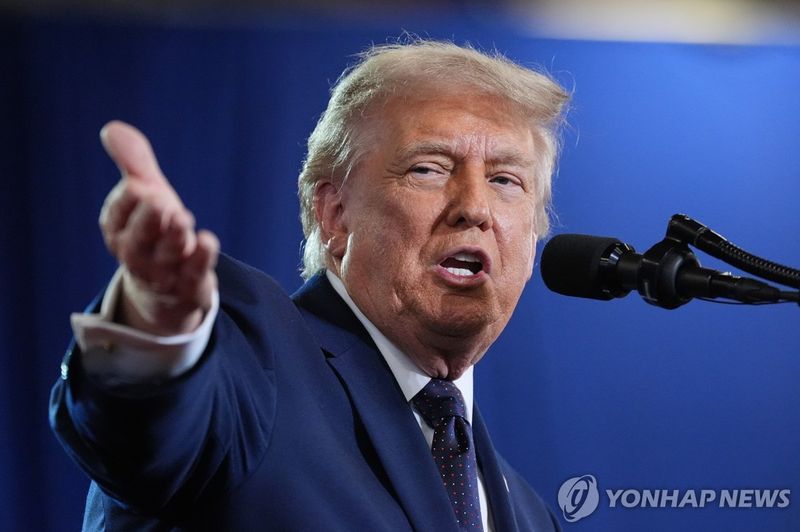
"Don't rush"... Trump slows ceasefire talks
On the 24th local time, Trump said on Truth Social, "I have instructed my representatives not to rush. Time is on our side." He added, "Both sides need to take their time and do this properly. There must be no mistakes," and said, "We will maintain the U.S. Navy's maritime blockade of Iranian ports until the agreement is finalized, certified, and signed."
Trump also directly targeted those criticizing the ceasefire proposal. "The negotiations aren't even fully finished yet. Don't listen to losers criticizing something they know nothing about," he said. "Unlike those who came before me, I do not make bad deals."
He also renewed his criticism of the Iran nuclear deal signed under former President Barack Obama, the Joint Comprehensive Plan of Action (JCPOA). "There will be no deal like Obama's that gives Iran a massive amount of cash and opens a clear, unobstructed path to developing nuclear weapons," he emphasized.
Nuclear and uranium issues pushed back as ceasefire outline emerges
Trump reacted this way because the specific outline of the ceasefire talks was reported in the U.S. media that day.
The New York Times (NYT) and other U.S. media outlets, citing senior U.S. officials and Iranian sources, reported that the United States and Iran had in principle agreed on a basic framework to end the war, but that final approval from both leaders could still take several days.
The agreement is said to include reopening the Strait of Hormuz and disposing of Iran's stockpile of highly enriched uranium. However, it is still being worked out whether Tehran will ship it abroad or dilute it. Trump has publicly said the United States should directly seize and control the material.
Both sides are continuing a war of nerves, stressing the concessions they want from the other side. Three Iranian officials said the tentative agreement only contains a principle to negotiate the nuclear issue over the next 30 to 60 days.
The United States has also acknowledged that the deal does not directly address Iran's missile program or a moratorium on uranium enrichment. Those issues are expected to be discussed in follow-up talks.
Republican hawks push back, saying war gains could be erased
Hard-line Republicans fear the talks could end up helping the Iranian regime survive and rearm rather than weakening it. They argue that if sanctions relief and the release of frozen assets become possible for Iran, which has been under pressure from U.S. and Israeli military operations, long-term security instability in the Middle East could worsen.
Sen. Ted Cruz of Texas, a prominent foreign policy hawk, called Trump's decision to launch strikes on Iran "the most significant decision of his second administration," but said, "We must not back down now." Sen. Lindsey Graham, a close Trump ally, also criticized the deal, saying, "Any agreement that leaves Iran perceived as the dominant power in the Middle East and able to attack Gulf oil infrastructure is unacceptable."
Sen. Roger Wicker, chairman of the Senate Armed Services Committee, said the proposed 60-day ceasefire would be "a disaster" and argued that "everything achieved through Operation Epic Fury could be wiped out." Michael Richard Pompeo, who served as secretary of state in Trump's first administration, also said the deal is not much different from the Iran nuclear agreement under the Obama administration and criticized it as "not America First at all."
[email protected] Reporter Lee Byung-chul Reporter