"My Ten Years' Salary in One Shot"... Samsung Electronics and SK hynix Shake Up the Matchmaking Market
- Input
- 2026-05-25 09:41:30
- Updated
- 2026-05-25 09:41:30
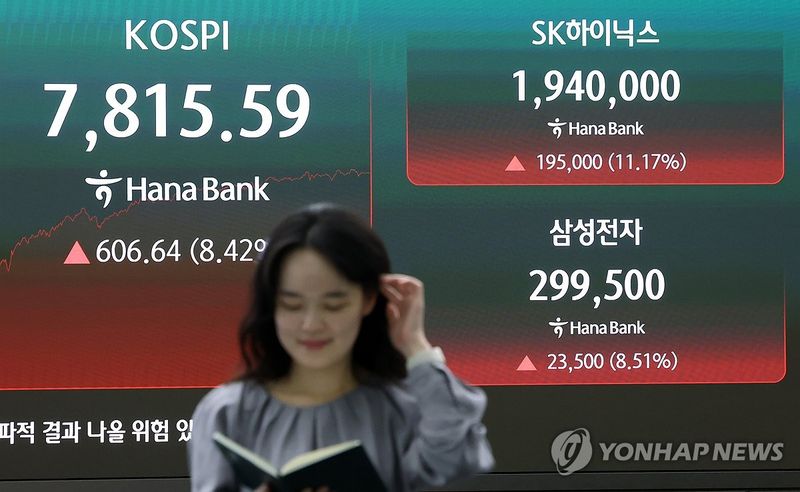
[Financial News] News that Samsung Electronics, SK hynix and other leading domestic semiconductor companies are handing out record-breaking bonuses is rippling far beyond an internal celebration, shaking the marriage market, real estate and the broader real economy. As wealth becomes concentrated in a few industries with the arrival of the AI era, compensation systems at individual companies are beginning to reshape people’s social and economic status.
According to Yonhap News Agency on the 25th, the semiconductor boom has immediately changed the spouse preferences of unmarried men and women. Marriage agency Sunoo recently raised the 'spouse index' for Samsung Electronics employees from 84 to 87.
The spouse index is a measure that combines socioeconomic ability, physical attractiveness and family background. Doctors and lawyers typically rank at the top.
A senior Sunoo official explained, "A three-point increase in the index is highly unusual, and the rise felt by matchmakers in the field is more than 10 points," adding, "Samsung Electronics employees are now effectively being evaluated at a level comparable to lawyers, who score 90 points."
An official at another marriage agency, Gayeon, also said, "The success rate of matches has risen noticeably because they face a low risk of being replaced by AI and can build assets quickly and stably thanks to huge bonuses."
Where will tens of billions of won in liquidity go? Real estate in 'shuttle-bus access' areas is heating up
The market's biggest question is where this massive liquidity will flow. Under the wage agreement between management and labor at Samsung Electronics, employees in the memory division are expected to receive bonuses of up to 600 million won based on an annual salary of 100 million won. If the boom lasts for three years, cumulative bonuses could reach 2 billion to 3 billion won depending on rank.
The real estate market is already reacting. In particular, so-called 'shuttle-bus access' areas, where commuter buses to Samsung Electronics and SK hynix sites stop, are emerging as key targets. The prevailing view is that excess liquidity will flow into Yongin Suji, Yeongtong, Suwon, Dongtan, and other parts of southern Gyeonggi Province, as well as Songpa District and Gangnam District in southeastern Seoul, pushing up home prices.
In fact, some in the market are voicing concern that "the strong financial power of Samsung Electronics and SK hynix employees could push real estate prices in southern Gyeonggi Province and then into Gangnam District like a domino effect."
"My ten years' salary"... Wealth concentration in the AI era and the challenges ahead
There are also concerns that the accumulation of enormous wealth in certain industries could deepen feelings of relative deprivation across society. Posts on anonymous workplace communities such as Blind are filled with expressions of frustration from employees at other industries, small and medium-sized firms, and partner companies. The prevailing tone is self-mocking, with comments such as, "Even after working for 10 years, I can't match one year's bonus," and "This is a world where the person who chose the right industry wins."
Experts say this is not a one-off event, but an inevitable result of industrial restructuring. Shin Jae-yong, a professor in the business administration department at Seoul National University (SNU), described the situation to Yonhap News Agency as "the beginning of a massive social change brought on by the AI era."
Shin added, "The phenomenon in which employees of certain companies unexpectedly benefit from rapid productivity gains, as seen at NVIDIA or Tesla, will continue to emerge as an issue. The new challenge of this era is how to distribute such enormous profits rationally among stakeholders, including partner companies."
[email protected] Moon Young-jin Reporter