U.S. and Iran Face Stalemate Over the Strait of Hormuz, but Appear to Have Agreed on Giving Up Nuclear Material
- Input
- 2026-05-24 16:03:06
- Updated
- 2026-05-24 16:03:06

[Financial News] As the United States and Iran move closer to a ceasefire agreement, attention is turning to how the key issues will be handled. The two sides still disagree over passage through the Strait of Hormuz, but they are said to have reached some common ground on Iran's denuclearization and the removal of nuclear material.
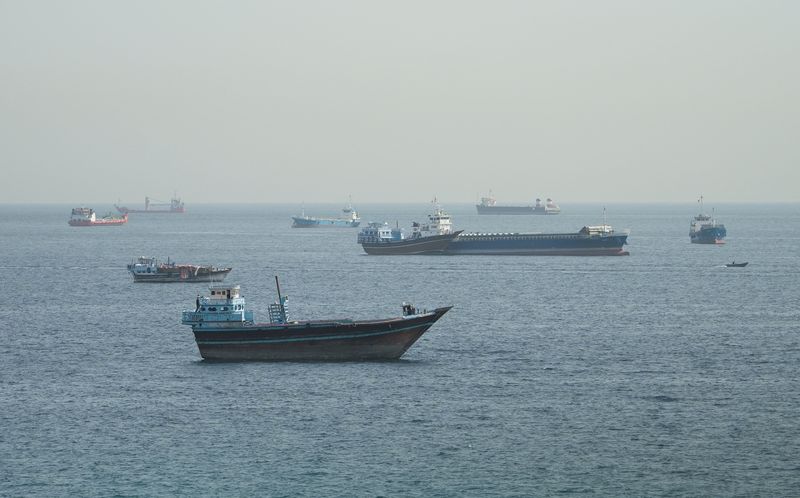
Dispute over control of the Strait of Hormuz
On the 23rd, Axios reported, citing a government official, that it had obtained a draft of the two sides' 60-day ceasefire extension MOU and claimed that the document mentioned the Strait of Hormuz. The draft reportedly says the strait would remain open for 60 days without transit fees, and that Iran would agree to clear mines to ensure safe passage. In return, the United States would lift blockade measures on the strait and nearby Iranian ports, and ease some existing sanctions so Iran could sell oil freely. A U.S. government official said the administration understands the move would greatly benefit Iran's economy, but would also significantly help the global oil market. The official added that the faster Iran clears the mines, the sooner the United States will lift its blockade measures. According to the official, Iran had sought the release of frozen overseas funds and permanent sanctions relief in the talks, but the United States stressed that any deal would require tangible concessions.U.S. President Donald Trump wrote on Truth Social the same day that "the Strait of Hormuz will be opened, in addition to many other elements of the agreement." However, Iran's semi-official Fars News Agency said Trump's remarks were "incomplete and not consistent with reality." The outlet stressed that, according to documents recently exchanged by the two sides, Iran will manage the Strait of Hormuz going forward. On the same day, Iranian Foreign Ministry spokesman Esmail Baghaei said Iran was close to an agreement with the United States, but made clear that the Strait of Hormuz "has nothing to do with the United States." He emphasized that transit through the strait is "an issue between us and the coastal states. We are strengthening cooperation with Oman on the Strait of Hormuz issue."
In response, U.S. Secretary of State Marco Rubio warned in a statement on the 22nd that if Iran moves ahead with plans to collect transit fees in the Strait of Hormuz, "a diplomatic agreement will become impossible."
It appears that an agreement has been reached on giving up nuclear material
On the 23rd, Axios claimed that the draft MOU included a pledge by Iran not to pursue nuclear weapons development, as well as a commitment to join talks on suspending uranium enrichment and disposing of highly enriched uranium. Officials said Iran had also conveyed, through the mediator in the ceasefire talks, its verbal position on how far it would be willing to concede on issues such as suspending enrichment and giving up nuclear material.Before last year's U.S. strikes on its nuclear facilities, Iran held 440 kilograms of uranium enriched to 60 percent. Uranium enriched to more than 90 percent can be used as material for a nuclear bomb. The United States had previously demanded that Iran remove all of its highly enriched uranium overseas and stop uranium enrichment for the next 20 years.
The New York Times (NYT) reported on the 23rd, citing officials, that the United States had demanded Iran give up its highly enriched uranium and that Iran had accepted. However, U.S. officials said the details of how Iran's uranium stockpile would be handled had not yet been agreed, and that the issue would be addressed in future negotiations over Iran's nuclear program.
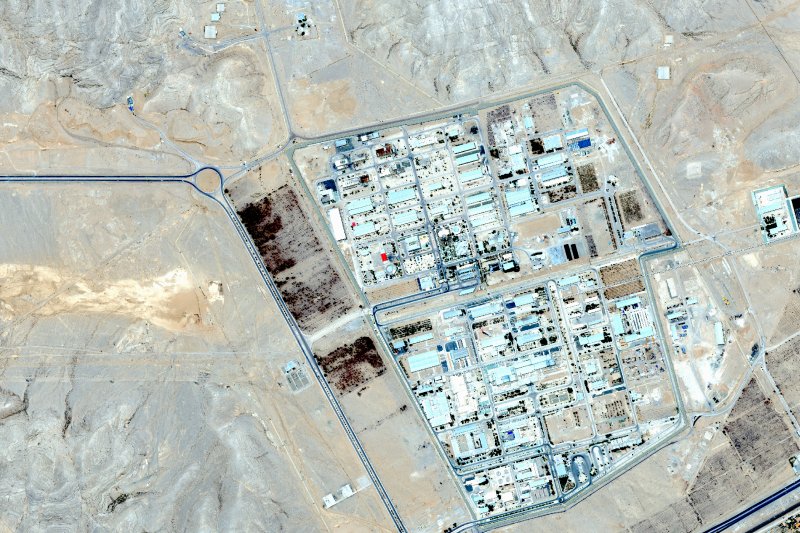
According to the report, Iran had strongly rejected the demand to give up its enriched uranium, viewing it as a national "surrender." But the U.S. negotiating team pressured Iran through mediators, saying it would walk away from the talks and resume military operations unless there was an initial agreement on the uranium stockpile. In fact, the U.S. military recently presented Trump with several options for striking Iran's uranium stockpile, including a plan to hit the Isfahan nuclear facility again with bunker-buster bombs.
In an interview with CBS on the 23rd, Trump said that a condition for ending the conflict with Iran was preventing it from obtaining nuclear weapons, adding, "Otherwise, we would not even be talking about this." He said the talks would "lead to a satisfactory handling of Iran's highly enriched uranium" and added, "I will only sign a deal that gives us everything we want."
[email protected] Park Jong-won Reporter