"Refunds Are Difficult, and Interest Reaches 40 Billion Won"... Starbucks' 'Prepaid Funds' Outside Regulation
- Input
- 2026-05-24 08:50:26
- Updated
- 2026-05-24 08:50:26
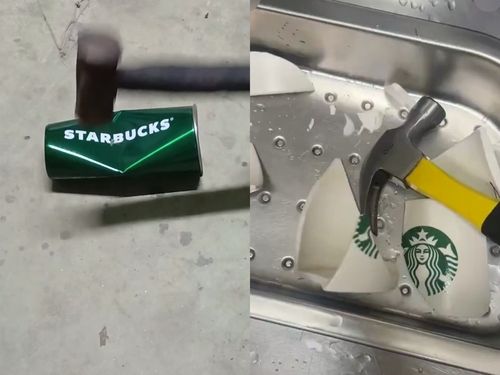
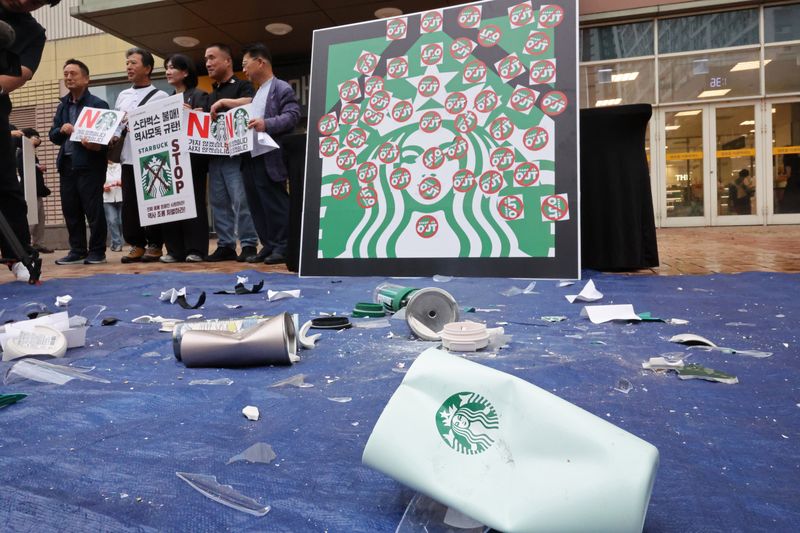
[Financial News] Starbucks Korea's prepaid funds rose 8% over the past year to more than 420 billion won, according to reports. However, because they are outside the financial authorities' oversight under current law, concerns are growing over a regulatory gap. In particular, some consumers have recently been demanding unconditional refunds of prepaid funds following the so-called 'Starbucks 5.18' controversy, prompting calls for countermeasures.
According to Starbucks Korea's audit report released on the 24th, prepaid funds stood at 427.56311 billion won at the end of last year, up about 32.5 billion won, or 8.22%, from 395.08377 billion won a year earlier. Prepaid funds refer to money customers deposit in advance into the Starbucks app or a Starbucks Card, and the amount is deducted from the account when a refund is requested. However, full refunds are limited because of restrictions such as minimum usage requirements. Under the Starbucks Card terms of use, a refund is available only after more than 60% of the balance has been used. This is based on the KFTC's Standard Terms and Conditions for New-Type Gift Certificates. For value-based gift certificates, refunds are allowed when more than 80% has been used for amounts of 10,000 won or less.
Starbucks Korea manages customer prepaid funds worth trillions of won, yet they are not subject to regulation as prepaid electronic payment instruments by the financial authorities. Under the Electronic Financial Transactions Act, only instruments used to purchase goods or services from a third party other than the issuing company are defined as prepaid electronic payment instruments. Starbucks, however, has the same entity as both issuer and user. In addition, all stores nationwide are operated directly by headquarters, so they are legally treated as a single outlet. As a result, unlike registered prepaid payment methods such as Naver Pay and Kakao Pay, Starbucks is classified in the same category as a neighborhood restaurant that simply accepts advance payments.
After the 2021 'Meritz Point incident,' the National Assembly of the Republic of Korea passed an amendment to the Electronic Financial Transactions Act to tighten regulations on prepaid businesses, but large directly operated companies such as Starbucks were excluded from regulation because of the third-party requirement.
According to data submitted by the Financial Supervisory Service (FSS) to the office of Kang Min-kuk of the People Power Party (PPP), a member of the National Policy Committee, Starbucks has earned about 40.8 billion won in interest income since 2020 by investing prepaid funds in cash-equivalent assets such as deposits and trusts.
Legal experts say the system should be improved to match the scale of the funds involved.
One legal expert said, "The purpose of the prepaid business provisions under the Electronic Financial Transactions Act is to prevent harm to users' funds and to guarantee priority repayment rights," adding, "If user concerns are high because of refund restrictions and the lack of transparency in fund management, including them under the Act's regulatory scope would be consistent with its purpose."
Meanwhile, Starbucks Korea is facing criticism from the ruling party and civic groups over allegations that it disparaged the May 18 Democratic Movement. Some consumer groups are demanding unconditional refunds of prepaid card balances from Starbucks.
[email protected] Park Moon-soo Reporter