'Barista Jang-i' Moves into the Neighborhood of Craftsmen... American Specialty Coffee in a Seochon Hanok [Coffee and Space 'Kkik']
- Input
- 2026-05-24 17:33:19
- Updated
- 2026-05-24 17:33:19
S. / Photo courtesy of Intelligentsia During the Ottoman Turkish era, it was called the "School of Wise Men," and in 17th-century England, it was known as the "Penny College," where one could participate in argumentative conversations for a fee of one penny. It was a meeting place for Enlightenment thinkers, where Austrian neurologist Sigmund Freud and French philosopher Jean-Paul Sartre wrote and Picasso discussed art.
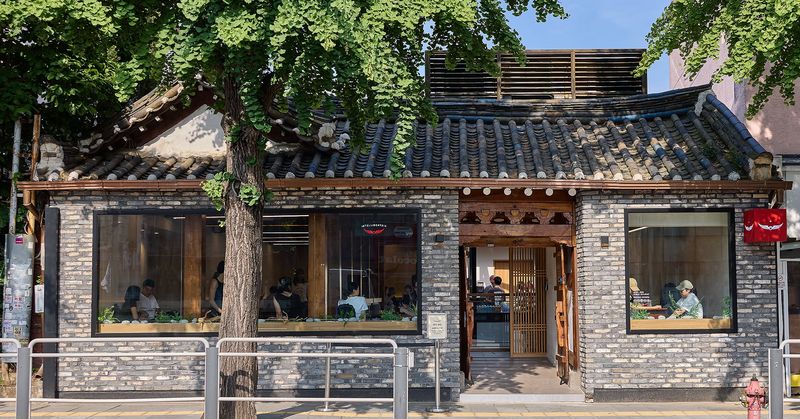
We call this type of space, where people gather with "coffee" as the fundamental premise, a "café. " In a place of "kik" (enjoyment) where one drinks coffee and enjoys the space, we savor the stories. How about a cup of "architecture" in that space this weekend? [Editor's Note] [Financial News] '-jangi'.It is a term commonly attached to describe the best technicians in a specific field, carrying the meaning of 'craftsman. ' From calligraphers and singers to plasterers, roof tile makers, and rice cake makers. Seochon in Jongno-gu, Seoul, was a neighborhood where these very 'jangi's' gathered and lived since the Joseon Dynasty.In 2024, a new type of 'jangi' took root in Seochon. It is called the 'Barista-jangi. ' People sit on the veranda of a 'D'-shaped Hanok and watch baristas brew coffee at a bar table set up in the middle of the courtyard, as if watching a performance.
S. / Photo courtesy of Intelligentsia During the Ottoman Turkish era, it was called the "School of Wise Men," and in 17th-century England, it was known as the "Penny College," where one could participate in argumentative conversations for a fee of one penny. It was a meeting place for Enlightenment thinkers, where Austrian neurologist Sigmund Freud and French philosopher Jean-Paul Sartre wrote and Picasso discussed art.Then, they drink the coffee that is finished in this way. This is the scene you can see at the Intelligentsia Seochon branch, an American specialty coffee brand.Ryu Seong-ryong, a professor of architecture at Korea University and president of the Korean Society of Architectural History, drew attention to the combination of Seochon, Hanok, and coffee. Professor Ryu explained, "A Hanok is built by artisans who read the tree rings, texture, and grain direction of the wood," adding, "Within that space, coffee crafted by artisans to suit the characteristics of the beans naturally harmonizes." Seochon, the neighborhood where '-jangis' lived The 'House of Yi Sang' in Seochon is the site where the writer Yi Sang lived for over 20 years, starting from the age of three. /Photo=Getty Images Bank Seochon, named for its location west of Gyeongbokgung Palace, possessed a character distinct from Bukchon, which was a residential area centered on the Joseon Dynasty's nobility.
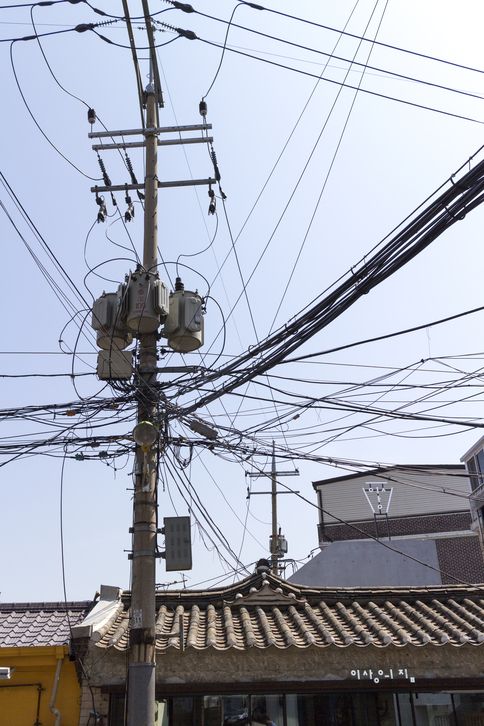
While Bukchon was a space for high-ranking officials and scholar-officials formed north of Cheonggyecheon Stream and Jongno, Seochon was a living space where diverse social classes and occupational groups coexisted. Seochon, where the royal family and some scholar-officials lived in the early Joseon period, saw a large influx of skilled professionals—such as physicians, interpreters, painters, and musicians—after King Sukjong permitted the residence of the middle class.
Although their social status was lower than that of the nobility, artisans possessing skills and expertise filled the alleys. Even during the Japanese colonial period, Seochon served as a gathering place for artists.
Artists such as Yi Sang, Yun Dong-ju, Yeom Sang-seop, Hyun Jin-geon, Lee Jung-seop, and Chun Kyung-ja gathered there, continuing its role as a center of culture and art. Even today, workshops, galleries, independent bookstores, and cafes coexist in the alleys of Seochon.
The scenery where old Hanok houses and modern cultural spaces harmonize is also a unique characteristic of Seochon. Seochon, the First Overseas Store: A Justified Choice Intelligentsia is a specialty coffee brand that light-roasts beans sourced directly from coffee farms.
S. / Photo courtesy of Intelligentsia During the Ottoman Turkish era, it was called the "School of Wise Men," and in 17th-century England, it was known as the "Penny College," where one could participate in argumentative conversations for a fee of one penny. It was a meeting place for Enlightenment thinkers, where Austrian neurologist Sigmund Freud and French philosopher Jean-Paul Sartre wrote and Picasso discussed art.
/Photo = Captured from Intelligentsia website Intelligentsia, known as one of the "Top 3 Specialty Coffee Brands in the U. S.
S. / Photo courtesy of Intelligentsia During the Ottoman Turkish era, it was called the "School of Wise Men," and in 17th-century England, it was known as the "Penny College," where one could participate in argumentative conversations for a fee of one penny. It was a meeting place for Enlightenment thinkers, where Austrian neurologist Sigmund Freud and French philosopher Jean-Paul Sartre wrote and Picasso discussed art.S. / Photo courtesy of Intelligentsia During the Ottoman Turkish era, it was called the "School of Wise Men," and in 17th-century England, it was known as the "Penny College," where one could participate in argumentative conversations for a fee of one penny. It was a meeting place for Enlightenment thinkers, where Austrian neurologist Sigmund Freud and French philosopher Jean-Paul Sartre wrote and Picasso discussed art.
S. coffee market was Italian-style espresso, which emphasized a rich and bitter taste through dark roasting.
A change began in the U. S.
coffee industry during that time. A culture of light roasting, which preserves the inherent aroma and acidity of the beans, began to spread in earnest.
Intelligentsia was one of the brands representing this trend. Intelligentsia took action to preserve the inherent characteristics of the beans.
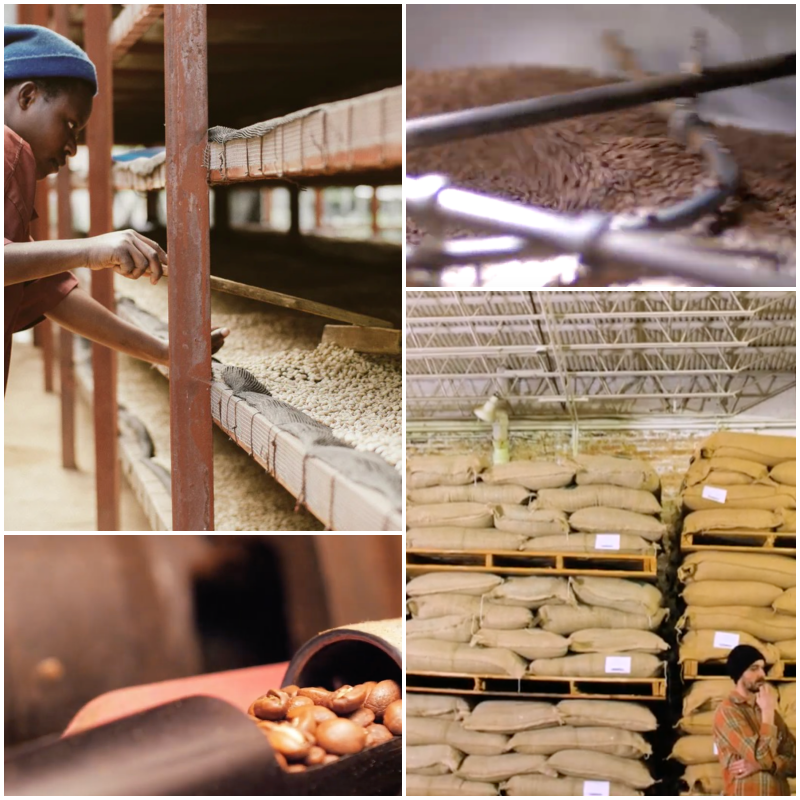
The first step was selecting the beans. By introducing a 'Direct Trade' system, they traded beans directly with producing farms over a long period.
S. / Photo courtesy of Intelligentsia During the Ottoman Turkish era, it was called the "School of Wise Men," and in 17th-century England, it was known as the "Penny College," where one could participate in argumentative conversations for a fee of one penny. It was a meeting place for Enlightenment thinkers, where Austrian neurologist Sigmund Freud and French philosopher Jean-Paul Sartre wrote and Picasso discussed art.
The top-quality beans, secured through years of trust with the farmers, were roasted using a light roast instead of a dark roast. This was based on the belief that, just like wine, coffee should be enjoyed for its flavors specific to its origin and its seasonality.
S. / Photo courtesy of Intelligentsia During the Ottoman Turkish era, it was called the "School of Wise Men," and in 17th-century England, it was known as the "Penny College," where one could participate in argumentative conversations for a fee of one penny. It was a meeting place for Enlightenment thinkers, where Austrian neurologist Sigmund Freud and French philosopher Jean-Paul Sartre wrote and Picasso discussed art.S. / Photo courtesy of Intelligentsia During the Ottoman Turkish era, it was called the "School of Wise Men," and in 17th-century England, it was known as the "Penny College," where one could participate in argumentative conversations for a fee of one penny. It was a meeting place for Enlightenment thinkers, where Austrian neurologist Sigmund Freud and French philosopher Jean-Paul Sartre wrote and Picasso discussed art.
Since then, Intelligentsia has grown into a global brand, producing world barista champions such as Charles Babinski and Michael Phillips. As Intelligentsia considered expanding overseas, the place they turned their attention to was Korea.
Korea was a market with one of the world's highest annual coffee consumption per adult and a world-class coffee consumption culture. Thus, on March 23, 2024, Intelligentsia opened its first store in Korea and its first overseas location outside the United States in Seochon, a neighborhood known for artisans.
Intelligentsia, the 'Artisan' Settler in Seochon Upon opening the wooden flat gate, a modern middle gate featuring a lattice design comes into view. / Photo by Reporter Seo Yoon-kyung Intelligentsia viewed Korea not merely as a consumer market, but as a space to experiment with a new coffee culture.
In particular, the Seochon branch was designed as a space that encapsulates the brand's philosophy. An Intelligentsia official stated, "Intelligentsia incorporates the local region and neighborhood into its store designs, giving each location its own distinct charm.
S. / Photo courtesy of Intelligentsia During the Ottoman Turkish era, it was called the "School of Wise Men," and in 17th-century England, it was known as the "Penny College," where one could participate in argumentative conversations for a fee of one penny. It was a meeting place for Enlightenment thinkers, where Austrian neurologist Sigmund Freud and French philosopher Jean-Paul Sartre wrote and Picasso discussed art.
In Hollywood, we reinterpreted the works of local artists through mosaics, while the Austin, Texas branch embodies the concept of an 'oasis in the city. '" The official added, "We explained to our U.
S. headquarters the history of Bukchon, where the nobility once lived, and Seochon, where artisans resided, and proposed a Hanok space.
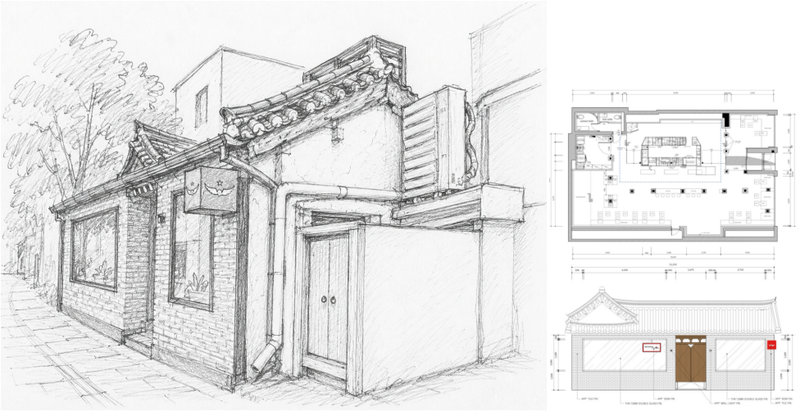
" This Hanok, found in this manner, is unique starting with its land registry. It was registered on February 2, 1940, during the Japanese colonial period, and the building type is listed as "Mokjo-wa-jeup-pyeong-ga-geonbon-ga" (Wooden, Tile-roofed, Pyeong-ga-geonbon-ga).
In the title descriptor terms used in Japanese-style building registrys, "Mokjo" refers to a building constructed of wood, and "Wa-jeup" refers to a roof covered with tiles. "Pyeongga-geon" refers to a flat-roofed house, while "Bonga" refers to the main building used for primary purposes.
S. / Photo courtesy of Intelligentsia During the Ottoman Turkish era, it was called the "School of Wise Men," and in 17th-century England, it was known as the "Penny College," where one could participate in argumentative conversations for a fee of one penny. It was a meeting place for Enlightenment thinkers, where Austrian neurologist Sigmund Freud and French philosopher Jean-Paul Sartre wrote and Picasso discussed art.
Upon entering the Intelligentsia Seochon branch, a bar table in the center of the open courtyard immediately catches the eye. White awnings have been installed over the skylight to block the midday sun.
S. / Photo courtesy of Intelligentsia During the Ottoman Turkish era, it was called the "School of Wise Men," and in 17th-century England, it was known as the "Penny College," where one could participate in argumentative conversations for a fee of one penny. It was a meeting place for Enlightenment thinkers, where Austrian neurologist Sigmund Freud and French philosopher Jean-Paul Sartre wrote and Picasso discussed art.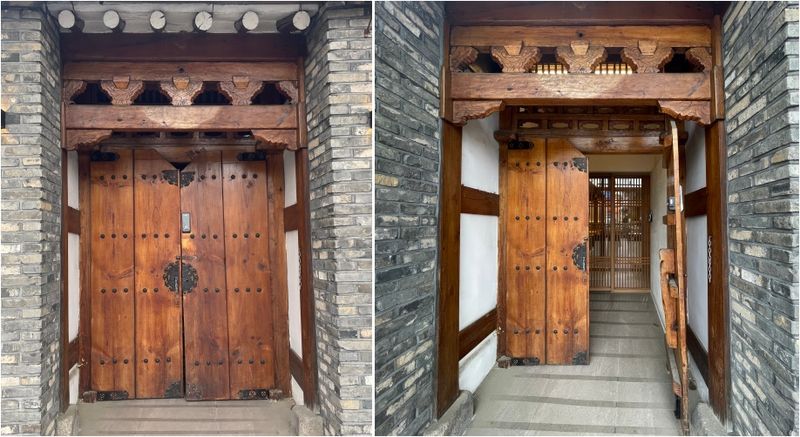
A square bar table sits in the center of that courtyard. A coffee grinder, an espresso machine, and a manual brewing device, the Flair 58, are set up, and baristas brew coffee in the central space.
Sitting areas, renovated from the inner quarters and the main hall, are arranged along the walls. Unlike typical cafes where you face your companions, your gaze is directed toward the bar table.
It feels as if you are sitting on a veranda, gazing out at the courtyard. Thanks to this, the sunlight streaming through the skylight becomes the lighting, and the baristas' movements turn into a performance.
Guests watch this process as if they were watching a show. From the low tables arranged along the wall, guests can watch the baristas brewing coffee at the bar counter.
S. / Photo courtesy of Intelligentsia During the Ottoman Turkish era, it was called the "School of Wise Men," and in 17th-century England, it was known as the "Penny College," where one could participate in argumentative conversations for a fee of one penny. It was a meeting place for Enlightenment thinkers, where Austrian neurologist Sigmund Freud and French philosopher Jean-Paul Sartre wrote and Picasso discussed art.
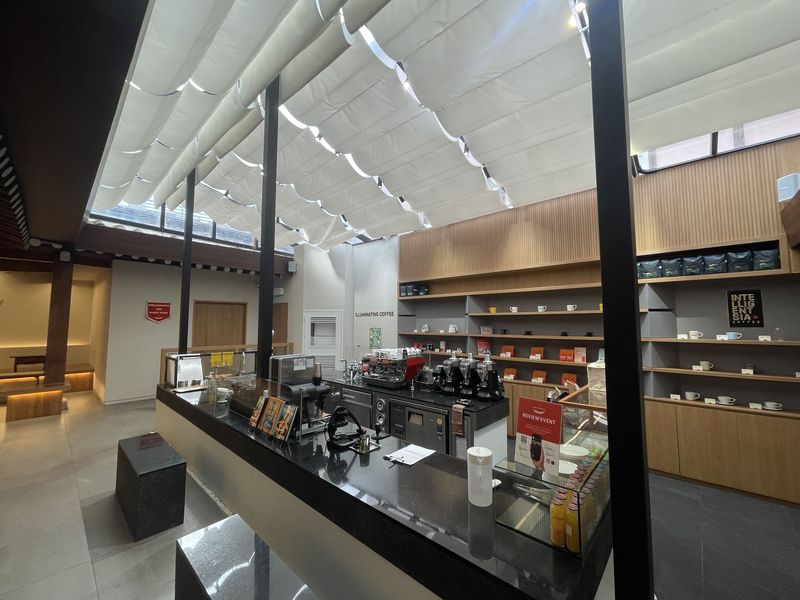
Having been used as a restaurant for a long time, it took a direct hit from dampness in many places. The red clay walls crumbled at the slightest touch, and about 80% of the wooden columns and beams were rotten.
We focused on safety while preserving as much of the old materials as possible that could be salvaged. New wood was added to the rotten columns.
The only visible trace of the past is the foundation stone that supports the columns. The lighting was placed inside wooden beams, and the rafters supporting the roof utilized old solid wood in its original state.
A white awning was added to the skylight above the bar table to block sunlight. Safety was also a priority.
S. / Photo courtesy of Intelligentsia During the Ottoman Turkish era, it was called the "School of Wise Men," and in 17th-century England, it was known as the "Penny College," where one could participate in argumentative conversations for a fee of one penny. It was a meeting place for Enlightenment thinkers, where Austrian neurologist Sigmund Freud and French philosopher Jean-Paul Sartre wrote and Picasso discussed art.
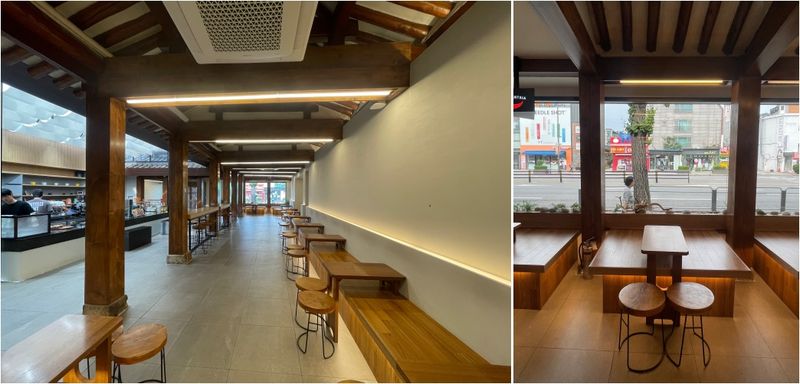
The bar table in the courtyard was the most challenging part of the space creation process. Due to the height difference between the ground level where the house once stood and the courtyard, installing the custom-made bar table was extremely difficult.
We experienced three failures in balancing the floor. The Intelligentsia logo features a winged coffee cup flying toward the stars.
The tree logo at the Seochon branch incorporates the contour lines of Mt. Bugak.
/Photo by Reporter Seo Yoon-kyung In addition, the tables were crafted in the form of small Korean-style dining tables or traditional Korean-style tables. Traditional wooden platforms have also been prepared for sitting on the floor.
S. / Photo courtesy of Intelligentsia During the Ottoman Turkish era, it was called the "School of Wise Men," and in 17th-century England, it was known as the "Penny College," where one could participate in argumentative conversations for a fee of one penny. It was a meeting place for Enlightenment thinkers, where Austrian neurologist Sigmund Freud and French philosopher Jean-Paul Sartre wrote and Picasso discussed art.
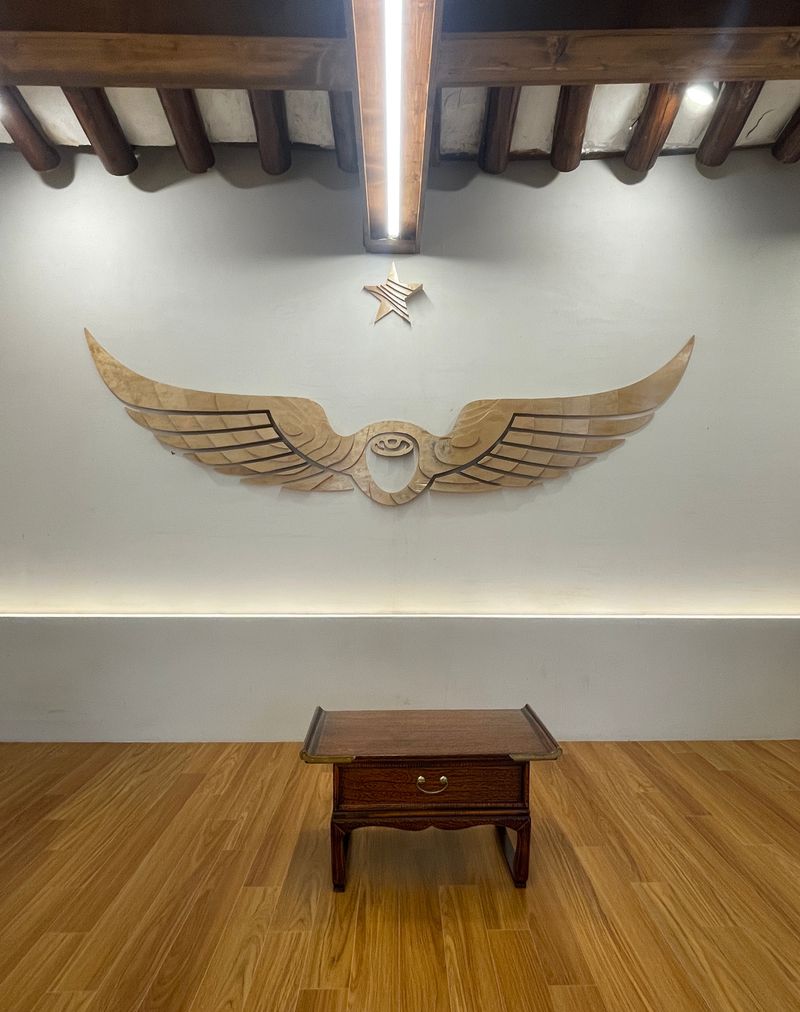
Of the two logos, the one made of wood features the contour lines of Mt. Bugak behind Gyeongbokgung Palace.
Tasting coffee in a space of hospitality I ordered Rwanda Murundi beans roasted on April 28. The coffee, brewed using the Flair 58 method, was served with sparkling water.
S. / Photo courtesy of Intelligentsia During the Ottoman Turkish era, it was called the "School of Wise Men," and in 17th-century England, it was known as the "Penny College," where one could participate in argumentative conversations for a fee of one penny. It was a meeting place for Enlightenment thinkers, where Austrian neurologist Sigmund Freud and French philosopher Jean-Paul Sartre wrote and Picasso discussed art.
/Photo by Reporter Seo Yoon-kyung It is time for the performance to begin. The beans are 'Rwanda Murundi,' roasted on April 28.
S. / Photo courtesy of Intelligentsia During the Ottoman Turkish era, it was called the "School of Wise Men," and in 17th-century England, it was known as the "Penny College," where one could participate in argumentative conversations for a fee of one penny. It was a meeting place for Enlightenment thinkers, where Austrian neurologist Sigmund Freud and French philosopher Jean-Paul Sartre wrote and Picasso discussed art.S. / Photo courtesy of Intelligentsia During the Ottoman Turkish era, it was called the "School of Wise Men," and in 17th-century England, it was known as the "Penny College," where one could participate in argumentative conversations for a fee of one penny. It was a meeting place for Enlightenment thinkers, where Austrian neurologist Sigmund Freud and French philosopher Jean-Paul Sartre wrote and Picasso discussed art.
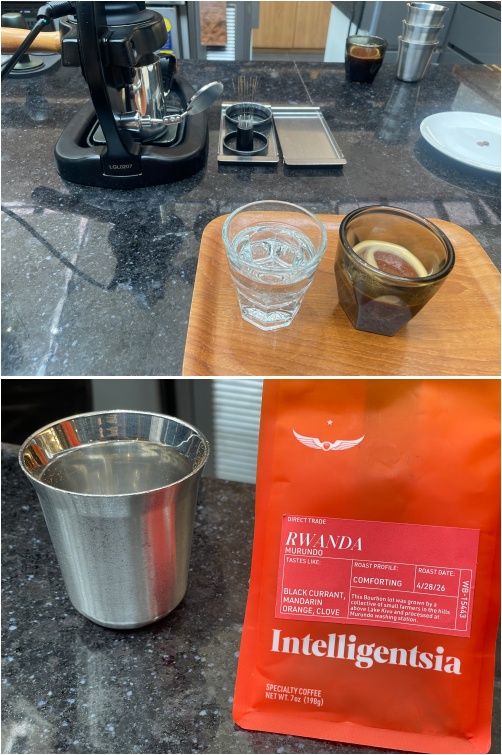
This is for light roasting. Unlike dark roasts, light-roasted beans show almost no oil rising to the surface.
The original flavor comes alive only when the carbon dioxide remaining inside the beans is sufficiently released immediately after roasting. An Intelligentsia official stated, "The taste is best about a week to a month after roasting.
During the process of carbon dioxide release, the balance of acidity, aroma, and sweetness stabilizes. " Now that the beans have been selected, the next step is extraction.
The Seochon branch does not have fully automatic machines that dispense coffee with the push of a button. Instead, they use Italian-made La Marzocco semi-automatic machines and manual Flair 58 espresso machines.
Hand drip is also available. This is why Intelligentsia says that baristas should be referred to as "masters.
S. / Photo courtesy of Intelligentsia During the Ottoman Turkish era, it was called the "School of Wise Men," and in 17th-century England, it was known as the "Penny College," where one could participate in argumentative conversations for a fee of one penny. It was a meeting place for Enlightenment thinkers, where Austrian neurologist Sigmund Freud and French philosopher Jean-Paul Sartre wrote and Picasso discussed art.
S. / Photo courtesy of Intelligentsia During the Ottoman Turkish era, it was called the "School of Wise Men," and in 17th-century England, it was known as the "Penny College," where one could participate in argumentative conversations for a fee of one penny. It was a meeting place for Enlightenment thinkers, where Austrian neurologist Sigmund Freud and French philosopher Jean-Paul Sartre wrote and Picasso discussed art.
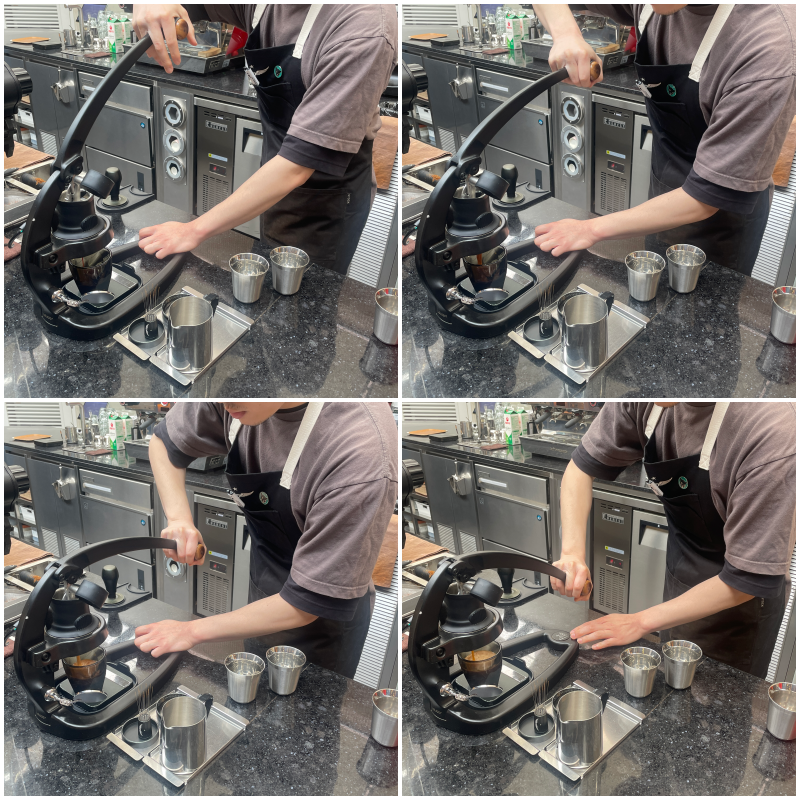
It is a method where coffee is extracted by adding beans and hot water, then pressing a long handle with human strength to adjust the pressure and time. The barista visually monitors the pressure gauge and finely adjusts the drip speed of the coffee.
An Intelligentsia official explained, "Since light-roast coffee reveals the true essence of the beans, controlling the extraction process is paramount," adding, "The taste varies significantly depending on the pressure, time, and extraction volume. " The coffee was served with sparkling water.
The sparkling water is provided to awaken the senses of the tongue. The moment I smelled the aroma and took a sip, there was no burnt taste typically found in dark-roast coffee; instead, the natural flavor of the beans lingered for a long time.
Having enjoyed coffee in a traditional Hanok, my next destination is set. It is 9-ro Pyeongsang in Hang-dong, Guro-gu, Seoul, a cafe inside a modern building that brings the atmosphere of a Hanok into the home.
S. / Photo courtesy of Intelligentsia During the Ottoman Turkish era, it was called the "School of Wise Men," and in 17th-century England, it was known as the "Penny College," where one could participate in argumentative conversations for a fee of one penny. It was a meeting place for Enlightenment thinkers, where Austrian neurologist Sigmund Freud and French philosopher Jean-Paul Sartre wrote and Picasso discussed art.
y27k@fnnews.com Seo Yoon-kyung Reporter