Trump Says, "Act Independently" ... Warsh Vows to Build a Reform-Oriented Fed
- Input
- 2026-05-23 02:14:59
- Updated
- 2026-05-23 02:14:59
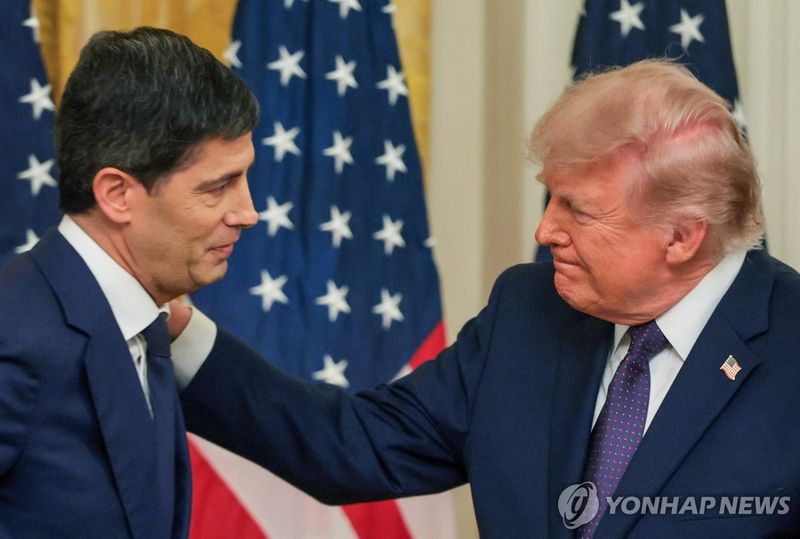
Immediately after taking office, Chair Warsh declared that he would build a "reform-oriented Fed." But even on his first day, voices inside the Fed openly raised the possibility of additional rate hikes, leading to the assessment that the new Fed leadership is starting under stronger-than-expected pressure for tightening.
Trump Says "Completely Independently" ... Warsh Vows a "Reform-Oriented Fed"
At Warsh's swearing-in ceremony, President Donald Trump said, "Warsh will have the full support of my administration," adding, "I want him to carry out his duties completely independently." He then emphasized, "Growth does not necessarily mean inflation."
Until now, President Donald Trump had repeatedly pressured former Fed Chair Jerome Powell to cut interest rates. This time, however, he appeared to be conscious of market concerns over the Fed's independence and publicly stressed that independence.
Chair Warsh also showed a strong reform drive in his brief remarks after taking office.
He said, "It is the honor of a lifetime to have the chance to serve in public office again," and added, "I will learn from past successes and failures and lead a reform-oriented Fed that moves away from rigid frameworks and models while maintaining clear principles and performance standards."
Waller Says "The Odds of a Rate Cut Are Not Greater"
But as the Warsh era began, the mood inside the Fed quickly turned more hawkish. Christopher Waller, once seen as a leading dove, said in a speech at the German Economic Forum that the phrase "easing bias" should be removed from the policy statement, effectively opening the door to the possibility of a rate hike.
Waller said, "It should be made clear that the odds of a rate cut are not greater than the odds of a rate hike." He also assessed recent price trends, saying that "inflationary pressures are spreading and strengthening across the economy."
In fact, inflationary pressure in the US is rising again as surging international oil prices caused by the US-Israel war with Iran, high tariffs, and higher electricity and costs driven by the spread of artificial intelligence all converge. The Fed's preferred Personal Consumption Expenditures Price Index also rose to 3.8% in April.
Markets are now saying that Chair Warsh is more likely than initially expected to focus on fighting inflation rather than cutting rates. The first Federal Open Market Committee meeting under the Warsh leadership, scheduled for June 16-17, is expected to be a turning point for the future direction of monetary policy.
[email protected] Lee Byung-chul Reporter