Iran Suspected of Laundering Money Through Virtual Assets, Apparently Using Binance
- Input
- 2026-05-22 18:28:34
- Updated
- 2026-05-22 18:28:34
[Financial News] The Islamic Revolutionary Guard Corps (IRGC), Iran's political and military force, is alleged to have obtained external funds by using Binance, the world's largest virtual asset exchange. The amount moved abroad through what is believed to be money laundering and used to evade international sanctions is estimated at more than 600 billion won.
The Wall Street Journal (WSJ) reported on the 21st, local time, citing an internal compliance report from Binance. The paper noted that Babak Zanjani, an Iranian businessman who has appeared on U.S. sanctions blacklists, traded about $850 million, including deposits and withdrawals, on Binance over the two years from 2023 to December 2025. Experts estimated that half of that amount, or $425 million, likely flowed into Iran through Binance.
The 52-year-old Zanjani is blacklisted in the United States for allegedly sending funds to the IRGC. He reportedly evaded sanctions through his virtual asset company, Zedsex, and accounts under the names of close associates. WSJ said suspicious activity was repeatedly reported inside Binance, yet the relevant accounts remained active for at least 15 months. The paper also claimed the accounts were still open as of January this year.
WSJ said the funds were linked to payments for crude oil purchases from China. China imported about 90% of Iran's oil exports before the war with Iran this year. Experts believe Iran laundered the oil payments received from China through Binance to avoid international sanctions. When Iran received payment in Chinese yuan and other currencies, it reportedly converted the money into cryptocurrency on Binance, sent it to an Iranian virtual asset exchange, and then exchanged it into Iranian rial. The oil revenue that flowed into Iran is believed to have been used not only for the IRGC, but also to support several pro-Iranian groups in the Middle East, including Hamas, Hezbollah, and Houthi rebels in Yemen.
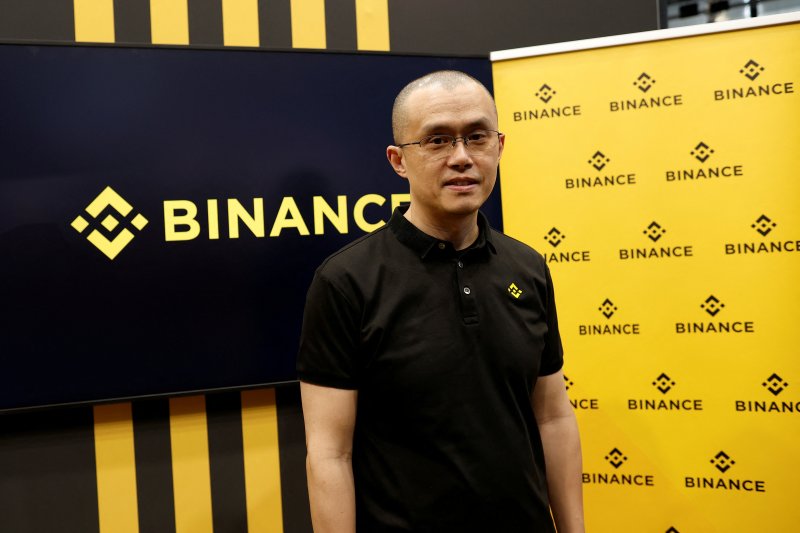
Binance is the world's largest virtual asset exchange, founded in Shanghai, China, in 2017 by Chinese Canadian Changpeng Zhao. The exchange initially had its headquarters in China, but later established entities around the world and did not disclose the location of its main office.
In its early years, Binance allowed users to open accounts without identity verification, and its monthly trading volume reached trillions of dollars, making fund tracing relatively difficult. Zhao, who served as Binance CEO, was indicted in the United States in the past on money laundering charges and other allegations, fined $4.3 billion, and sentenced to prison. He was later pardoned after U.S. President Donald Trump took office for a second time last year. Binance is also said to have lobbied for years, including by helping World Liberty Financial, the Trump family's cryptocurrency company, secure a large investment.
An anonymous expert who spoke with WSJ said the Binance accounts identified this time in connection with Iran are not used as ordinary investment accounts for buying and selling various virtual assets. "They are used as a means of transferring funds, and money is withdrawn at nearly the same value as the amount deposited," the expert said.
Earlier, the Central Bank of Iran also transferred about $107 million worth of virtual assets to Binance accounts last year, and direct transactions between Binance accounts and Iran-linked entities in 2024 and 2025 reportedly reached about $260 million. In response to the WSJ report, Binance called it "inaccurate information" and said it "did not allow transactions with sanctioned individuals and took appropriate action after sanctions were imposed."
[email protected] Park Jong-won Reporter