[Kim Do-yeol's Tech Odyssey] The Fall of Britannica and Collective Intelligence
- Input
- 2026-05-23 07:00:00
- Updated
- 2026-05-23 07:00:00
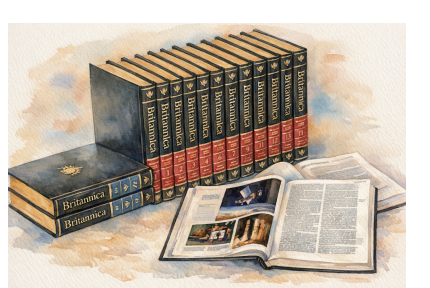
Its status was clear even from the living rooms of middle-class Korean households in the mid-1980s. A full set of encyclopedias, bound in black leather and stamped with gold titles, sat in the center of the bookshelf like a symbol of authority. It did not matter how often it was actually opened. Simply owning it was enough. The line between those who possessed knowledge and those who did not was that sharp.
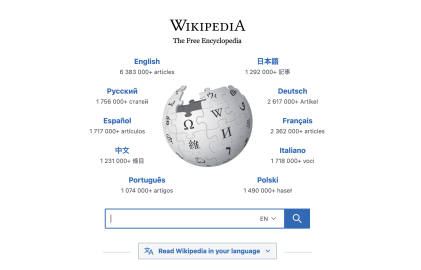
But in January 2001, a website appeared that posed a fundamental challenge to that order. It was the online encyclopedia Wikipedia, created by Jimmy Wales. Its slogan was simple: "The encyclopedia of all of us." From the perspective of the existing knowledge system, the phrase was almost provocative. Anyone could write what they knew, without credentials such as degrees, affiliations, or resumes. Existing entries could also be edited freely. Academia and the media immediately voiced concern. "How can we trust knowledge written and edited by unverified people?"
The debate was settled in 2005. Nature, the world's most authoritative science journal, conducted an experiment that directly compared the two media. After having experts in each field cross-check 42 science-related entries, it found 123 errors in Encyclopædia Britannica and 162 in Wikipedia. Wikipedia had more errors, but Nature's conclusion was clear: the difference in accuracy between the two was not statistically significant.
The more important difference, however, lay beyond accuracy. It was speed and self-correction. To fix an error in Britannica, readers had to wait years for the next edition. Wikipedia, by contrast, allowed users around the world to correct mistakes as soon as they were discovered. The contrast became especially clear when Pluto was stripped of its status as a planet. Wikipedia updated the entry immediately, while Britannica remained on the shelf for a long time with knowledge that had already become outdated.
In the end, Britannica stopped publishing its print edition in 2012. The standard for trust in knowledge shifted from "who" to "how." Knowledge was no longer a finished product. It became a living ecosystem of repeated verification and revision.
Today, we are asking a similar question again in front of information generated by AI. But just as Wikipedia did not survive because it was perfect, AI does not need to be perfect to be trusted. What matters is whether there is a structure that can verify and correct its errors. Humanity did not become ignorant when Britannica disappeared. On the contrary, knowledge spread more widely, was updated more quickly, and came alive through the participation of more people. Knowledge now trusts not people, but process.
Kim Do-yeol, Media Strategy Director, Webcash Group