Tensions Escalate in Cuba... U.S. Skeptical of Diplomatic Resolution, Threatens Military Action
- Input
- 2026-05-22 06:50:43
- Updated
- 2026-05-22 06:50:43
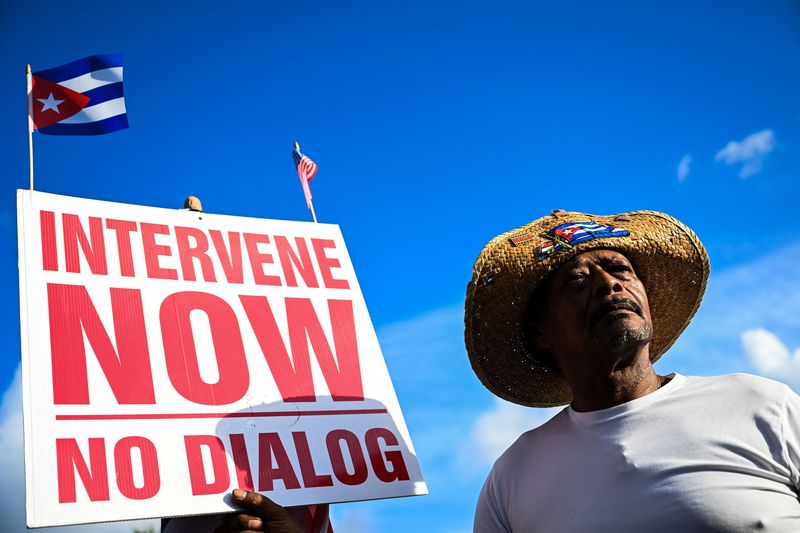
[Financial News] U.S. President Donald Trump and Secretary of State Marco Rubio have once again raised the pressure on Cuba by openly signaling the possibility of military intervention. The move came just one day after U.S. authorities announced that former Cuban President Raúl Castro had been criminally indicted, underscoring a broad U.S. campaign aimed at toppling the regime.
At an environmental event held in the Oval Office at the White House on the 21st local time, Trump was asked about Cuba and said, "Past U.S. presidents have considered taking some action on Cuba over the last 50 or 60 years." He added, "It looks like I may be the one who ends up doing it. I would be glad to do so," strongly hinting at the possibility of military intervention.
Rubio also told reporters the same day that Cuba had threatened U.S. national security for years because of its close ties with hostile countries, and said Trump was firmly determined to resolve the issue.
Rubio, the son of Cuban immigrants who has long taken a hard line against Cuba's socialist government, said, "The United States' priority has always been a peaceful negotiated settlement." He added, "But given the nature of the Cuban regime we are dealing with now, the chances of a diplomatic solution are frankly not high."
Over the past few months, Rubio and other senior U.S. security officials, including CIA Director John Ratcliffe, have met with Cuban officials to explore the possibility of improving relations, but they reportedly made little progress. As a result, the United States imposed additional sanctions on the Cuban government last week.
Rubio warned, "For years, Cuba has become used to buying time and waiting for us to back down, but that will not work this time." He added, "We are very serious and focused." When asked by a reporter whether regime change through force would amount to rebuilding the country, he drew a line and said, "We are only responding to a national security threat."
U.S. federal prosecutors announced on the 20th that Castro had been secretly indicted by a grand jury on charges including murder and destruction of aircraft for allegedly ordering the downing of a civilian plane operated by a Miami-based Cuban exile group in 1996. Rubio declined to say how the legal action against Castro, who turns 95 this year, would be enforced.
The move has drawn comparisons to the scenario in early January, when the U.S. military abruptly seized former Venezuelan President Nicolás Maduro Moros through a military operation and brought him to the United States. Maduro is currently on trial in a U.S. court on drug trafficking charges.
Signs of U.S. military activity were also detected. United States Southern Command said on the 20th, the same day Castro's indictment was announced, that a U.S. Navy Nimitz-class aircraft carrier strike group had arrived in the Caribbean Sea. The command said it was part of regular maritime exercises with Latin American allies that began in March, but the move is widely seen as a show of force aimed at Cuba.
The Cuban government reacted angrily to the sweeping U.S. pressure. Cuban President Miguel Díaz-Canel strongly condemned the indictment, calling it "nothing more than a political manipulation to justify the foolish act of military aggression against Cuba."
Cuba is now facing a severe crisis, with widespread blackouts, food shortages, and the risk of economic collapse after fuel supplies were cut off by the Trump administration's harsh energy blockade. Trump has continued to pressure the regime for a change in leadership, saying he would carry out a "friendly takeover" unless Cuba opens its economy to U.S. capital and drives out America’s adversaries.
[email protected] Yoon Jae-jun Reporter