Trump Abruptly Delays AI Regulation Executive Order... White House Rift
- Input
- 2026-05-22 04:27:09
- Updated
- 2026-05-22 04:27:09
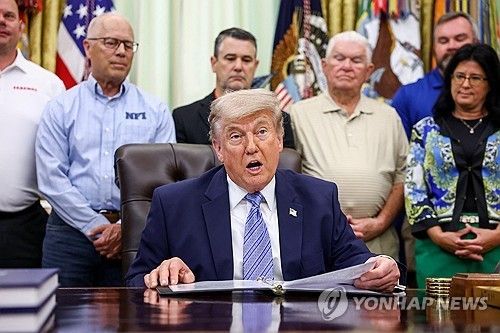
At the White House on the 21st local time, Trump told reporters that he had decided to postpone an executive order that would require AI companies to submit new models to the government in advance.
Major technology executives had been expected to attend the event. Trump said he believed the measure could slow the development of the U.S. AI industry. He said, "I thought that measure could become an obstacle to U.S. AI competition," and added, "I do not want to do anything that would hinder America's leading position."
Trump also stressed that the U.S. currently holds the upper hand in AI competition with China.
The decision is being seen as a fresh sign of conflict within the Trump administration over AI policy. Some officials have argued for tighter oversight, warning that the latest ultra-powerful AI models could be misused for cyberattacks and other threats. Concerns have grown in particular that Anthropic's latest AI model, Mythos, can identify software vulnerabilities with excessive precision. OpenAI is also said to be testing a similar model with customers while working with the government on access restrictions.
By contrast, Silicon Valley and pro-business aides have pushed back, saying excessive regulation could stifle AI innovation. One of the most prominent voices is venture investor David Sacks, who has strongly advocated AI-friendly policies since the start of Trump's second term.
On a recent podcast, Sacks said, "If an FDA-style approval process is introduced, innovation could be severely damaged," and added, "There is a very strong backlash inside Silicon Valley."
The postponed executive order was reportedly set to include provisions requiring AI companies to voluntarily disclose advanced models to the government in advance and cooperate with national security and cyber authorities to address vulnerabilities. A key goal was to protect institutions such as local hospitals and small banks that lack advanced security infrastructure.
[email protected] Reporter Lee Byung-cheol Reporter