The U.S. Government to Invest $2 Billion in IBM and PsiQuantum
- Input
- 2026-05-22 01:11:40
- Updated
- 2026-05-22 01:11:40
The United States Department of Commerce said on the 21st (local time) that it had signed letters of intent with nine quantum computing and advanced technology companies, including International Business Machines (IBM), GlobalFoundries, and PsiQuantum.
IBM will receive the largest amount of support, with $1 billion in funding. GlobalFoundries will also receive a $375 million investment.
PsiQuantum, an investment company of 1789 Capital, the venture capital firm that Donald Trump Jr. joined, is also included in the $100 million support package. This is the largest amount of support PsiQuantum has received from the U.S. government to date.
Other recipients include Atom Computing, Infleqtion, Quantinuum, and Rigetti Computing, each of which will receive $100 million. Diraq is expected to receive up to $38 million.
The market reacted immediately. Shares of IBM and GlobalFoundries rose more than 6% in premarket trading, while D-Wave Quantum surged more than 20%.
Howard Lutnick, U.S. Secretary of Commerce, said, "With this investment in quantum computing research and development, the Trump administration is opening a new era of American innovation," adding, "It will create thousands of high-paying jobs and strengthen U.S. competitiveness in quantum technology."
The move is seen as part of the Trump administration's broader policy of injecting government funds into strategic industries in exchange for equity stakes.
Earlier, the U.S. government converted support funds for Intel into equity last year and secured a 10% stake in the company. The move used subsidies scheduled under the CHIPS and Science Act during the Biden administration, along with unpaid federal support funds.
Market analysts say the United States has begun to actively develop quantum computing as the next national strategic industry amid its technology rivalry with China.
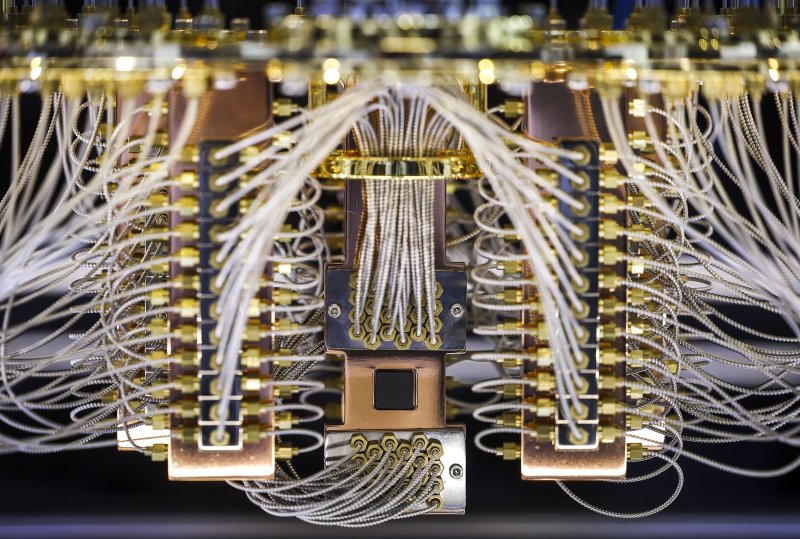
Quantum computers are considered a technology that can perform complex calculations much faster than conventional supercomputers by using the properties of matter at the atomic and subatomic levels. They are seen as a key technology in Artificial Intelligence, code-breaking, drug development, and military applications.
However, many technical challenges remain before commercialization. Companies are also locked in fierce competition over how to reduce error rates and which quantum approach will ultimately prevail.
[email protected] Reporter Lee Byung-chul Reporter