Sixth Cap on Oil Prices Frozen Again; Fuel Tax Cut Extended Through End-July
- Input
- 2026-05-21 19:00:00
- Updated
- 2026-05-21 19:00:00
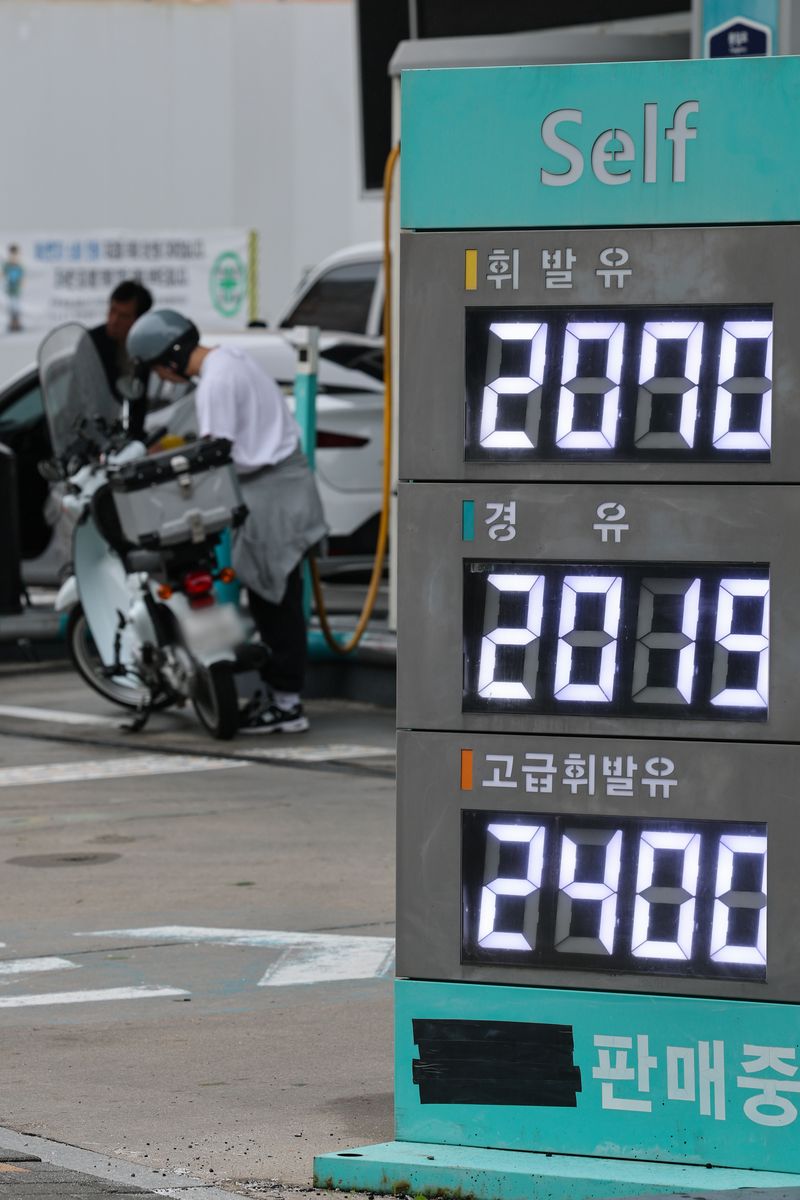
The government has frozen the oil price cap once again. With international oil prices fluctuating around $100 per barrel, it decided to keep prices in check in consideration of inflation and the burden on households, even though cumulative upward pressures remain after the cap was introduced. The government said it will combine the price cap with a fuel tax cut to reduce fuel costs for the public and ease inflationary pressure.
The Ministry of Trade and Industry said on the 21st that the sixth oil price cap, which takes effect at midnight on the 22nd, will be frozen at the same level as the fifth round. Under the new cap, gasoline will remain at 1,934 won per liter, diesel at 1,923 won, and kerosene at 1,530 won.
This marks the fourth straight time the price has been kept unchanged, following the third, fourth and fifth caps. The government said it saw no major change in Middle East conditions or global oil prices after the fifth cap was set, and therefore decided to maintain the current level.
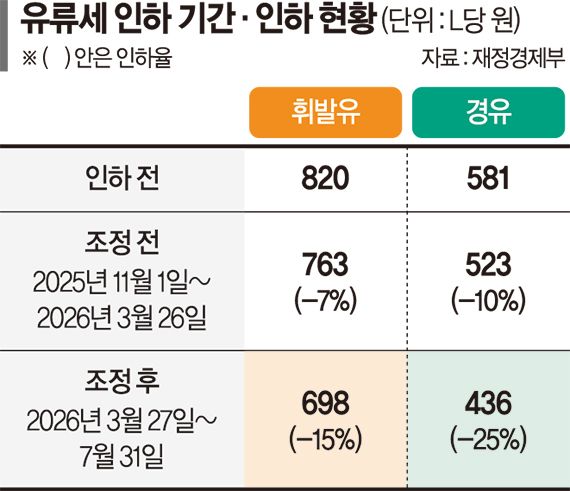
At the same time, the government will extend by two months, until the end of July, the fuel tax cut currently applied to gasoline and diesel. The tax reduction rates of 15 percent for gasoline and 25 percent for diesel, expanded in March to match the second price cap, will remain in place through July 31.
With this measure, the price reduction effect will continue to amount to 122 won per liter for gasoline and 145 won per liter for diesel. The fuel tax cut had originally been scheduled to end on the 30th.
Kim Wansu, director of the Environment and Energy Taxation Division at the Ministry of Economy and Finance, explained that the government is combining the fuel tax cut with the price cap to ease the public's fuel burden, while applying a larger reduction to diesel, which is essential for industry and logistics.
The extension also reflects concerns that crude oil supply could become unstable after August. According to the Ministry of Trade and Industry, supply disruptions are unlikely through July, but the government believes global supply conditions could tighten again after August if the war drags on.
Yang Ki-wook, director-general for Industrial and Resource Security at the Ministry of Trade and Industry, said at a briefing that "supplies are available through July, but there are views that global supply could become difficult in August." He added, "Rather than making a definitive judgment, we will closely monitor the situation, as supply pressure could intensify if the conflict is prolonged."
An exit strategy for the price cap does not appear likely anytime soon. The government says it can consider ending the cap only if stability in the Strait of Hormuz and price predictability are confirmed, even if international oil prices temporarily fall.
The government is also leaving open the possibility of adjusting how the price cap is operated. Until now, the cap has been announced every two weeks, but officials are discussing whether to lengthen the announcement cycle, as volatility in global oil prices and domestic fuel prices has eased compared with the initial stage.
[email protected] Seo Young-joon Reporter