Cho Tae-yong Sentenced to 1 Year and 6 Months in Prison in First Trial for Failing to Report Martial Law to Parliament... "Obstructed National Assembly Investigation"
- Input
- 2026-05-21 16:42:35
- Updated
- 2026-05-21 16:42:35
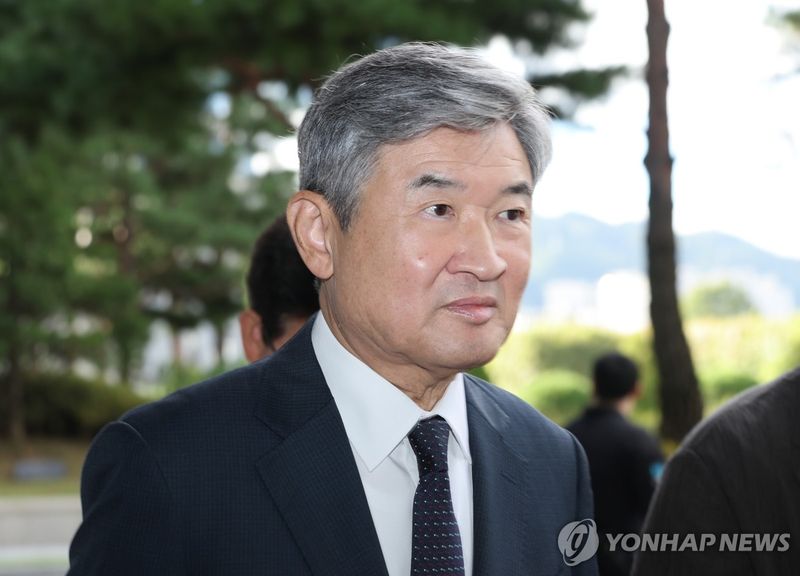
[Financial News] Cho Tae-yong, the former chief of the National Intelligence Service (NIS), who was indicted on charges including failing to report to the National Assembly despite knowing in advance about former President Yoon Suk Yeol's Dec. 3 martial law declaration, was sentenced to prison in his first trial.
The Seoul Central District Court's Criminal Division 32, presided over by Judge Ryu Kyung-jin, sentenced Cho, who had been detained and indicted on charges including violating the NIS Act's ban on political involvement and dereliction of duty, to 1 year and 6 months in prison on the 21st. Earlier, the Special Prosecutor's Office for Insurrection had asked the court to sentence him to 7 years in prison.
The court acquitted him of all NIS Act violations emphasized by the special prosecution. It said, "It cannot be ruled out that the defendant may have taken the report from former First Deputy Director Hong Jang-won as a rumor that emerged during the martial law process." It added, "Since the defendant did not receive the basic facts about the arrest of politicians from Hong Jang-won, it is difficult to say that a duty to report to the National Assembly arose merely because he was told that politicians were to be arrested." In other words, the court found that the failure to report to the National Assembly could not be treated as dereliction of duty simply because Cho did not know, based on Hong's report alone, that the arrests were ordered by Yoon.
The court also rejected the special prosecution's claim that interviews in which he said, "Yoon Suk Yeol never ordered the arrest of politicians," violated political neutrality. It said, "As the head of the NIS, the defendant's interviews were reasonable as an effort to clarify suspicions over whether the agency had received orders to arrest politicians during the martial law declaration process and to stabilize the organization."
He was also acquitted of the charge that he provided CCTV footage showing Hong Jang-won's movements only to the People Power Party (PPP). The court said it was difficult to conclude that Cho acted with the intent to engage in political activity.
He was also found not guilty of destroying evidence by deleting Hong Jang-won's secure phone information to conceal evidence related to martial law. The court explained that many related witnesses said it was difficult to locate Hong, making it hard to rule out the possibility that the deletion of secure phone data by the presidential security service was a security measure.
He was also acquitted of testifying at the National Assembly that he had never received a report about the arrest of politicians from Hong Jang-won.
However, the court found him guilty of perjury for giving false testimony before the Constitutional Court of Korea, saying he had not received any martial-law-related documents from the president, and of preparing and using false official documents under the NIS name by including those false statements in a written response.
The court explained its sentencing by saying, "At the National Assembly investigation, the defendant, as the NIS chief, should have answered as truthfully as possible to dispel public suspicions and show a responsible and reflective attitude. Instead, he forgot that duty, prepared false official documents, and submitted them to the National Assembly." It added, "In this way, the defendant made the progress and proceedings of the National Assembly investigation difficult, so the nature of his crime is not light."
Cho is accused of dereliction of duty for failing to report to the National Assembly even though he knew in advance about the plan to declare martial law before former President Yoon's address to the public. Under the NIS Act, the NIS chief must promptly report to the National Assembly's intelligence committee when a situation arises that has a significant impact on national security.
The special prosecution also said Cho's failure to report to the National Assembly after Hong Jang-won told him that "martial law troops are going around to arrest Lee Jae-myung and Han Dong-hoon" also constituted dereliction of duty.
Cho is also accused of violating his duty to refrain from political involvement by providing CCTV footage showing Hong Jang-won's movements during martial law only to the People Power Party, while not providing the Democratic Party of Korea with CCTV footage showing his own movements.
[email protected] Jung Kyung-soo, Choi Eun-sol Reporter