"It's All My Fault": Lee Jae-yong's Weekend '90-Degree Apology' ... What Path Is Starbucks Taking? [Useful Issue]
- Input
- 2026-05-22 07:50:27
- Updated
- 2026-05-22 07:50:27
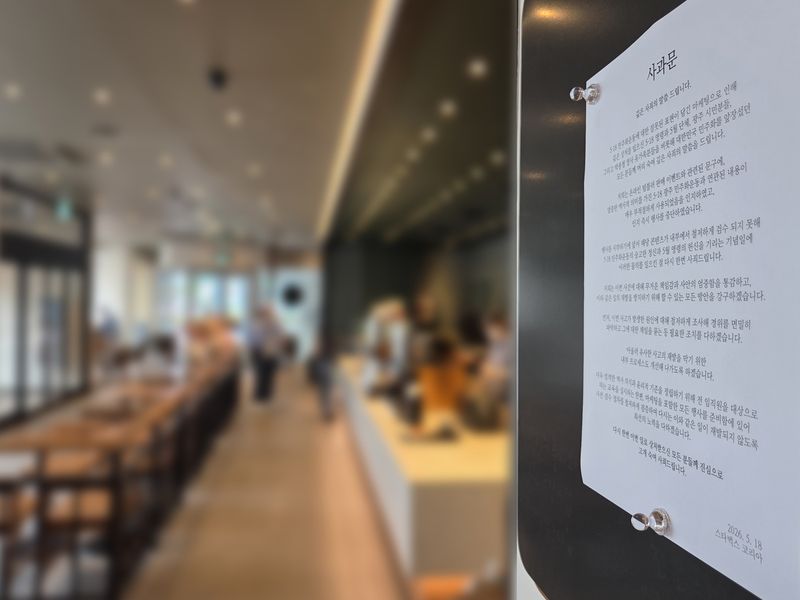
[The Financial News]"A true apology begins not with simply saying 'I'm sorry,' but with acknowledging responsibility."Aaron Lazare, an American psychiatrist and author widely regarded as an authority on the study of apologies, described an apology in his book "On Apology" not as a mere expression of regret, but as a "process of restoring trust." He also argued that apologies aimed at avoiding responsibility only intensify public anger.
That is something companies, which survive on market trust, should pay close attention to. There have already been many cases in which a company's fate was decided by how it apologized. As Lazare said, some companies recover through apology, while others instead head down a path of decline.
As of May 2026, what kind of "apology process" is Starbucks Korea going through amid fierce criticism over its so-called "Tank Day" controversy?
The power of an apology to reverse a fall

In 2009, the famous U.S. pizza chain Domino's Pizza experienced both heaven and hell because of a single video. It showed two employees in a store kitchen joking around by throwing pizza ingredients and stepping on them, then making a pizza with those ingredients and delivering it to a customer.
Within two days of being posted on YouTube, the video had drawn more than 1 million views, and American consumers were shocked. Sales plunged, and a boycott movement spread.
The headquarters realized what had happened just 15 minutes after the video went up on YouTube at 4:30 p.m. on April 12 that year and immediately moved into emergency response mode. It identified the employees involved, reported them to the police and health authorities, and asked YouTube to remove the video. It also used social networking service (SNS) channels and its website to explain that the problematic food had never been delivered to an actual customer, but the situation remained grim.
The turnaround came in less than 48 hours. J. Patrick Doyle, then the North American chief, appeared in an apology video himself.
On YouTube, the same platform where the problem video had been posted, he acknowledged flaws in the hiring process for the employees involved and promised, "We will strengthen ethics training and improve our management system so this never happens again." More than 650,000 people watched the video. Given the social media environment 17 years ago, it was a quick response.
Doyle did not stop there. He also appeared in a campaign video called "Pizza Turnaround." In the video, consumers complain about Domino's Pizza, calling it "the worst pizza" and saying "the dough feels like paper," after which Doyle appears and says once again, "We realized that we had to change in order to survive."
The kind of self-deprecating campaign produced an unexpected effect. Sales, which had fallen sharply, began to recover, and consumer trust returned.
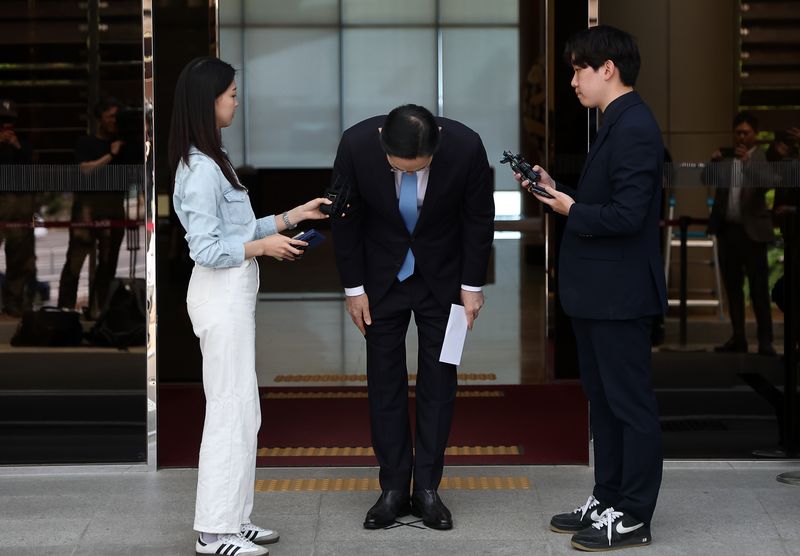
A model case of apology also emerged more recently, when Lee Jae-yong bowed his head personally during a labor dispute at Samsung Electronics.
Returning from an overseas trip on the 16th, Lee said, "I apologize to customers and people around the world for the anxiety and concern caused by internal company issues," adding, "I will take the harsh wind and rain myself and accept all the blame."
With a general strike just five days away, the fact that the owner himself directly took responsibility made the timing and the messenger of the apology especially clear.
There are rules and principles to apologizing
The responses from Domino's Pizza and Samsung Electronics are model examples of how companies should apologize. Academic institutions and researchers who study corporate apologies have also described similar approaches.
The first rule companies should follow is that the faster, the better. In the age of social media, while a company remains silent, consumers interpret the meaning of an incident on their own, and anger can quickly harden into distrust.
A 2026 study published in the Journal of the Korean Society of Sports Industry and Management also found that the timing of an apology has a major impact on public reaction. It explained that apologies made before negative information is disclosed, or in the early stages, are much more likely to be seen as sincere.
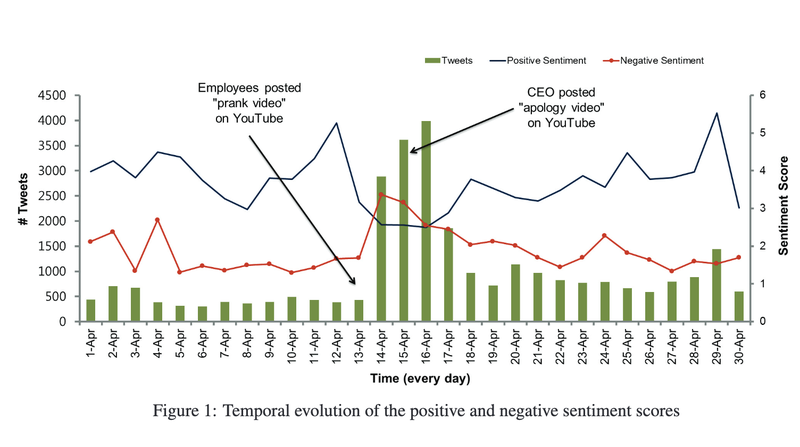
A paper titled "Managing Bad Reviews in Social Media: A Case Study of the Domino's Pizza Crisis," published in the proceedings of the 2012 International AAAI Conference on Weblogs and Social Media (ICWSM), also discussed how the "time" needed for companies to apologize for mistakes has changed in the online environment. The paper was co-authored by Park Jaram, Meeyoung Cha, Kim Ho, and Jaeseung Jeong of the KAIST Graduate School of Culture Technology.
The paper stated, "In the past, companies took a long time to apologize for mistakes, but today they respond much faster," and added, "As social media has played an important role in spreading bad news and crisis communication, corporate CEOs have begun using social media to respond to corporate crises, including apologizing through YouTube."
One of the examples it cited was Doyle's apology video for Domino's Pizza. It also showed how sales recovered afterward.
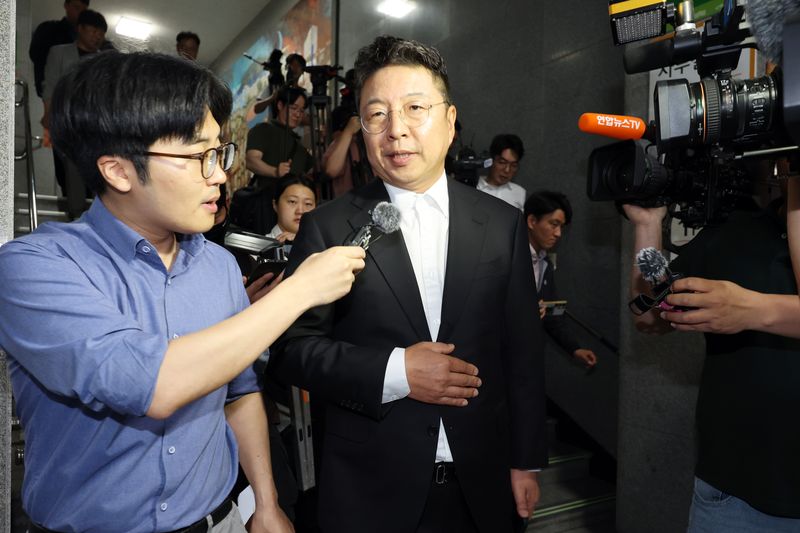
The second rule is that the person responsible must speak directly. A representative case of making the problem worse by failing to follow this rule was the 2013 Namyang Dairy Products scandal. At the time, Namyang Dairy Products held a public apology press conference after allegations grew over abusive language by sales staff and forced sales practices. But Chairman Hong Won-sik did not appear, drawing public criticism.
Media outlets at the time said, "The owner did not attend, and management claimed the headquarters knew nothing, further provoking franchise owners and consumers," and, "The real person responsible hid behind the scenes."
The Namyang Dairy Products scandal later grew beyond a simple abuse-of-power controversy and turned into a long-term boycott.
The final rule is not to mix excuses into an apology.
The apology people want to hear is not "why it was unavoidable," but "what was wrong and how will it be fixed." Explanations are necessary, but if they come before the apology, they can be taken as excuses. The 2014 Korean Air "nut rage" incident was a case in which an apology only fueled more anger.
At the time, Korean Air said in its apology statement that "it was excessive to have the aircraft return and remove a flight attendant even though there was no emergency." The problem was the explanation added to the apology. The statement also included an explanation that the aircraft had moved less than 10 meters from the boarding bridge, so there was no safety issue, along with an assertion that the criticism by then-vice president Heather Cho was "only natural," which deepened the controversy.
Starbucks Korea's speed, but little else
Starbucks Korea's recent "Tank Day" controversy over May 18 is also likely to remain a lasting example of a poorly handled apology. Everything from the response to the apology was fast, but critics say it lacked the "who" and the "how."
Starbucks drew fierce criticism after using promotional phrases such as "Tank Day" and "Bang on the desk!" on the anniversary of the May 18 Democratic Uprising. It quickly revised and deleted the phrases as the controversy grew, but its initial apology merely acknowledged the inappropriateness without explaining the circumstances.
There was also an explanation that the issue arose because young employees who did not know about May 18 had planned the event.
Only after the controversy escalated did the company issue an apology in the name of the CEO and announce measures to prevent a recurrence, including employee training. Even then, the public still said it was not enough. In particular, criticism continued that it was a half-hearted apology.
President Lee Jae-myung criticized the Starbucks event on social media and said, "Appropriate moral, administrative, legal, and political responsibility should be imposed accordingly," then asked, "Have you apologized to the victims and bereaved families of May 18?"
The May 18 Foundation also called for a sincere apology and measures to prevent a recurrence, saying the event amounted to "distortion of history and trivialization."
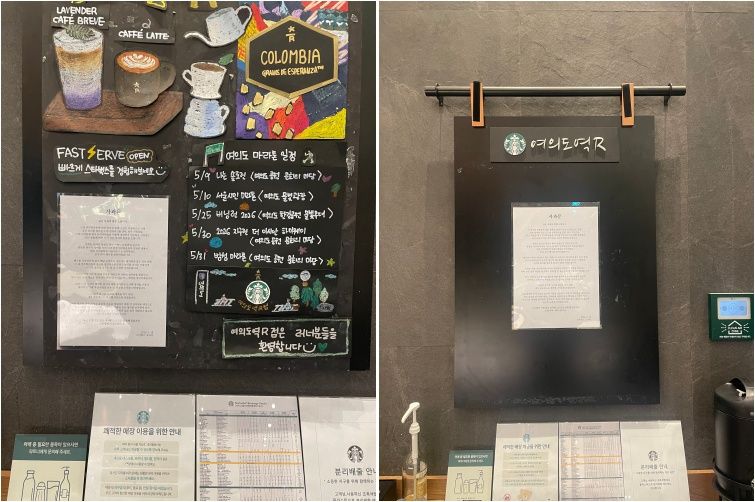
In the end, Chairman Chung Yong-jin dismissed the CEO of Starbucks Korea along with the apology statement.
Follow-up measures were also taken. A vice president of Shinsegae Group visited Gwangju in person, and the placement of the apology notice in the store was changed. The notice, which had initially been posted alongside promotional banners, is now hung in the center of the board.
Even so, public sentiment remains cold.
The method of apologizing is not complicated. Admit the mistake quickly, have the person in charge speak directly, and present measures that victims can accept.
Starbucks acknowledged the issue relatively quickly, but Chairman Chung, who is ultimately responsible, has only issued a written apology and has not appeared in person. The later the apology, the higher the cost. And an insincere apology can provoke even more anger than no apology at all.
The companies that came before have already shown the answer.
[email protected] Seo Yoon-kyung Reporter