Foreign media rush to report Samsung Electronics strike delay..."Global market jitters ease somewhat"
- Input
- 2026-05-21 06:32:52
- Updated
- 2026-05-21 06:32:52
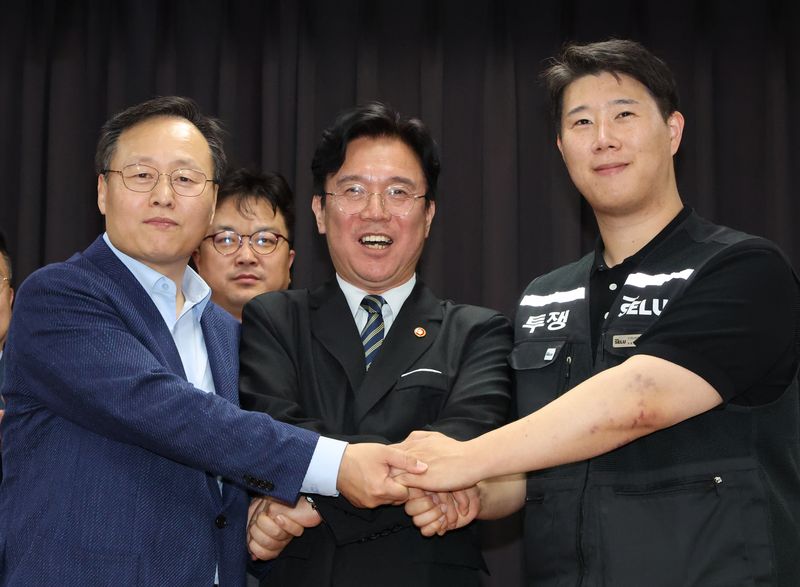
[Financial News] As Samsung Electronics management and labor reached a tentative agreement on the wage deal and abruptly put strike plans on hold, major foreign media outlets quickly reported the news and focused on its impact on the global semiconductor supply chain. They also said the easing of concerns over production disruptions at Samsung Electronics, the world's largest memory chip maker, could help calm market jitters somewhat.
The Associated Press (AP) quickly reported on the 20th that Samsung Electronics' union had suspended its planned strike, saying that "concerns surrounding operations at the world's largest memory chip maker have eased somewhat." The report noted that labor-management tensions at Samsung Electronics had been a major market concern, as stable memory chip supply has emerged as a key variable across global industries amid rising demand for Artificial Intelligence (AI).
Agence France-Presse (AFP) also reported that "concerns over possible disruptions to semiconductor production had grown, but the union decided to postpone the planned strike until further notice," adding that the tentative wage agreement would be put to a vote by union members.
It also pointed out that the union had been set to begin striking on Thursday after talks over bonuses broke down.
The Wall Street Journal (WSJ) also reported that Samsung Electronics management and union leaders reached a tentative agreement on bonus payments after last-minute negotiations. The WSJ said, "A deal was struck dramatically just hours before the strike was due to begin," explaining that morning talks had failed to produce an agreement, but further negotiations followed with mediation from South Korea's labor minister, leading to a final settlement.
The WSJ also cited pressure from the South Korean government as one reason the deal was reached. It said both sides felt the strain after the government suggested it could invoke emergency mediation powers if talks collapsed, signaling a hard-line response to prevent a prolonged strike.
Foreign media also noted that the key issue in the talks was how to distribute performance bonuses amid Samsung Electronics' sharp earnings improvement. As expectations grew for better results on the back of rising demand for High Bandwidth Memory (HBM) for AI servers and a recovery in the memory market, the union had been demanding compensation in line with those gains.
AFP also highlighted that the labor dispute unfolded alongside the AI boom. It explained that as South Korean chipmakers have emerged as key beneficiaries of growth in the AI industry, driving national economic growth and gains in the domestic stock market, the possibility of production disruptions at Samsung Electronics had fueled market anxiety.
Some analysts said that even if a strike had actually taken place, the production impact would likely have been limited. Tom Hsu, an analyst at TrendForce, told AFP that "because the level of automation in front-end facilities is very high, DRAM and NAND flash memory production at Samsung Electronics would likely have continued operating normally."
He added, "The potential impact of the strike was likely to be concentrated in the non-memory semiconductor business rather than memory."
[email protected] Seo Yoon-kyung Reporter