Trump administration indicts former Cuban President Castro on murder charges
- Input
- 2026-05-21 04:30:50
- Updated
- 2026-05-21 04:30:50
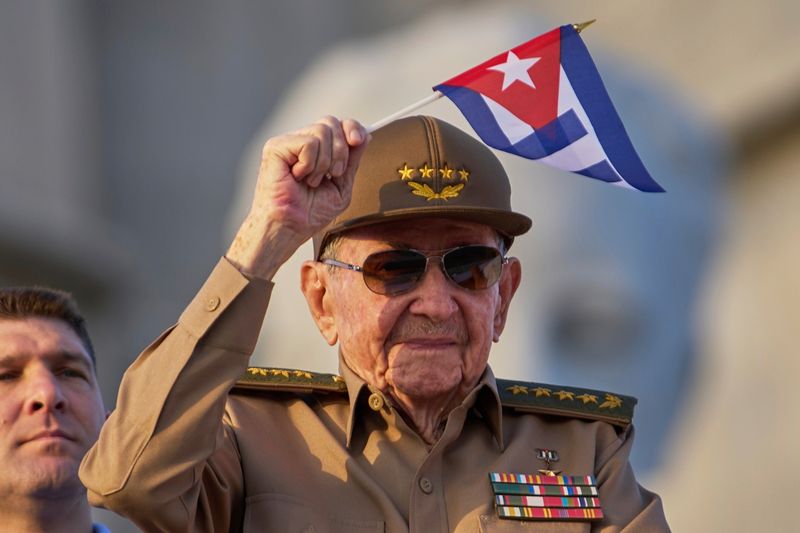
The Trump administration on the 20th, local time, indicted former Cuban President Raúl Castro, who also served as president of the Council of State, on murder charges.
After ordering the arrest and extradition of Venezuelan President Nicolás Maduro Moros on drug trafficking charges in January, President Donald Trump has now targeted Castro, a symbolic figure in Cuba. The move is seen as an effort to pressure Cuba through the indictment and bring it to the negotiating table.
Citing the indictment filed with the court, The Wall Street Journal (WSJ) reported that U.S. federal prosecutors charged Castro with murder, conspiracy to kill Americans, and destruction of an aircraft.
Raúl Castro, the younger brother of Fidel Alejandro Castro Ruz, the "father of the Cuban Revolution," took over his brother's power in 2006, became president of the Council of State in 2008, and formally retired in 2021. He is still widely regarded as Cuba's symbolic leader and a powerful figure behind the scenes.
Castro is accused of involvement in the 1996 downing of a civilian aircraft operated by the humanitarian group Brothers to the Rescue while he was defense minister. Three Cuban American citizens and one permanent resident were killed in the incident.
The indictment signals a tougher U.S. stance toward Cuba. Marco Rubio, the U.S. Secretary of State who is also of Cuban descent, is said to be leading the hard-line approach.
The indictment announcement by Acting Attorney General Todd Blanche drew cheers from Cuban Americans. According to WSJ, Blanche received a standing ovation after saying, "The U.S. government has not forgotten the innocent people who were shot down and killed in the sky." He announced the indictment at Miami's Freedom Tower, where processing was carried out for hundreds of thousands of Cuban refugees in the 1960s.
Brian Fonseca, a professor at Florida International University, said the indictment suggests the United States is preparing additional measures beyond its existing economic and political pressure on Cuba.
However, the prevailing view is that the additional steps will not amount to a "Castro arrest operation" like the one used against Maduro in Venezuela. Former and current U.S. officials said the 95-year-old Castro is unlikely to be extradited to or arrested by the United States. The indictment itself is expected to be used as a practical pressure tool.
Some analysts, however, see the indictment as a misstep. They argue that it only narrows Cuba's room to negotiate by yielding to the United States.
Jorge Castañeda, a former foreign minister of Mexico, said, "The indictment gives Cubans another reason not to yield to the United States." He added that Cuba would resist to the end because it cannot accept Raúl Castro's extradition to the United States.
[email protected] Song Kyung-jae Reporter