Fed FOMC Minutes: "If the Iran War Continues, Interest Rates Could Be Raised"
- Input
- 2026-05-21 03:52:43
- Updated
- 2026-05-21 03:52:43
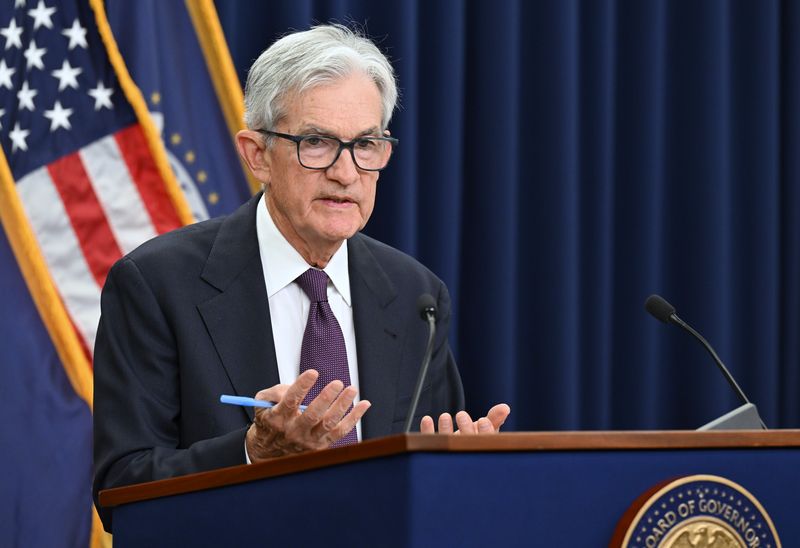
It was confirmed on the 20th, local time, that the Federal Reserve (Fed) is considering an interest rate hike.
According to the minutes of the Federal Open Market Committee (FOMC) meeting held on the 28th and 29th of last month, more than half of the committee members concluded that rates should be raised if the Iran War continued and fueled inflation.
At the time, the FOMC kept the benchmark rate unchanged at 3.50% to 3.75%. However, four members dissented from the FOMC statement. That was the largest number of dissenting votes in 34 years, since 1992. Excluding one member who argued for a rate cut, the other three opposed a statement that signaled a cut would be the Fed's next move.
According to the minutes, the main focus of the meeting was the impact of the Iran War on prices and monetary policy. Members debated how long the shock from the war would last and whether to keep a statement that said the "next move is a rate cut."
The minutes said some participants argued that a rate cut would be appropriate if inflation improved toward the Fed's 2% target or if the labor market weakened, but most did not agree. According to the minutes, "many participants said some firming of monetary policy would be appropriate if inflation continued to run above 2%."
The minutes also suggested that while three regional Federal Reserve Bank presidents voted against a statement tilted toward further cuts, many of the members who supported it were also uncomfortable with leaning too heavily toward additional easing. The minutes said, "many participants said they would have preferred to remove language from the statement suggesting that future rate decisions were tilted toward easing."
CNBC noted, however, that in the Fed context, the word "many" does not mean a majority, and said that this is why the statement was still seen as leaning toward further cuts.
The minutes also said participants agreed that the Iran War was having a "significant impact" on the Fed's dual mandate of maximum employment and price stability. Still, they disagreed on how long that impact would last.
Last month's FOMC meeting was the final one chaired by Jerome Powell. Kevin Warsh, who has been reported to have promised Donald Trump a rate cut, is expected to lead Fed monetary policy starting with the FOMC meeting on the 16th and 17th of next month.
However, markets expect the Fed's next move to be a rate hike.
A 0.25 percentage point rate increase is expected by the end of this year or early next year.
That is because the Iran War launched by President Donald Trump has led to a blockade of the Strait of Hormuz, pushed global oil prices up by 50%, and reignited inflationary pressure.
[email protected] Song Kyung-jae Reporter