[International Oil Prices] Down 5%... WTI Falls Below $100
- Input
- 2026-05-21 02:19:28
- Updated
- 2026-05-21 02:19:28
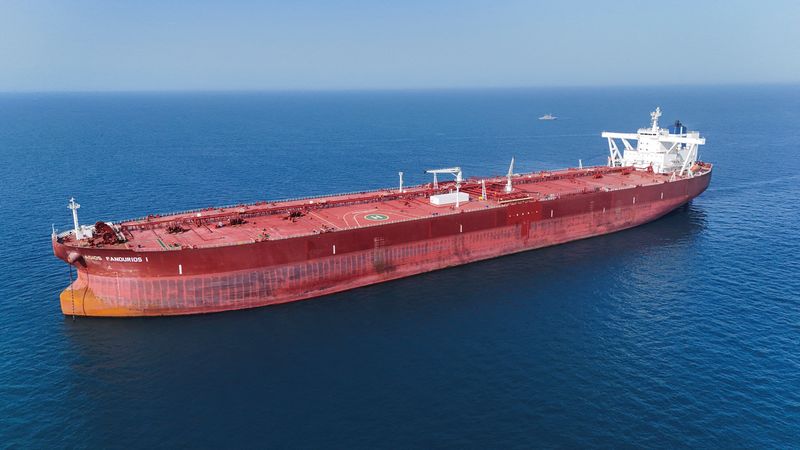
International oil prices fell sharply by more than 5% on the 20th local time.
Brent Crude Oil for July delivery, the global benchmark, closed down $6.35, or 5.70%, at $105.02 per barrel.
West Texas Intermediate crude oil (WTI) for July delivery, now the U.S. benchmark front-month contract, fell below the $100 mark. WTI for July delivery ended the session down $5.89, or 5.66%, at $98.26 per barrel.
The Financial Times (FT) reported that oil prices were dragged lower as expectations grew that the Strait of Hormuz would remain open after three very large tankers carrying crude from the Persian Gulf region passed through the waterway en route to Asia on the day.
According to maritime data, two of the three very large tankers are carrying Iraqi crude to China, while the other is transporting Kuwaiti oil to South Korea. The three vessels are moving while publicly disclosing their locations and destinations.
Unlike previous attempts to slip through quietly with radios turned off after the Iran war blocked the strait, this time they are moving openly with Iran's approval.
FT said the three tankers are carrying 6 million barrels of crude oil. That would make it the largest daily passage since the start of the Iran war on Feb. 28.
The tankers turned north through the Strait of Hormuz along a route designated by Iran. Matt Wright, a senior analyst at shipping data provider Kpler, said, "It is most likely that an agreement with Iran on the passage was reached."
Another shipping data company, Windward, noted that the tankers are approaching the strait after Iran launched a new agency two days earlier to oversee the Strait of Hormuz and collect transit fees.
Windward said the Strait of Hormuz is "no longer a blocked passage," but has become an environment where "access is tiered and competition for passage is intense" under the control of both the United States and Iran.
Iran claimed on the 20th that 26 vessels had passed through the strait in the previous 24 hours.
According to Kpler, excluding the three very large tankers now awaiting passage, six very large tankers have passed through the Strait of Hormuz and headed to Asia this month. Nearly 17 million barrels of crude oil have passed through.
Wright of Kpler said it is too early to conclude that oil supply from the Persian Gulf region will increase simply because the three tankers are currently passing through the strait, adding that the situation needs to be watched more closely.
He said, "Only a very small number of negotiated passages have taken place, so little has actually changed," and added, "The real test will be whether more tankers bound for China or South Korea are allowed through."
Meanwhile, U.S. President Donald Trump also helped push oil prices lower by saying that talks with Iran were in their final stage.
[email protected] Song Kyung-jae Reporter