China Keeps Its 'De Facto' Benchmark Rate Unchanged for 12 Straight Months... No Rush to Cut
- Input
- 2026-05-20 13:07:35
- Updated
- 2026-05-20 13:07:35
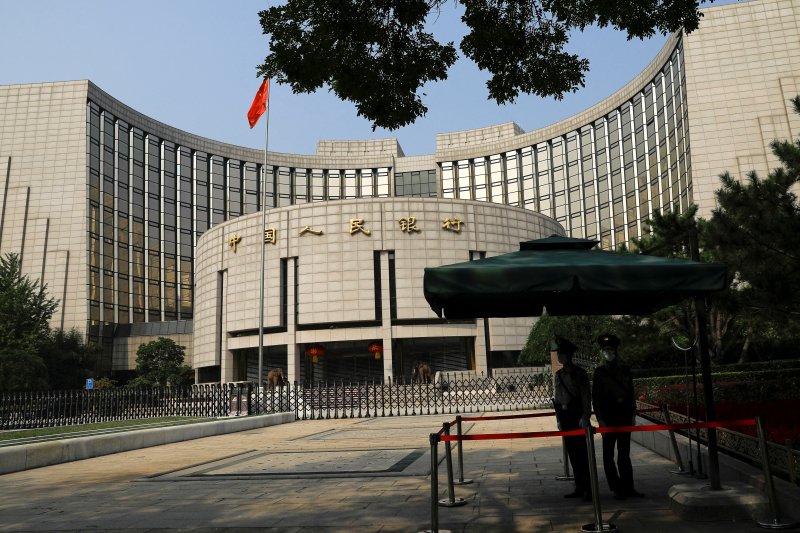
[Financial News] China's central bank, the People's Bank of China (PBC), kept the Loan Prime Rate (LPR), which serves as the country's de facto benchmark interest rate, unchanged for the 12th consecutive month. Markets said the move was widely expected, adding that authorities appear to be keeping rate cuts in mind but are in no hurry.
According to Xinhua News Agency and other local media, the PBC said in a statement on the 20th that it would keep the one-year LPR, which serves as the benchmark for general loans, at 3%, and the five-year LPR, which is used as the mortgage benchmark, at 3.5%. The PBC officially sets the one-year loan rate as a benchmark rate, but it has not adjusted it since changing it to 4.35% in 2015. Instead, it uses the LPR, introduced in 2013, as its de facto benchmark rate and reflects market conditions in its rate decisions. In China, 20 major commercial banks submit their own lending rates each month to the National Interbank Funding Center, taking into account funding costs and risk premiums. The PBC then reviews the compiled LPR and announces it.
China cut the LPR by 0.25 percentage points in October 2024 to help offset weak domestic demand and a sluggish property market. It then lowered it by another 0.1 percentage point in May last year before keeping it unchanged since then.
The Chinese government appears to be maintaining its easing bias, but without rushing. At a meeting last month, the Politburo of the Central Committee of the Communist Party of China called for a "systematic response" to external challenges, including the Iran War. At the same time, it reaffirmed the need to "precisely and effectively implement a more proactive fiscal policy and an appropriately accommodative monetary policy." On monetary policy in particular, it called for greater foresight, flexibility, and targeting, while maintaining ample liquidity.
China's Gross Domestic Product (GDP) grew 5% in the first quarter, outpacing the previous quarter's 4.5% growth. Key indicators such as industrial output and trade also showed relatively solid performance. As a result, market sentiment is broadly that there is little need for additional monetary easing. Some foreign media outlets also noted that banks in China are now seeing profitability at record lows, leaving little reason for them to lower the LPR further.
[email protected] Park Jong-won Reporter