South Korea and the United States Agree to Hold 'Kickoff' Security Consultations; U.S. Delegation to Visit Seoul Within Weeks
- Input
- 2026-05-20 07:34:40
- Updated
- 2026-05-20 07:34:40
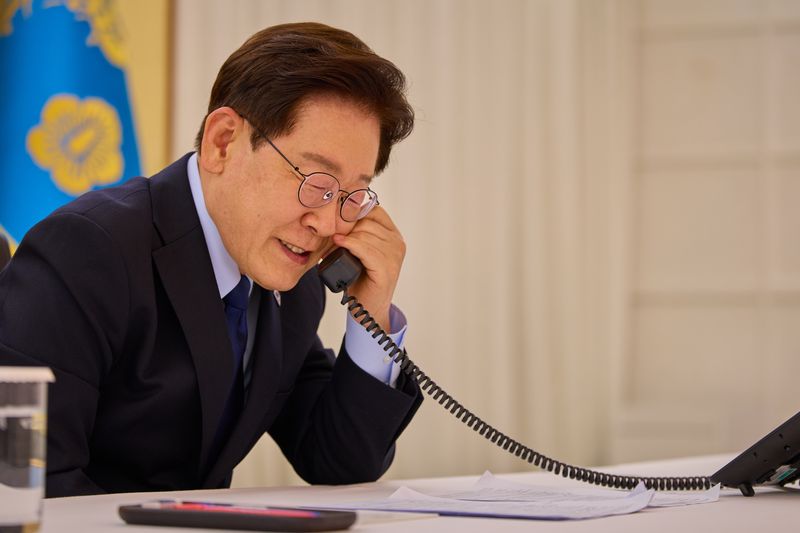
The move is drawing attention to whether progress will be made on major security issues agreed by the two leaders, including South Korea's plan to build nuclear-powered submarines. It is also unclear whether U.S. restrictions on sharing North Korea-related intelligence, triggered by a leak controversy involving Unification Minister Jung Dong-young, will be lifted.
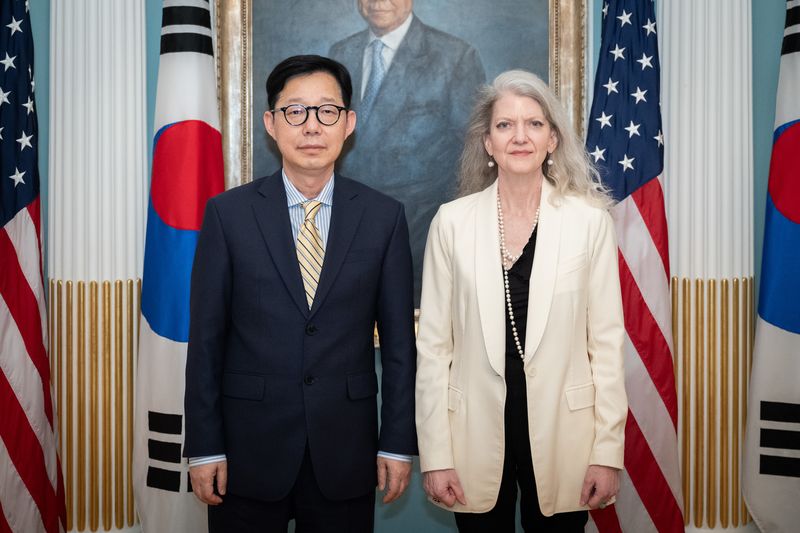
First Vice Foreign Minister Park Yoon-joo met with Hooker on the 19th local time and reached the agreement. The two sides also exchanged views on the overall ROK-U.S. relationship, including implementation of the summit's Joint Fact Sheet, issues on the Korean Peninsula, and regional and global developments.
Earlier, Defense Minister Ahn Gyu-back visited the United States for the first time since taking office and held talks with U.S. Defense Secretary Pete Hegseth in Washington, D.C. on the 11th. However, the meeting produced no notable progress on nuclear-powered submarine construction or the restoration of intelligence sharing between South Korea and the United States on North Korea.
Park and Hooker discussed ways to further develop bilateral ties, including security and economic cooperation between South Korea and the United States. Both sides reaffirmed that the ROK-U.S. Alliance is a key pillar for peace and prosperity in the Indo-Pacific region, extending beyond the Korean Peninsula.
Hooker emphasized the United States' firm defense commitment to South Korea, including extended deterrence. Park and Hooker also assessed that economic, trade, and investment cooperation for the prosperity of both peoples has been making progress, and agreed to work closely together on current trade issues under discussion.
The two officials also held in-depth discussions on Korean Peninsula issues and regional and global developments. Park explained the main outcomes of the South Korea-Japan summit in Andong and reaffirmed the government's commitment to strengthening South Korea-Japan relations and trilateral cooperation with the United States. They also reaffirmed the importance of freedom of navigation in international waterways, including the Strait of Hormuz, and agreed to maintain close communication between Seoul and Washington to that end.
Park also said the two sides should sustain momentum in high-level exchanges over the next two to three months by using various opportunities to strengthen strategic communication within the alliance.
Before meeting with Hooker that day, Park met with Andy Baker, a deputy assistant to the U.S. National Security Council, and other NSC officials.
Park called for close communication between the two countries to ensure the swift and smooth implementation of the JFS. Baker said the NSC would also actively support related consultations. The two sides also exchanged views on the recent U.S.-China summit, the South Korea-Japan summit, the Korean Peninsula, and the situation in the Middle East.