U.S. Treasury Yields Hit Highest Level Since the Financial Crisis... China and Japan Lead the Sell-Off
- Input
- 2026-05-20 02:59:40
- Updated
- 2026-05-20 02:59:40
\r\n
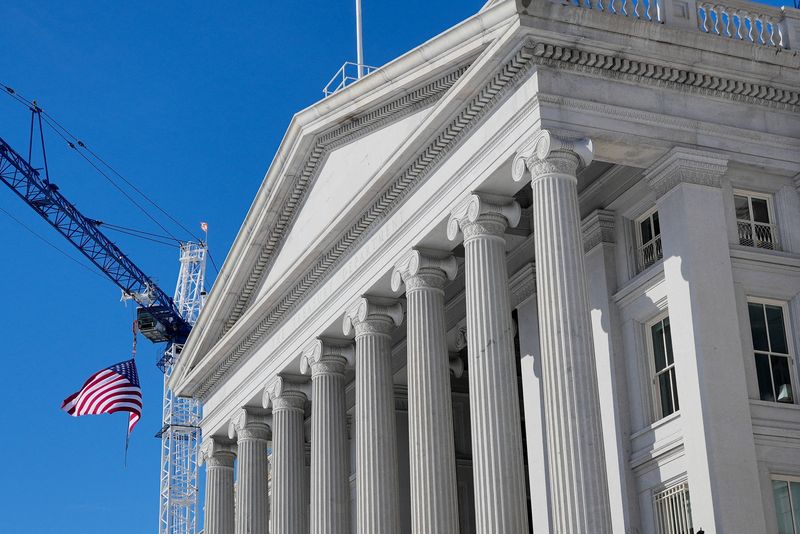
Analysts said China and Japan are behind the sharp rise in U.S. Treasury yields.
U.S. Treasury yields, which move inversely to prices, jumped on the 19th local time, with the 30-year yield soaring to 5.19%, the highest level since the 2007 financial crisis.
Bond selling has pushed prices down, which in turn has sent yields higher.
\r\n
Long-term Treasury yields hit their highest level since the financial crisis
\r\nWhile short-term yields on one-month, three-month, and six-month Treasuries fell, longer-term yields, including the benchmark 10-year note, continued to rise.
The 10-year yield jumped 0.06 percentage points from the previous session to 4.687%, briefly reaching its highest level since January last year before narrowing its gain to 0.024 percentage points.
The 2-year yield rose by more than 0.05 percentage points to as high as 4.127%. The 2-year yield is highly sensitive to market expectations for Fed policy.
The 30-year yield, the benchmark for long-term rates, surged by about 0.06 percentage points early in the session to 5.198%, its highest level since July 2007.
By contrast, buying interest in short-term Treasuries pushed yields lower.
The one-month yield fell 0.039 percentage points to 3.614%, while the three-month yield slipped 0.01 percentage points to 3.668%. The six-month yield also edged down 0.008 percentage points to 3.728%.
\r\n
China and Japan lead U.S. Treasury selling
\r\nCNBC, citing U.S. Department of the Treasury data, reported that China and Japan have been leading the selling since the Iran War began on Feb. 28.
According to data released late on the 18th by the Treasury Department, China cut its U.S. Treasury holdings by about 6% in March, reducing them to $652.3 billion. That is the lowest level since September 2008.
April data will be released in June.
Japan, the largest holder of U.S. Treasuries, also sold about $47 billion worth of U.S. Treasuries during the period, reducing its holdings to $1.191 trillion.
Foreign holdings of U.S. Treasuries, which stood at $9.49 trillion in February when the Iran War began, fell 2.5% month on month to $9.25 trillion in March.
\r\n
To defend their currencies amid the Iran War
\r\nForeign selling of U.S. Treasuries is closely tied to the Iran War.
As oil prices surged and the currencies of these energy-importing countries weakened, they sold U.S. Treasuries to intervene in foreign exchange markets.
Frederic Neumann, chief Asia economist at HSBC Holdings plc, said, "Given the heightened financial volatility since the outbreak of the war in the Persian Gulf region and the resulting currency pressure in Asia, it is no surprise that central banks are reducing their U.S. Treasury holdings."
Neumann added, "Foreign-exchange intervention to support domestic currencies is ultimately prompting some central banks to reduce the share of U.S. Treasuries in their portfolios."
Experts expect the April data, due next month, to show how far central banks are willing to go to stabilize their currencies.
\r\n
Preparing for an inflationary environment
\r\nExchange rates are not the only factor driving the selling.
As the Iran War pushes oil prices higher and rekindles inflation, expectations that the Fed will pivot toward rate hikes are also encouraging bond sales.
If the Fed is expected to raise rates, U.S. Treasury prices are bound to fall, making portfolio adjustments unavoidable.
Foreign investors were estimated to have suffered unrealized losses of as much as $142.1 billion on their U.S. long-term Treasury holdings in March alone.
Neumann said central banks, anticipating greater foreign-exchange volatility in the changed market environment, are selling U.S. Treasuries while increasing their cash-like assets so they can intervene in the market at any time.
dympna@fnnews.com Song Kyung-jae Reporter