K-Robotic Surgery Sets New Records, but Domestic Platforms Struggle to Gain Ground
- Input
- 2026-05-19 18:28:06
- Updated
- 2026-05-19 18:28:06
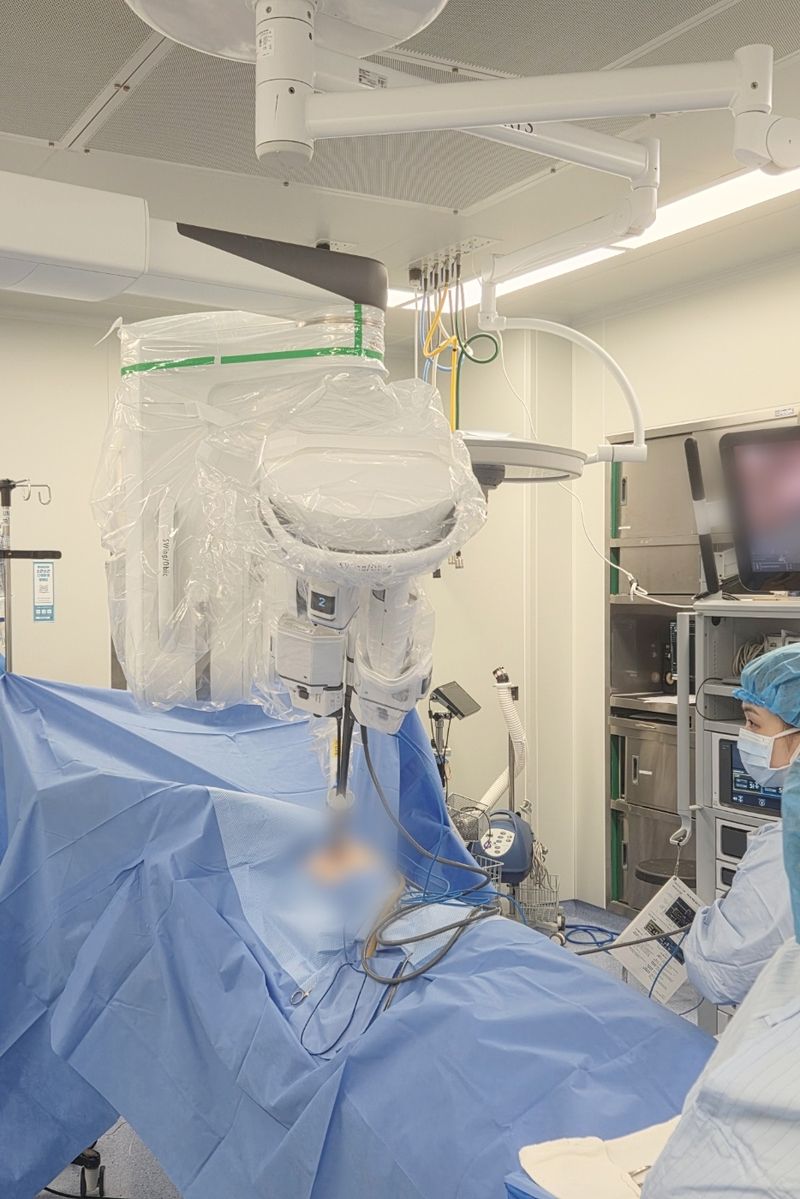
According to industry sources on the 19th, major hospitals in South Korea have expanded the use of robotic surgery mainly for prostate cancer, thyroid cancer and stomach cancer. More recently, they have also broadened its application to lung cancer and thoracic diseases.
Two of the most notable areas are thyroid cancer and stomach cancer surgery. Korean medical teams have developed robotic approaches for thyroid cancer that do not require a direct incision in the neck. In stomach cancer robotic surgery as well, South Korea is regarded as one of the countries with the most extensive surgical experience worldwide.
The Catholic University of Korea, Seoul St. Mary's Hospital recently reached 20,000 robotic surgery cases, underscoring the country's competitiveness in the field. About 20% of its surgeries are performed using single-port robotic surgery, and a large share of those procedures are applied to cancer treatment, allowing the hospital to build extensive clinical experience in highly complex cancer operations. Earlier, in 2022, the hospital became the fastest in South Korea to reach 10,000 robotic surgery cases.
Incheon Sejong Hospital has also advanced its technology by expanding the use of single-port robotic surgery beyond the abdomen into the thoracic area. Last month, the hospital said it performed a single-port pneumothorax surgery combining the da Vinci SP robot and an intelligent stapler.
Pneumothorax surgery is a highly difficult procedure that requires removing and suturing lung lesions within a narrow chest cavity. It is usually performed by inserting surgical instruments through several incisions. This operation was considered significant because the entire procedure was completed through just one incision.
Still, South Korea’s robotic surgery industry remains heavily dependent on overseas platforms. At present, the domestic market is overwhelmingly dominated by Intuitive Surgical’s da Vinci system. Companies such as Curexo, Koh Young Technology and Mirae Corporation are developing surgical robot platforms in South Korea, but their influence in the global market is still limited.
Even so, the medical community expects South Korea’s robotic surgery competitiveness to grow further. An industry official said, "South Korea is already regarded as one of the world’s leading countries in robotic surgery techniques and clinical experience." The official added, "If domestic platforms also become competitive, the country could further strengthen its edge in both medical technology and the industry."
[email protected] Jung Sang-hee Reporter