Uber Eyes Baemin, Bringing Naver In as Second-Largest Shareholder to Soften Its Foreign-Company Image
- Input
- 2026-05-19 18:25:14
- Updated
- 2026-05-19 18:25:14
■ Uber secures DH stake and moves to acquire Baemin directly
According to the information technology industry on the 19th, Uber is increasing its stake in Germany's Delivery Hero while also accelerating efforts to acquire Baemin in South Korea. It was recently reported that Uber formed a consortium with Naver and submitted a letter of intent to buy a stake in Baemin. In response, Naver issued a clarification disclosure on the 19th, saying, "We are reviewing various options to strengthen our business competitiveness, but nothing has been decided yet." It added, "We will make another disclosure once specific details are finalized or within one month."
The two companies are said to have proposed an acquisition price of up to 8 trillion won to Delivery Hero. If the deal goes through, it would require merger notification and review by the Fair Trade Commission, as well as foreign investment filings. Under current law, a business group must report a merger to the KFTC if it comes to own 20% or more of another company's total outstanding shares. However, if Naver's stake is set at 19.9%, just below the regulatory threshold, some of the compliance risk could be addressed in advance.
If this plan is realized, Uber would bring in Naver, South Korea's largest platform company, as a second-largest shareholder. That would help secure management control while also easing concerns over foreign capital dominating the domestic market and softening scrutiny from regulators. Uber has recently shifted its strategy toward acquiring leading local players with large amounts of capital after its direct-entry platforms, such as Uber Eats and Uber Taxi, were overtaken by local rivals. In fact, Uber withdrew its own delivery platform, Uber Eats, from the Korean market in 2019.
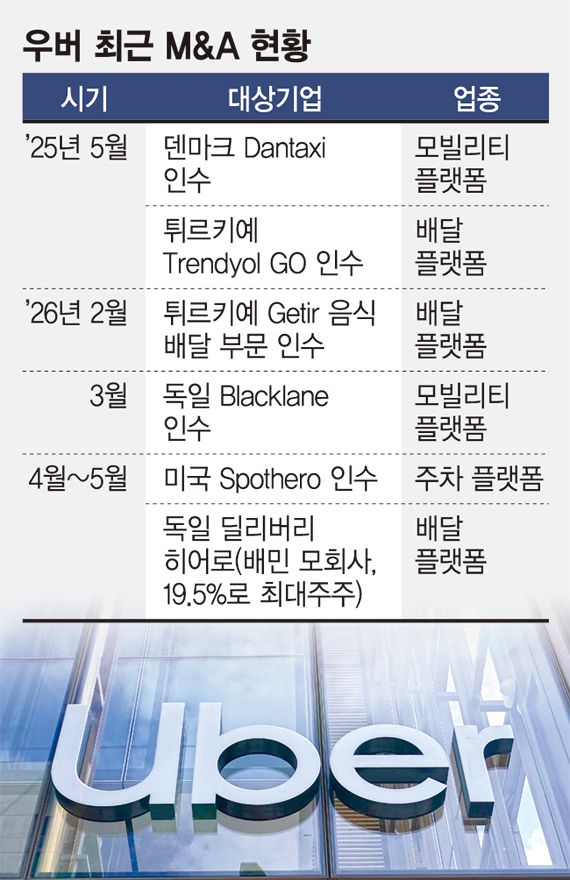
In addition, South Korea's delivery market, with annual transaction volume of about 40 trillion won, ranks among the world's top five and is estimated to be the largest relative to population. That makes it a market Uber cannot afford to give up as it seeks to expand its influence in the global mobility and delivery sectors. Beyond Baemin, Uber has also been aggressively buying stakes in related platforms around the world. Last May, it acquired an 85% stake in Turkey's delivery platform Trendyol Go and also secured control of Danish taxi operator Dantaxi.
■ Naver alliance could also create synergy
Naver could also benefit from synergies in commerce if the stake acquisition is completed. By linking its powerful lock-in ecosystem, Naver Plus Membership and Naver Pay, with Baemin, it could expand into quick commerce. Greater influence in the delivery market would allow Naver to build a business portfolio similar to that of Coupang, one of its strongest competitors in the commerce ecosystem, while also creating additional revenue models through the collection of related data. Naver, which has been posting strong gains in commerce, has recently been expanding its distribution and delivery network through partnerships with companies such as Kurly Inc.
Analysts also say the interests of the three companies have aligned as Delivery Hero faces the need to restructure its global business. In March, Delivery Hero sold its Taiwanese delivery platform Foodpanda to Grab. Woowa Brothers, Delivery Hero's key profit engine, continued to grow last year, posting revenue of 5.283 trillion won, but operating profit has been declining. Baemin's operating profit fell 7% year on year to 592.9 billion won last year, marking a second straight year of decline. Given intensifying price competition in the domestic market and regulatory risks surrounding delivery apps, the deal could give Delivery Hero an opportunity to streamline its Asian portfolio.
There is also analysis that Uber's expanded stake in Delivery Hero, which would make it the largest shareholder, has given fresh momentum to mergers and acquisitions around the world.
[email protected] Joo Won-kyu Reporter