President Lee Says Korea and Japan Will Strengthen Cooperation on Supply Chains, LNG and Crude Oil; Takaichi Says Energy Security Will Be Jointly Reviewed
- Input
- 2026-05-19 17:27:01
- Updated
- 2026-05-19 17:27:01
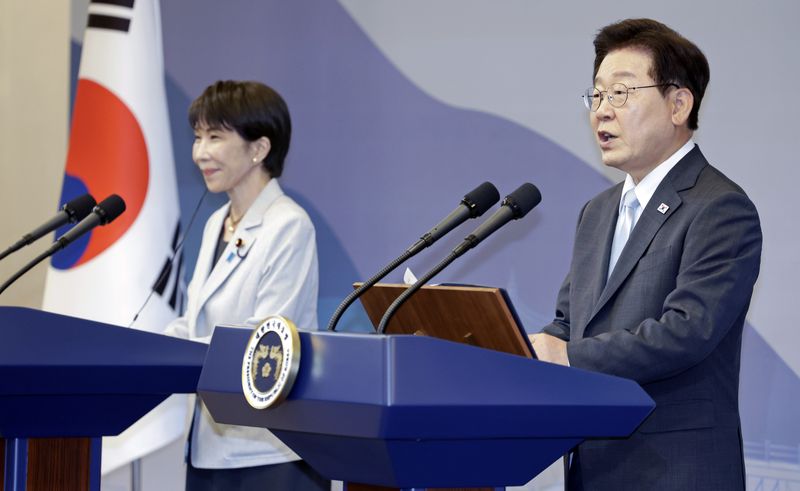
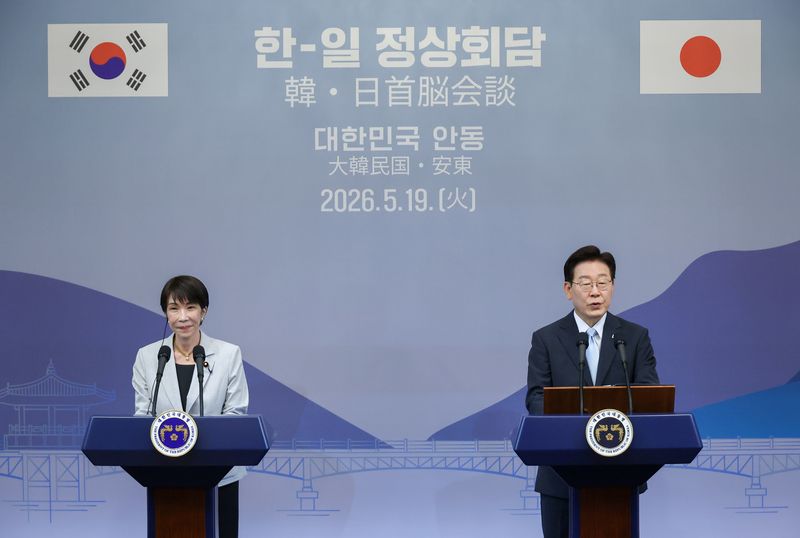
At a joint press briefing after the summit in Andong, North Gyeongsang Province, Lee said the two sides agreed that the recent instability in supply chains and energy markets stemming from the Middle East has made close bilateral cooperation even more necessary.
He added that the two countries reviewed the results of the Korea-Japan Supply Chain Partnership signed in March and decided to further expand supply chain cooperation.
Lee said Takaichi proposed that the two countries work closely together to deepen resource supply chain cooperation with other Asian countries facing supply chain crises, and that he expressed his agreement and willingness to actively participate.
The two sides also agreed to strengthen cooperation in the energy sector. Lee said they decided to further expand cooperation in liquefied natural gas (LNG) and crude oil, which are key energy sources. He added that, based on the LNG Supply Cooperation Agreement signed in March, the two countries will broaden LNG cooperation and deepen information sharing and communication channels related to crude oil supply and stockpiling.
In the security area, they reaffirmed the importance of Korea-Japan and U.S.-Japan-Republic of Korea security cooperation. Lee said that, amid rapidly changing international conditions, the two sides reconfirmed the importance of Korea-Japan and U.S.-Japan-Republic of Korea cooperation for peace and stability in the region. He also described the recent elevation of the Korea-Japan Security Policy Consultative Meeting to the vice ministerial level as a highly meaningful development.
Regarding the situation on the Korean Peninsula, he said he explained the government’s position of building “a peaceful Korean Peninsula where the two Koreas can coexist peacefully and grow together, without the need to fight.”
Lee also mentioned humanitarian cooperation related to historical issues. He said DNA testing of remains recovered from Japan’s Chosei Coal Mine will begin soon. He added that the two sides reached agreement on the specific procedures and methods for the testing through close working-level consultations between their diplomatic authorities. He said this would be “a small but very meaningful first step” toward cooperation on humanitarian issues related to historical disputes.
Lee also emphasized the symbolism of the summit. He said that just four months after he visited the prime minister’s hometown of Nara in January, Takaichi came to his hometown of Andong this time. He noted that this was the first time leaders of Korea and Japan had visited each other’s hometowns, and said it is rare even globally.
He added that, including today’s summit, he and Takaichi have met four times over the past seven months. He said this shows shuttle diplomacy has fully taken root, with the two leaders meeting whenever necessary without being bound by formality.
Takaichi said that, given recent international developments, supply chain cooperation between Japan and Korea, including critical minerals, is important. She said the two sides confirmed the memorandum drafted in March and agreed to actively push cooperation forward.
She added that they agreed to begin cooperation centered on strengthening energy supply and energy security, including mutual flexibility and swap transactions involving crude oil, petroleum products and LNG, and to jointly review concrete actions.
On security, Takaichi said the two sides agreed on the importance of strategic coordination, including U.S.-Japan-Republic of Korea security cooperation. She added that they discussed North Korea, including its nuclear and missile issues, and reconfirmed that Japan, Korea and the United States will respond in close coordination.
She also said, “I would like to once again thank the President for the support he expressed for the immediate resolution of the abduction issue.”
Takaichi added, “We promised to speak by phone often if difficult issues arise. Next time, you will come to Japan. Shall we go to a hot spring, or somewhere else? I will take you to a beautiful place.”
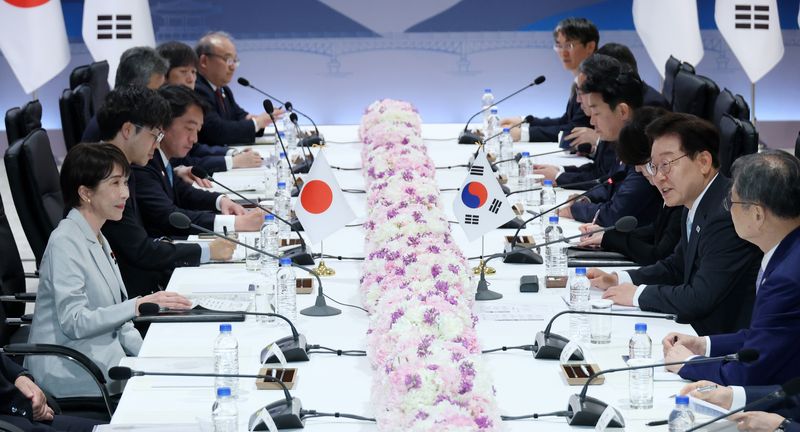
The summit in Andong lasted a total of 1 hour and 45 minutes. Lee and Takaichi held a small-group meeting for 33 minutes, followed by an expanded meeting that lasted 1 hour and 12 minutes. Their summit in Nara Prefecture in January lasted 1 hour and 28 minutes in total, including a 20-minute small-group meeting and a 1 hour and 8 minute expanded meeting, making the Andong meeting 17 minutes longer.
[email protected] Sung Seok-woo Reporter