"Interest Is a Big Problem"...Mortgage Rates Break Back Above 7%, Sending Borrowers Rushing to Bogeumjari Loans
- Input
- 2026-05-21 05:59:00
- Updated
- 2026-05-21 05:59:00
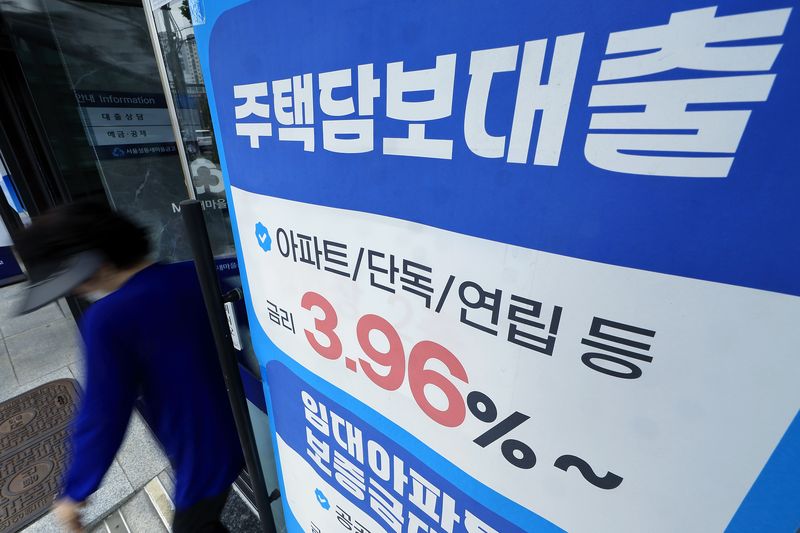
According to the financial sector on the 21st, mortgage rates at the five major banks — KB Kookmin Bank, Shinhan Financial Group, Hana Bank, Woori Bank, and NH NongHyup — based on five-year bank bonds for fixed-rate loans, ranged from 4.43% to 7.03% as of the 18th. After the upper end of the range first broke above 7% at the end of March, it climbed back above that level again about six weeks later.
The increase was driven by a surge in U.S. Treasury yields amid the prolonged Middle East crisis. The yield on the 10-year U.S. Treasury rose to the 4.6% range, while the 30-year yield broke above 5% and jumped to its highest level since July 2007.
In addition to tighter lending rules, rising bank rates are pushing demand toward policy-backed loans. According to Korea Housing Finance Corporation (HF), Bogeumjari loan supply from January to March this year totaled 7.41 trillion won. That is nearly double the roughly 3.7 trillion won recorded in the same period last year. In just three months, about 40% of this year's 20 trillion won supply target has already been met.
Sales of Bogeumjari loans, which had been in the mid-1 trillion won range per month until the second half of last year, have risen sharply this year. They reached 2.4147 trillion won in January, 2.5675 trillion won in February, and 2.4282 trillion won in March, staying in the mid-2 trillion won range each month. As commercial bank lending has been blocked by the government's household loan cap, demand is shifting to Bogeumjari loans in a classic balloon effect.
Although Bogeumjari loan rates have been raised four times this year, demand remains strong as banks in the first financial sector continue to tighten lending. Bogeumjari loan rates have risen from 3.75% to 4.05% last year to 4.6% to 5.0% this year.
The problem is that the accelerating shift toward policy-backed loans could become a flashpoint for household debt. According to the Bank of Korea on the same day, housing-related loans in the first quarter stood at 1,178.6 trillion won, up by 8.1 trillion won from the previous quarter, when they rose by 7.2 trillion won. The BOK said the increase was driven mainly by housing-related loans, including mortgages, centered on policy loans.
As mutual finance institutions also tighten their lending gates after the first financial sector, demand for policy-backed loans is expected to grow even more. The Korean Federation of Community Credit Cooperatives has not been offering mortgages to non-members since the 11th. It has also banned preferential mortgage rates for both members and non-members. Even if a person becomes a member, they must wait one year before receiving a mortgage.
However, as the financial authorities had originally planned to reduce policy-backed loans this year, some expect Bogeumjari loan rates to rise further. Through the April 1 Household Debt Management Measures, the Financial Services Commission decided to cut the share of policy loans in total lending from 30% to 20%. An official at Korea Housing Finance Corporation said, "It is still the second quarter, and the target has not been exceeded, so we are watching closely," adding, "Demand could also be managed through rate adjustments."
[email protected] Lee Ju-mi Reporter