Global oil prices swing on Trump's remarks on Iran... oil inventories may hit bottom within weeks
- Input
- 2026-05-19 13:55:03
- Updated
- 2026-05-19 13:55:03
[The Financial News] Global oil prices continued their volatile run, swinging by nearly 2% after U.S. President Donald Trump's remarks on a possible war with Iran. Experts said that even if prices calm down for now, oil inventories will eventually be depleted within weeks, leaving no real solution other than reopening the Strait of Hormuz.
Global oil prices swing on Trump's remarks on Iran
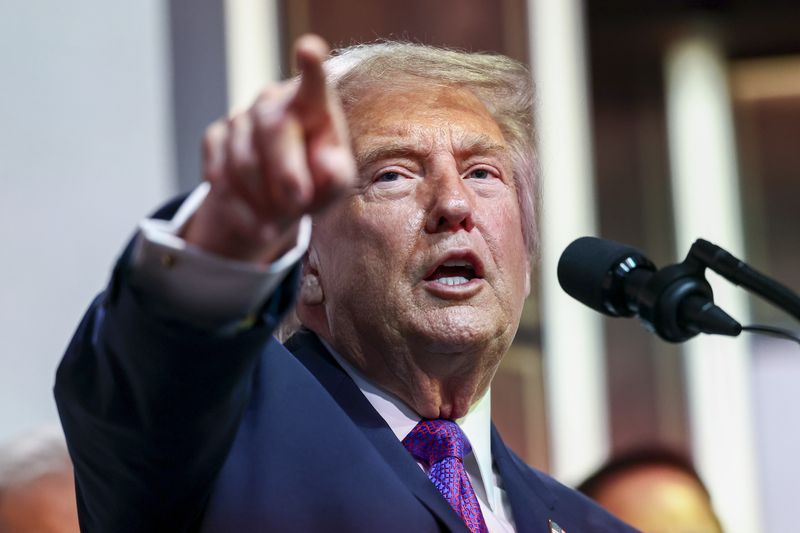
On the 18th local time, July Brent Crude Oil futures and June West Texas Intermediate crude oil (WTI) futures traded in the U.S. market closed at $112.1 and $108.66 per barrel, respectively. Both benchmarks rose 2.6% and 3.07% from the previous session, extending gains for a third straight trading day, but they tumbled in Asian trading that began on the 19th. During the session, Brent and WTI fell to $109.8 and $107.36 per barrel, respectively, giving back part of their earlier gains as they dropped 2.05% and 1.3% from the previous close.CNBC said Trump's comments were behind the price swings. In an interview with the New York Post on the 18th, he said he was disappointed with Iran's latest ceasefire proposal this month and would not accept any concessions to Iran. He added, "Iran will know what is about to happen soon."
That same day, he posted on Truth Social that he had instructed the U.S. military "not to carry out the attack on Iran scheduled for tomorrow (the 19th)." He said leaders of Middle Eastern allies who are mediating a ceasefire deal with Iran had asked him to hold off on the strike. He then stressed that the ongoing talks would be "very acceptable to all countries."
Nikos Tzabouras, chief market analyst at the British financial platform Tredo, told The Wall Street Journal on the 18th that "the rally in oil prices is not unlimited." He said, "Trump has consistently emphasized his preference for negotiations, and he has kept the door open to a diplomatic solution while maintaining the ceasefire."
In addition, U.S. Treasury Secretary Scott Bessent wrote on X on the 18th that "the Treasury Department is issuing a 30-day general license to allow the most vulnerable countries temporary access to Russian crude that is currently stranded at sea." Since imposing sanctions on Russian oil trade after Russia's invasion of Ukraine in 2022, the United States temporarily eased restrictions on Russian oil in March and April to help stabilize prices.
Almost no oil left... the Strait of Hormuz must stay open
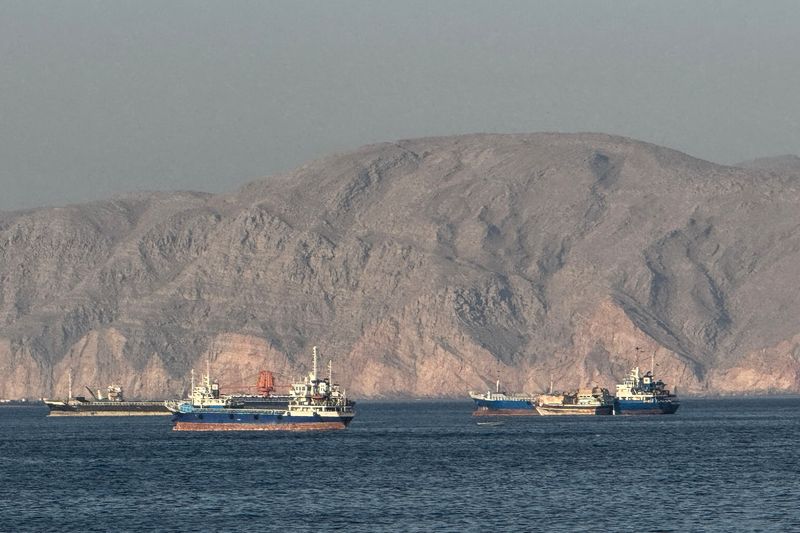
At a Group of Seven (G7) finance ministers' meeting in Paris on the 18th, International Energy Agency (IEA) Executive Director Fatih Birol told reporters that "commercial inventories around the world are falling rapidly and there are only a few weeks' worth left." He said, "We must clearly recognize how steep the decline is." He added that when spring planting and the summer vacation season begin in the Northern Hemisphere, demand for diesel, fertilizer, jet fuel, and gasoline rises at the same time, causing crude inventories to drop sharply.He said at the G7 meeting that there is a "perception gap between the physical market and the financial market" for crude oil, arguing that the inventory shortage in the real market is far more serious than the price reaction in financial markets. In a report released on the 13th, the IEA said that after the Strait of Hormuz, through which about 20% of global seaborne oil shipments pass, was blocked by the Iran war in February, global crude inventories fell by 4 million barrels per day in March and April. CNBC reported on the 16th, citing officials at UBS in Switzerland, that if oil demand remains unchanged from the previous month, global crude inventories could approach a record low of 7.6 billion barrels by the end of May.
Jeff Currie, chairman of Abaxx Commodity Exchange in Singapore, told CNBC on the 18th that "industry insiders are saying the situation is extremely serious" and that "the issue is not oil prices themselves, but the actual availability of crude supply." He warned that "there has not yet been a physical supply shortage, but it could become a reality in Europe by the end of this month."
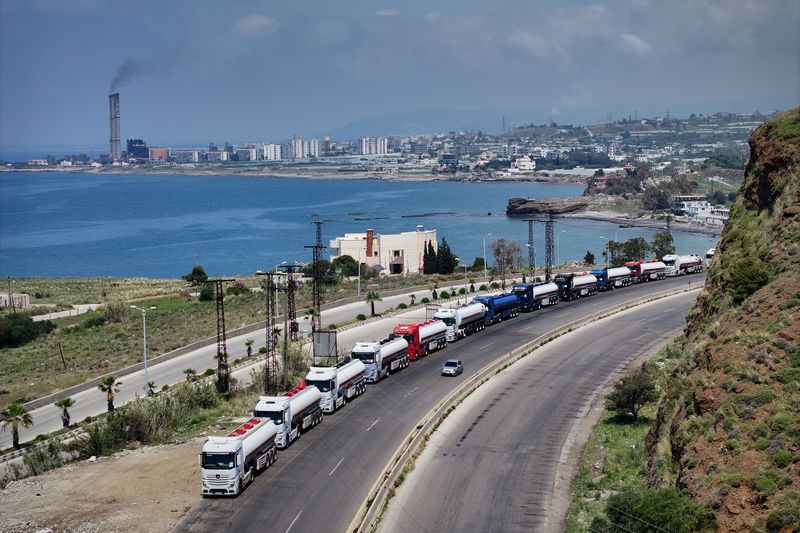
The New York Times reported on the 18th that Syria could serve as an alternative to the Strait of Hormuz. Syria, which borders Turkey, Iraq, Jordan, and Lebanon, also has several ports on the Mediterranean. Countries on the Persian Gulf coast that have had their export routes blocked by a closure of the Strait of Hormuz are already moving oil overland to Syria and then shipping it from the Mediterranean. The NYT, however, noted that Syria's outdated infrastructure and political instability remain major risks.
On the same day, CNN assessed possible ways to address rising oil and consumer prices in the United States, including cutting fuel taxes, halting U.S. crude exports, and boosting oil production in the United States and Saudi Arabia, but concluded that these measures would be difficult to implement. Bob McNally, chairman of the U.S. energy consultancy Rapidan Energy Group, told CNN that "the current problem will be solved by a single step. Reopening the Strait of Hormuz."
[email protected] Park Jong-won Reporter