FALCON, the AI Simulation That Sharpens the U.S. Army's Future Battlefield Readiness
- Input
- 2026-05-19 11:00:35
- Updated
- 2026-05-19 11:00:35
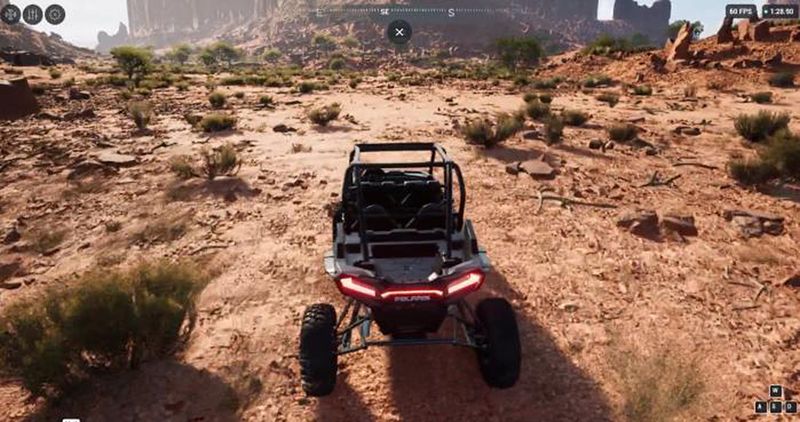
To overcome that limitation, the United States Army partnered with Duality AI to introduce FALCON. Using digital twin technology, it created a twin world in virtual space that reproduces the terrain, climate, and enemy air defense network of an actual battlefield. AI-based unmanned vehicles and drones then autonomously repeat maneuver and strike scenarios thousands of times inside it.■ Zero cost of failure, limitless tactical experimentationThe biggest advantage of AI simulation is that the cost of failure is zero. In live training, even the loss of a single drone can wipe out hundreds of millions of won in budget and halt data collection. In FALCON's virtual world, however, a drone can be shot down by enemy anti-aircraft fire or crash in a gust of wind, and then be instantly regenerated with the push of a button.
That makes it possible to conduct unlimited tactical experiments under extreme conditions. Faced with the question of whether 50 attack drones can break through mountainous terrain in an area with intense GPS jamming, AI FALCON can run thousands of simulations in just a few hours to derive the optimal flight path and success probability. Commanders then go into real operations armed with tactics that have already been verified.■ Data is combat power: improving commanders' competitivenessA digital twin is more than just a weapons testbed. The vast amount of data accumulated through virtual combat evolves into an AI staff system that supports commanders' decisions. That is because AI can identify tactical blind spots that human commanders would struggle to predict in their heads, warning them in advance through massive computing power. Beyond competition in destructive power, this is a decisive signal that the axis of future warfare has shifted to who can predict the battlefield first with more precise data.
Amid the U.S. Army's technological transformation, the Republic of Korea Army also boldly presented its blueprint for the next generation of ground forces on the global stage. At the recent Land Forces Pacific Symposium in Hawaii, the Republic of Korea Army showcased the advanced capabilities of Army Tiger, its cutting-edge manned-unmanned integrated combat system, before military leaders from around the world.
With drones, combat robots, and the AI Warrior Platform at its core, Army Tiger is a key force designed to overcome the sharp decline in troop numbers caused by demographic collapse through advanced science and technology. On this stage, the ROKA drew strong attention by proving a high level of interoperability that would allow joint operations with allies in the Indo-Pacific region.■ Balanced development of hardware and software: a survival indicator for ground forcesFor Army Tiger to deliver real combat capability, multi-domain operations control software and tactical verification infrastructure must be built in step with the pace of hardware deployment. For the Republic of Korea Army, the United States Army's adoption of FALCON is an excellent benchmark. The United States Army has established a process that links virtual simulation to preemptively correct errors in unmanned systems. Our military must also integrate a multi-layered verification process that derives tactics through endless simulated engagements in virtual space from the earliest stages.
A RAND Corporation report analyzed that digital twin technology maximizes long-term defense budget efficiency and future warfare adaptability at the early stage of weapons introduction. For K-Defense Industry's manufacturing capabilities and the Army's field operations to create synergy, investment in virtual battlefield infrastructure is essential. Working in a precise AI virtual battlefield to operate advanced forces and improve the completeness of real-world victory is not optional, but necessary. The digital-first military innovation demonstrated by FALCON is seen as a core capability that Army Tiger must secure to raise mission success rates and troop survival.
Digital twin technology is expected to become essential infrastructure for multi-domain operations (MDO), expanding into land, sea, air, space, and cyberspace.
[email protected] Lee Jong-yoon Reporter