[Editorial] Rebar Missing Again at a GTX Station Construction Site. Why Does It Keep Happening?
- Input
- 2026-05-18 18:22:57
- Updated
- 2026-05-18 18:22:57
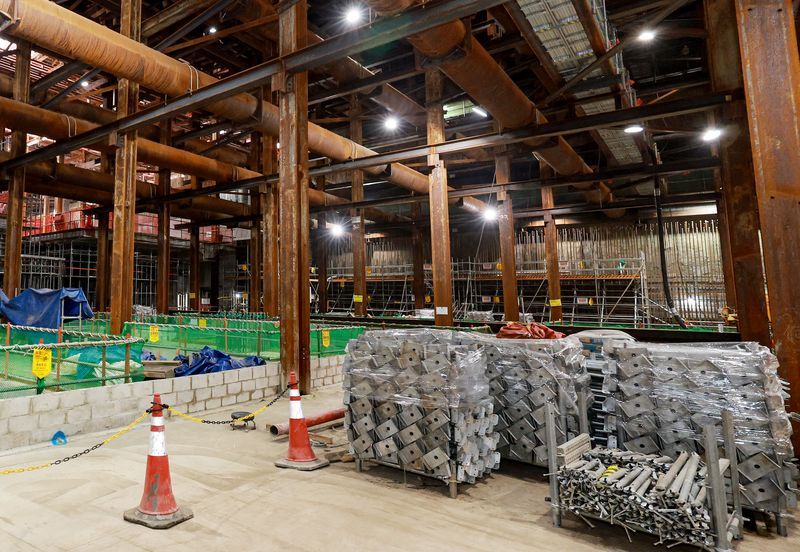
Above all, it is shocking that rebar omissions have been found again when the memory of the so-called "bare-skeleton apartment" scandal, in which rebar was not used according to regulations, is still vivid. It is even more alarming that this happened at a GTX station construction site used by the public. Hyundai Engineering and Construction says the incident occurred because a worker misread the design drawings, but that is no excuse.
Like apartment buildings, underground facilities must be built to be strong enough to last for centuries. Once constructed, they are not easy to rebuild, and if a collapse were ever to occur, the damage would be unimaginable. This is not something that can be brushed aside with a simple explanation that a worker made a mistake. The responsibility must be clearly identified and made public.
Major accidents often begin with surprisingly small flaws. If a dam were completed with a tiny hole left in it, that hole could bring down the entire structure. Whether it is a worker or anyone else, even the smallest mistake must never be allowed. The report says improper construction was found in 50 pillars, which is a large-scale problem. Underground facilities are not the kind of projects that can simply be torn down and rebuilt like ordinary buildings, even if defects are discovered after completion.
The Seoul Metropolitan Government says it first received the report from the contractor in November last year and formally notified the Ministry of Land, Infrastructure and Transport on April 29 this year, but it is unclear why the reporting was so delayed. Seoul and Hyundai Engineering and Construction say there is no risk of collapse, but it is hard not to suspect that the matter may have been concealed and reported late on purpose.
Something that should never have happened has happened again. Construction and supervision must be carried out with absolute rigor, and that means the building and inspection processes must be extremely thorough. It is even more pathetic that people are now arguing about it only after the project has been completed and a long time has passed.
At this stage, authorities should first present follow-up measures that can ease public anxiety. The issue is not whether the opening schedule will be delayed. Even if the entire structure must be demolished and rebuilt, a perfect corrective plan should be prepared.
What is even more lamentable is the behavior of politicians who are using this shoddy construction as material for political infighting ahead of the local elections. Trading accusations and attacking one another is not the answer. The right approach is to first determine how this happened and then discuss countermeasures.
Whenever shoddy construction becomes a controversy, the political world seems to find a convenient target and simply starts fighting, and that is why accidents keep happening. Instead of wasting time on that, officials should go to the site, examine how recurrence can be prevented, and think seriously about what safeguards are needed. Construction procedures that verify and reverify every step must be strictly codified in a manual so that similar accidents never happen again.