The Strike Is Not the End... A Tense 'DS-DX Conflict' [At a Crossroads in Samsung Electronics' Strike]
- Input
- 2026-05-18 18:16:04
- Updated
- 2026-05-18 18:16:04
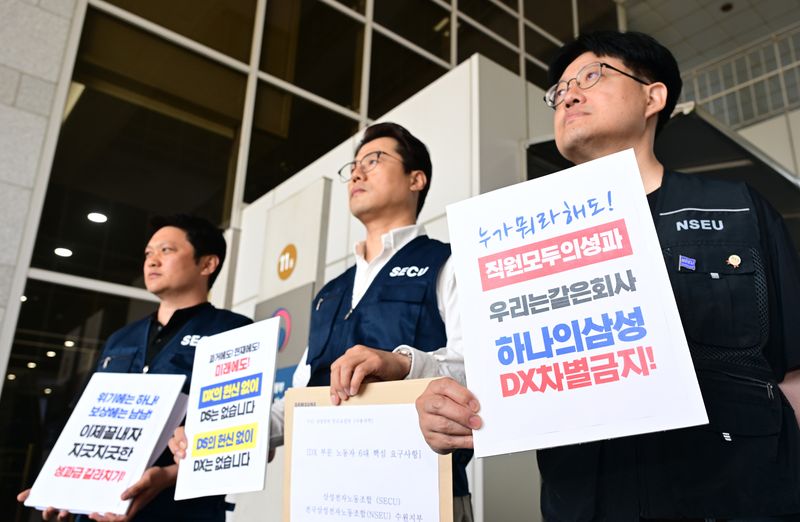
According to industry sources on the 18th, the National Samsung Electronics Union and the Samsung Electronics Union, Samsung Electronics' second- and third-largest unions, visited the resumed labor-management talks three days before the deadline for a general strike and demanded that "the voices of 50,000 DX Division employees be clearly reflected." The Inter-Enterprise Labor Union, which secured majority-union status and is leading the negotiations, has most of its members in the DS Division.
Many DX Division members view the Inter-Enterprise Labor Union's demands for abolishing the bonus cap and sharing operating profit as a structure that favors the DS Division, whose profitability has surged on the back of the AI semiconductor boom.
That day, officials from the National Samsung Electronics Union and the Samsung Electronics Union staged a public protest as Choi Seung-ho, chairman of the Samsung Electronics Branch of the Inter-Enterprise Labor Union, headed from the MOEL to the post-mediation meeting room, demanding that DX Division proposals be reflected. When Choi replied, "We negotiated this together, so it is difficult to change it now," the National Samsung Electronics Union and the Samsung Electronics Union pushed back, saying, "We are not asking you to change it. We are asking you to recognize items that were already discussed sufficiently during the negotiations."
The conflict between the two sides is also spreading into legal disputes. On the 15th, the Samsung Electronics Workers' Rights Restoration Legal Response Coalition, made up of five Samsung Electronics DX Division employees, filed an injunction with the Suwon District Court against the Inter-Enterprise Labor Union, asking it to "suspend this year's wage and collective bargaining." They argue that the current negotiations are being conducted around the DS Division, effectively excluding the DX Division's working conditions and demands. In particular, they say the union violated its rules and the Labor Union Act by using the results of a survey conducted last November, without a general assembly vote, as a substitute for its bargaining demands.
Tensions are also intensifying within the organization after Lee Song-i, vice chair of the Inter-Enterprise Labor Union, urged members in the union's Telegram chat room the previous day to join the strike and said, "If you're going to split off, then do it."
Industry observers say the root cause of the internal conflict is the sharply widening gap in performance and bonuses. The DS Division's profitability has surged thanks to the recent AI semiconductor boom, while the DX Division has posted relatively weak results amid slowing global consumption and intensifying competition. Just a year ago, the DX Division's performance far outpaced that of the DS Division, so the situation has now reversed completely.
Analysts also say that even if this year's negotiations are completed, clashes are likely to continue between the DS-centered view that "the division that delivers results should receive more" and the DX-side argument that "companywide contributions must be reflected."
Industry sources believe that if the concentration of results in AI semiconductors continues for a prolonged period, debate over "compensation polarization" between Samsung Electronics' divisions is likely to become a permanent issue. Inside and outside Samsung Electronics, calls are growing for a solution that can improve organizational culture and help attract talent, regardless of this year's bargaining outcome.
[email protected] Jung Won-il, Kim Jun-hyeok, and Im Su-bin Reporter