Court partially grants Samsung Electronics injunction to block strike, saying operations must be maintained as usual [Roundup]
- Input
- 2026-05-18 13:18:43
- Updated
- 2026-05-18 13:18:43
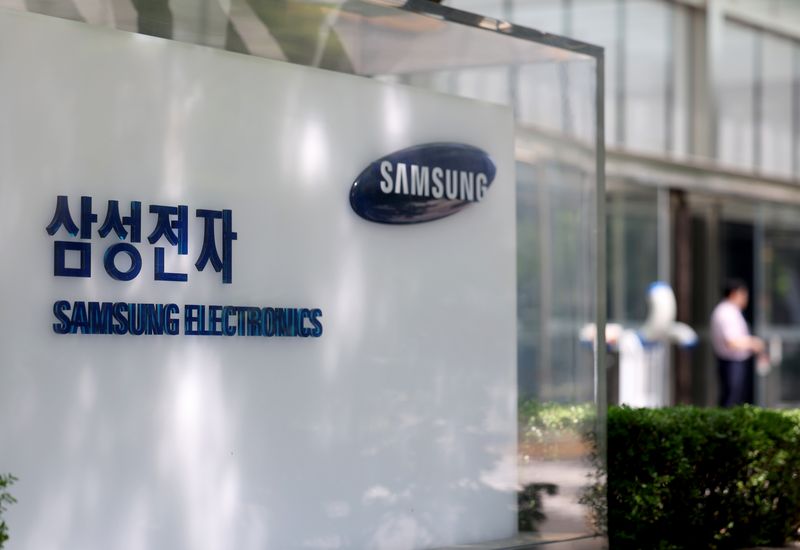
[Financial News] The court on the 18th partially granted Samsung Electronics' request for an injunction to block a general strike by the union. With the general strike just three days away, what happens in the final round of negotiations between labor and management on the same day is expected to affect the outcome.
Suwon District Court Civil Division 31, presided over by Chief Presiding Judge Shin Woo-jung, partially accepted Samsung Electronics' petition for an injunction against unlawful strike activity in a case filed against the Samsung Electronics Branch of the Supra-enterprise Labor Union and the National Samsung Electronics Union.
The court ruled that during the strike, the unions must not suspend, abolish, or interfere with operations that are maintained at the same level of staffing, operating hours, and duty of care as before the strike, whether on weekdays, weekends, or holidays. It also said they must not cause their members to do so.
The court further ordered that the unions must not obstruct security-related work, including damage-prevention work on facilities and work to prevent wafer deterioration, if such work is carried out with the same level of staffing, operating hours, operating scale, and duty of care as before the strike. It also barred them from having members engage in such conduct.
In addition, it prohibited the Supra-enterprise Labor Union and union chief Choi Seung-ho from occupying all or part of facilities, installing locks on facilities, or blocking workers from entering. However, it did not accept Samsung Electronics' request for an occupation ban against the National Samsung Electronics Union and chairwoman Woo Ha-kyung. The court said this did not mean occupation would be allowed, but rather that it did not see a high likelihood of occupation and therefore did not issue a separate ban.
The court also accepted most of the company's other claims.
To ensure compliance with the injunction, the court also set a condition that the two Samsung unions subject to the order must pay 100 million won per day if they violate the ban.
However, it rejected the company's request for an injunction prohibiting interference with union members and executives. The court explained that the targets influenced by the unions and their representatives are limited to their own members.
It also rejected the company's request to ban threats and calls for participation aimed at union members. The court said the purpose of preventing participation in the strike could largely be achieved through the parts it had already granted.
With the court's ruling on the strike now out, attention is turning to what comes next. As labor and management entered last-minute negotiations on the day, the outcome is expected before the general strike on the 21st. Since most of the company's arguments were accepted, it is also drawing interest whether the union will accept the court's decision.
Meanwhile, if the talks under way on the day fail, attention will also shift to whether the government will invoke emergency arbitration. According to legal sources, the law providing the basis for such a move does not specify when emergency arbitration must be invoked, leaving open the possibility of a preemptive emergency arbitration order by the government.
Article 76 of the Trade Union and Labor Relations Adjustment Act, which governs emergency arbitration, states that the Minister of Employment and Labor may issue such a decision when a strike concerns a public service, is large in scale, or is of a special nature, and when there is an existing risk of seriously harming the national economy or endangering the public's daily life.
In the case of the Samsung Electronics strike, it could be viewed as large in scale and of a special nature, and its impact on the national economy is also significant. As a result, the legal issue may hinge on how the phrase "when there is an existing risk" is interpreted. In the four previous cases in which emergency arbitration was invoked, the government acted anywhere from four days to 60 days after a strike began.
A lawyer at a large law firm said, "If there is a reasonable possibility that the strike has effectively begun, a preemptive emergency arbitration order may be possible." The lawyer added, "If it is done after the strike starts, it may have little practical value."
[email protected] Lee Hwan-ju, Jung Kyung-soo, Choi Eun-sol Reporter