Crypto Trading Volume Falls to U.S.-China Tensions Levels... Exchanges Seek Partners Amid the Chill [Crypto Briefing]
- Input
- 2026-05-18 13:44:28
- Updated
- 2026-05-18 13:44:28
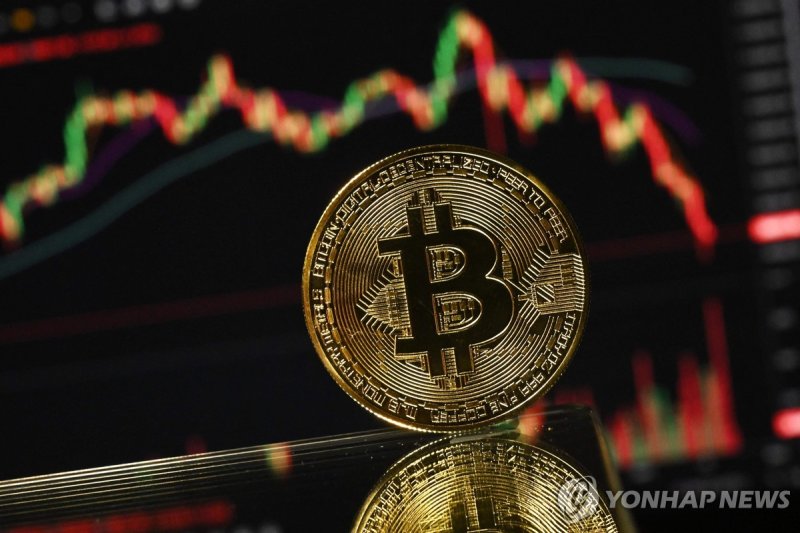
[Financial News] Domestic cryptocurrency trading volume is on a downward trend. As digital assets moved sideways amid the Middle East crisis, funds appear to have shifted into the local stock market, which has delivered relatively stronger returns. With the market freezing up, exchanges have begun expanding cooperation with other traditional financial firms to draw up a new roadmap.
According to the cryptocurrency industry on the 18th, trading volume on the five major won-based markets in South Korea — Upbit, Bithumb, Coinone, Korbit and GOPAX — reached $27.8 billion from the 1st to the 17th of this month. Given that the month is still only half over, total trading volume for May is expected to come in at just $50 billion to $60 billion.
Crypto trading volume has plunged this year. Monthly trading volume stood at $75 billion in January, $85.3 billion in February, $58.3 billion in March and $53 billion in April. In particular, March and April both remained in the $50 billion range for two straight months.
This year, investor sentiment has worsened as the Middle East crisis raised the possibility of further U.S. interest rate hikes. Bitcoin fell 11.6% from Jan. 1 through the previous day. On Feb. 6, it dropped to the $60,000 level, down about 30% from the start of the year. Strength in the domestic stock market also pulled money out of the crypto market. From the start of the year through the 15th, the KOSPI and KOSDAQ rose 77.81% and 22.08%, respectively.
The sharp drop in trading volume has also hurt the earnings of domestic crypto exchanges. Dunamu, the operator of Upbit, reported consolidated revenue of 234.6 billion won and operating profit of 88 billion won in the first quarter, down 54.6% and 77.8%, respectively, from a year earlier. Bithumb also posted revenue of 82.5 billion won and operating profit of 2.9 billion won, down 57.6% and 95.8% from the same period last year. As of last year, trading fees accounted for 98.26% of Dunamu's revenue and 97.69% of Bithumb's revenue.
Yang Hyun-kyung, a researcher at iM Securities, said, "This year, the stock market has continued to be led by artificial intelligence (AI) and semiconductors, while the crypto market has remained relatively weak amid deteriorating investor sentiment." She added, "In South Korea's crypto market, trading volume has fallen sharply due to the strength of the KOSPI and the weakening of crypto investment sentiment."
In response, exchanges are trying to move away from a business model that relies heavily on trading fees. After announcing a merger with Naver last year, Dunamu recently secured a 1 trillion won equity investment from Hana Financial Group. Together with those companies, it plans to expand into fintech and traditional finance, centered on won-based stablecoins.
Korbit is also in the process of being acquired by Mirae Asset Consulting, an affiliate of Mirae Asset Group, since February. In his New Year message this year, Mirae Asset Group Chairman Park Hyeon-Joo stressed that he would "digitize all investment assets into digital tokens." Coinone is also reviewing a plan for Korea Investment & Securities and global crypto exchange OKX to each acquire a 20% stake.
Lee Jun-ho, a researcher at Hana Securities, said, "Recently, there have been reports in South Korea's crypto market about traditional financial firms acquiring stakes in exchanges. After the passage of the second-stage crypto legislation, the General Act on Digital Assets, active moves into the won-based stablecoin business are expected." He added, "In particular, Dunamu and NAVER Financial Corporation have strong influence in the real and digital economies, so together with Hana Financial Group they are expected to secure a large share of the domestic won-based stablecoin market."
[email protected] Lim Sang-hyeok Reporter