Will Iran Take Submarine Cables Hostage After the Strait of Hormuz?
- Input
- 2026-05-18 13:49:45
- Updated
- 2026-05-18 13:49:45
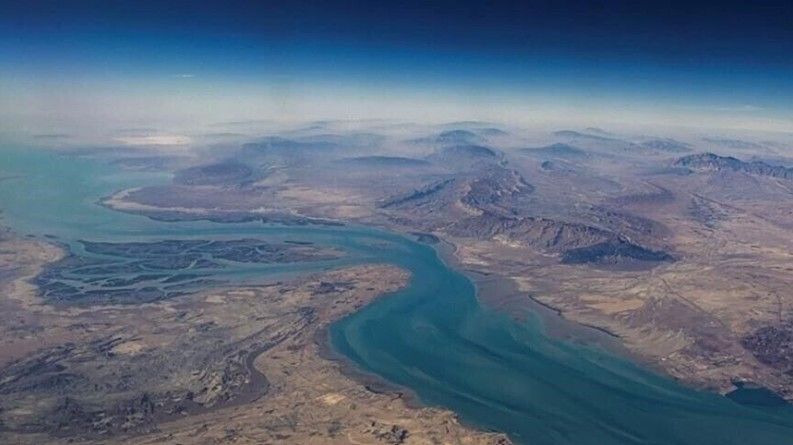
[Financial News] Iran, which is blocking the Strait of Hormuz amid wartime conditions, is now trying to weaponize submarine cables.
On the 17th local time, CNN reported that the Islamic Consultative Assembly discussed a bill last week to charge global tech companies fees for submarine internet cables passing beneath the Strait of Hormuz.
Ebrahim Zolfaghari, a spokesman for the Iranian military, recently declared on his X account, "We will impose fees on internet cables."
Media linked to the Islamic Revolutionary Guard Corps (IRGC) also reported that global big tech companies such as Google, Microsoft (MS), Meta Platforms, and Amazon.com, Inc. must comply with Iranian law, and that submarine cable operators must pay transit license fees. They also argued that Iranian companies should hold exclusive rights to repair and maintain the cables in the strait.
The submarine cables under the waters of the Strait of Hormuz are essential for internet and financial traffic, linking Persian Gulf countries with Asia and Europe.
Some big tech companies have invested in routes through the Strait of Hormuz and the Persian Gulf, but it is unclear whether the cables actually pass through Iranian territorial waters. CNN said that because U.S. government sanctions on Iran are so severe, any payment to Iran by these companies would itself be illegal. For that reason, some observers interpret Tehran's announcement as little more than bluff or a political pressure tactic.
Even so, Iranian state media are sending an implicit warning that the cables could be damaged if the fees are not paid.
The move suggests that Iran wants to use the Strait of Hormuz not only as an energy export route, but also as a long-term economic and strategic lever.
Middle East experts see Iran's strategy as a key survival tactic for the regime, aimed at imposing enormous costs on the global economy so that Iran will not be attacked again.
According to TeleGeography, a submarine cable research firm, the international bandwidth of cables passing through the Strait of Hormuz accounted for less than 1% of global capacity last year. Even so, if this route were cut off, the damage to certain regions would be severe.
For security reasons, most submarine cables are laid in a narrow area on the Oman side of the waters to avoid Iranian territorial waters. However, at least two major cables, including the FALCON subsea cable system and Gulf Bridge International (GBI), pass through Iranian waters.
CNN reported that the IRGC has divers, small submarines, and underwater drones, giving it the capability to strike this infrastructure at any time.
Mustafa Ahmed, chief researcher at the Hubtour Institute in the United Arab Emirates (UAE), warned that if the cables were destroyed, a cascading digital disaster could unfold across several continents.
If Iran were to join forces with the Houthi rebels in Yemen in the Red Sea and target submarine cables at the same time, the damage could grow uncontrollably.
In fact, in 2024, three cables were severed in the Red Sea when the anchor of a sinking ship, attacked by the Houthi rebels, scraped the seabed. The incident disrupted 25% of regional internet traffic.
Iranian media argue that this measure is a legitimate right under the 1982 United Nations Convention on the Law of the Sea (UNCLOS). They cite Article 79, which allows coastal states to impose certain conditions on submarine cables passing through their territorial waters. The move appears to be modeled on Egypt, which collects hundreds of millions of dollars a year in transit and licensing fees from submarine cables passing through the Suez Canal.
However, international law experts point out that Egypt's Suez Canal is an artificially excavated internal waterway, while the Strait of Hormuz is a naturally formed international strait, so the legal framework that applies is completely different.
Irini Papanicolopulu, a professor of international law at SOAS University of London, told CNN, "Iran must comply with the contracts it signed when existing cables were installed." She added, "However, for any new cables laid in the future, it has the right as a coastal state to decide the conditions for passage through its territorial waters."
Allen Mauldin, research director at TeleGeography, said there is currently only one submarine cable maintenance vessel operating in the Persian Gulf. He warned that if cables are actually damaged by Iranian threats or operations, repairs could take a considerable amount of time.
[email protected] Yoon Jae-jun Reporter