Shipping Rates for Asia and the Middle East Hit Record Highs as Iran War Drags On
- Input
- 2026-05-18 11:19:54
- Updated
- 2026-05-18 11:19:54
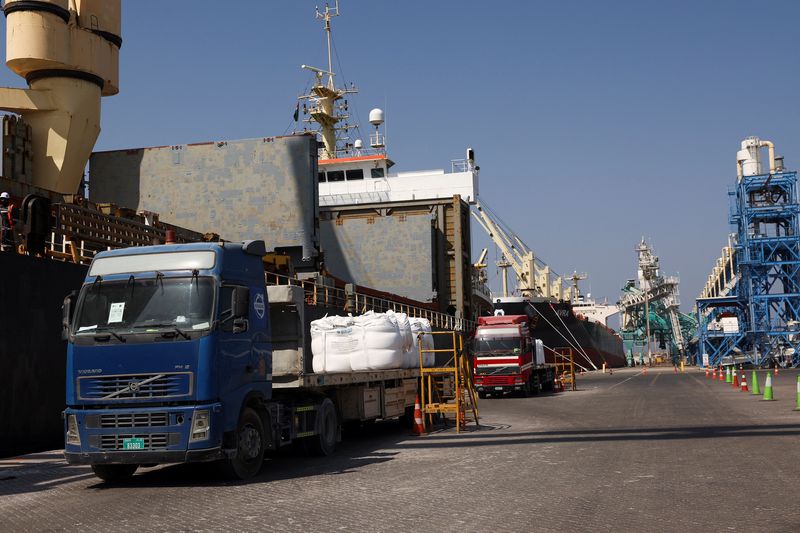
[The Financial News] As the Iran War and disruptions to shipping in the Strait of Hormuz have continued for more than two months, freight rates for shipments bound for the Middle East are surging to record highs. The trend is expected to place a heavy burden on Asian companies that route goods through the Middle East to Europe, Africa and other regions.
The Financial Times (FT) reported on the 17th, local time, citing Clarksons Research, a British maritime data firm, that transportation costs from Shanghai to the Persian Gulf and the Red Sea have jumped sharply.
The cost of shipping one 20-foot equivalent unit, or TEU, on the route was $980 before the war in February. But the weekly average for the week ending May 15 rose to $4,131, or about 6.2 million won. That is an increase of about 320 percent and exceeds the previous all-time high of $3,960 per TEU recorded during the COVID-19 pandemic in 2021.
FT said the overall rate increase was driven by higher fuel costs and a surge in demand for trucks used in overland transport. When the Strait of Hormuz was blocked by the U.S.-Iran war, multinational shipping companies began relying on land transport routes centered on ports near the Red Sea and the Gulf of Oman. Under this system, cargo is diverted to another port and then delivered to its final destination by truck or smaller vessels.
These routes mainly connect Yanbu and King Abdullah Port in Saudi Arabia and Fujairah in the United Arab Emirates with Dammam in Saudi Arabia, Basra in Iraq and Jebel Ali in the UAE.
Rolf Habben Jansen, Chief Executive Officer of German shipping company Hapag-Lloyd, said, "The only practical way to move goods into the Persian Gulf is by land, but transport capacity is limited," adding that cargo volume has fallen 60 to 80 percent since the war began.
Christian Wendel, chairman of Swiss fertilizer company Hexagon Group AG, said, "Fertilizer export volumes are usually in the range of 30,000 to 50,000 tons, but a truck can carry only about 30 tons," calling the situation "a logistics nightmare." David Ozard, General Manager of British moving company John Mason International, said the ports being used for overland transport have already reached their capacity limits. He forecast that it could take months to clear the congestion.
[email protected] Park Jong-won Reporter