Borders Closed Amid Ebola Spread in Africa, First Since Public Health Emergency Declaration
- Input
- 2026-05-18 08:14:28
- Updated
- 2026-05-18 08:14:28
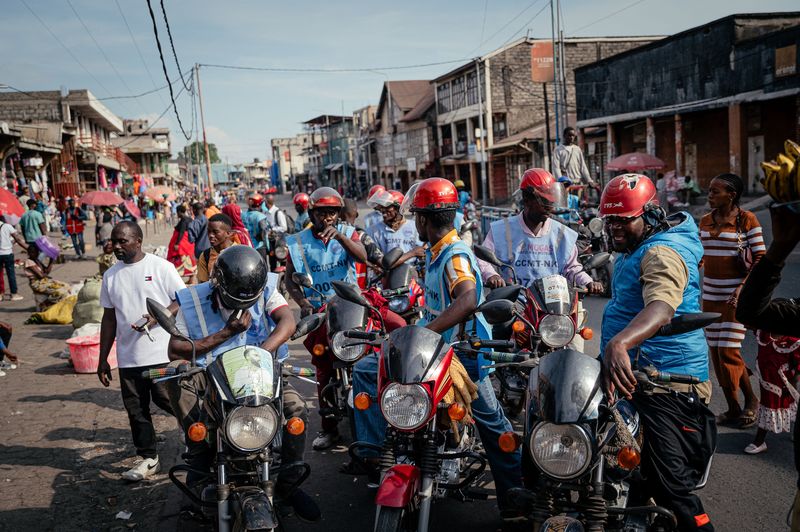
[The Financial News] Rwanda, which borders the Democratic Republic of the Congo (DRC) in Africa, has indefinitely closed its border with the DRC after the spread of Ebola virus disease led to a declaration of a Public Health Emergency of International Concern (PHEIC).
According to foreign media outlets, including Associated Press (AP), on the 17th local time, all traffic between Goma, the provincial capital of eastern Kivu Province in the DRC, and Rwanda's Rubavu and Gisenyi areas was blocked from the early hours of the 16th. Prospere Mulyandwa, the mayor of Rubavu, said at a news conference that the border closure was a measure to prevent the spread of Ebola virus disease and that it is expected to remain in place indefinitely. At the border, only nationals of the DRC and Rwanda are being allowed to return to their home countries.
On the 17th, the World Health Organization (WHO) declared a PHEIC over the spread of Ebola virus disease in the DRC and Uganda. Rwanda borders the DRC to the northwest and Uganda to the northeast.
According to the WHO, as of the 16th, eight confirmed Ebola virus disease cases and 246 suspected cases had been reported in three areas, including Bunia, Lwampala, and Mongbalu in Ituri Province, DRC. The Africa Centres for Disease Control and Prevention (Africa CDC) reported 336 suspected cases. In Kampala, the capital of Uganda, two confirmed cases were recently identified, and one of them died at a hospital in the city.
In a statement released that day, the WHO said, "This situation poses a public health risk to other countries through the international spread of the disease, and international spread has already been confirmed." Citing the WHO, AP reported that more than 300 suspected Ebola-related cases and 88 deaths have been recorded so far.
The WHO noted that there are no approved treatments or vaccines for the Ebola virus currently circulating. It added, however, that the outbreak does not meet the criteria for a global pandemic. Since Ebola virus disease was first identified in 1976, the DRC has experienced a total of 17 outbreaks. Most previous outbreaks were caused by the Zaire ebolavirus strain, but this one has been identified as the rarer Bundibugyo ebolavirus strain.
The WHO urged governments to immediately activate national disaster and emergency response systems and strengthen border checks and inspections along major roads. It also cautioned against border closures or trade restrictions driven by fear, saying such measures could increase informal cross-border movement and make containment more difficult.
[email protected] Park Jong-won Reporter