"Trump and Xi Reaffirm Goal of North Korea's Denuclearization" ... Fallout Grows as Surprise Meeting with Kim Jong Un Falls Through
- Input
- 2026-05-18 07:50:47
- Updated
- 2026-05-18 07:50:47
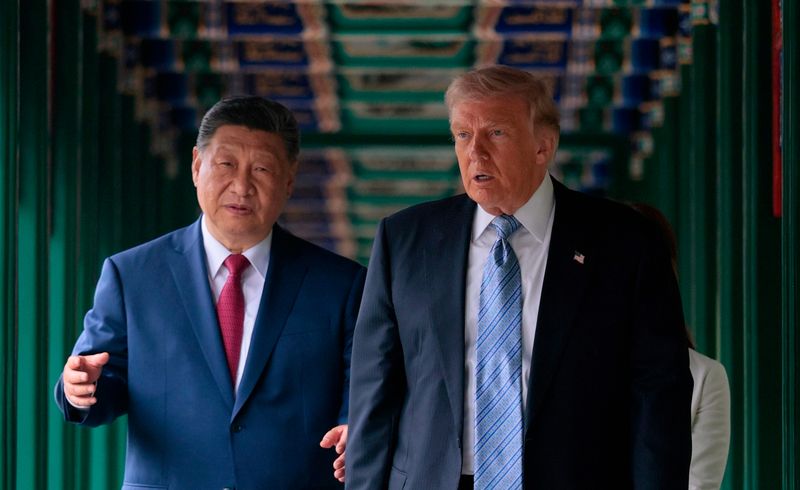
In a fact sheet on the U.S.-China Summit released on its website on the 17th local time, the White House said, "President Trump and President Xi confirmed their shared goal to denuclearize North Korea."
Earlier in the day, Jamieson Greer, the U.S. Trade Representative, also said in an interview with American Broadcasting Company (ABC) that "President Trump and President Xi agreed to maintain the goal of denuclearizing the Korean Peninsula." However, the White House fact sheet clearly referred to denuclearizing North Korea, not the Korean Peninsula.
Trump has consistently maintained his position on North Korea's denuclearization. Xi, by contrast, has at times used the phrase denuclearization of the Korean Peninsula instead of denuclearization of North Korea. Even more than a decade ago, Xi often stated his position on denuclearizing the Korean Peninsula in public. China's principle of denuclearizing the Korean Peninsula has long carried an implicit aim of restraining not only North Korea's nuclear armament, but also South Korea's own nuclear armament. Beijing has also worried that recognizing North Korea's nuclear weapons could lead to the deployment of U.S. tactical nuclear weapons on the Korean Peninsula.
In recent years, however, Xi has stopped mentioning denuclearization of the Korean Peninsula, raising concerns that China may in effect be tolerating North Korea's possession of nuclear weapons.
The White House moved quickly to release the fact sheet just days after Trump's visit to China. It came two days after the U.S.-China Summit on the 14th and 15th. By comparison, the White House released the fact sheet for last year's South Korea–United States summit more than two weeks after the meeting.
Attention is now on how China will respond to the White House's disclosure of the North Korea denuclearization fact sheet. If China states a position on "denuclearization of North Korea" through state-run media or an official government statement, it would inevitably have a significant impact on the recently restored China–North Korea relations. As a result, China may choose not to publicly state support for North Korea's denuclearization, or may soften the wording by referring instead to "denuclearization of the Korean Peninsula." The South Korean government has been pursuing North Korea's denuclearization together with the United States. Under the Lee Jae-myung administration, however, it has sought a phased approach of "freeze → reduction → denuclearization" rather than an all-at-once settlement of the North's nuclear issue. In an interview with the Yomiuri Shimbun last year, President Lee proposed three stages: first, a freeze on nuclear and missile programs; second, reduction; and third, denuclearization. The Ministry of Unification (MOU) has also supported this phased denuclearization policy.
[email protected] Kim Kyung-soo Reporter