Nationwide Farmland Survey Begins... Gyeonggi Province Farmland to Be Photographed by Drone
- Input
- 2026-05-17 15:11:50
- Updated
- 2026-05-17 15:11:50
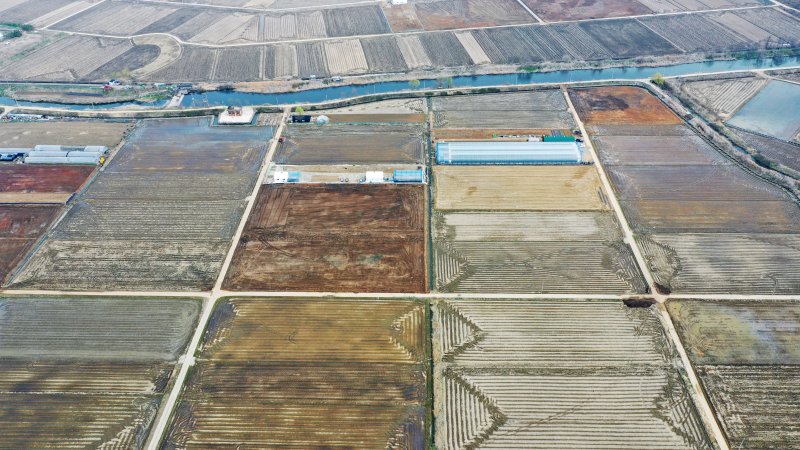
[Financial News] The Ministry of Agriculture, Food and Rural Affairs (MAFRA) said on the 18th that it will begin a nationwide survey with local governments to curb farmland speculation and build a database. All farmland in Gyeonggi Province, where speculation concerns are high, will be photographed by drone. The survey will run for two years. This year, farmland acquired after January 1996, when the Farmland Act took effect, will be examined in stages, with a "basic survey" from this month through July and a "in-depth survey" from August through December.
According to MAFRA on the 17th, the basic survey will use administrative data, satellites and artificial intelligence to select targets for the in-depth survey. By checking owners and land area through the Farmland Ledger, the ministry will verify whether there are any violations related to ownership limits and caps applied to inherited farmland, farmland owned by people who have left farming, agricultural corporations, general corporations and organizations. Under the Farmland Act, non-farmers may own inherited farmland or farmland owned by those who have left farming only if farmland exceeding 1 hectare is entrusted to the Korea Rural Community Corporation's Farmland Bank.
For farmland that is directly cultivated, the ministry will make an initial check of whether the owner is actually farming by cross-referencing basic public-interest direct payment records, Agricultural Management Entity information, agricultural input purchase history and local government subsidy records.
For leased farmland, it will check whether the land is listed in the Farmland Ledger or entrusted to the Farmland Bank. Any farmland suspected of violating the rules will be classified as a target for the in-depth survey.
The basic survey will also use aerial and satellite images, building registry records and AI detection data to check whether the land is being cultivated and whether illegal structures have been installed. Buildings other than facilities that may legally be installed on farmland, such as greenhouses and livestock sheds, will be classified as targets for the in-depth survey if they are suspected of having been built without proper procedures, such as farmland conversion approval, and will be inspected on site. The ministry also plans to pilot technology from the Rural Development Administration (RDA) that interprets long-term fallow land using satellite data.
During the basic survey period, MAFRA will operate a "Special Period for the Improvement of Farmland Lease Contracts" to encourage written lease agreements and entrustment to the Farmland Bank. It will also run a "Tenant Farmer Protection Reporting Center" in preparation for cases in which lease relationships are unilaterally terminated in order to evade the nationwide farmland survey. Farmland reported to the center will be classified as a target for the in-depth survey starting in August, and the ministry has also prepared measures to protect tenant farmers, including giving top priority to farmland entrusted to the Farmland Bank for lease to tenants whose contracts have been terminated.
The in-depth survey will focus on 10 major target groups, including land transaction permit zones and the entire Seoul metropolitan area, with officials and farmland inspectors deployed to the field. They will check whether crops are being grown and whether facilities are installed and in use. Farmland that is difficult to access will be surveyed by drone.
If illegal leasing is suspected or a report is filed, investigators will also work with members of the Farmlands Committee and village heads to conduct interviews. They will also verify actual cultivation and compliance with the farming plan through documents such as agricultural input purchase records and crop sales records.
Yoon Won-seub, Director General for Agricultural Policy at MAFRA, said, "The nationwide farmland survey is more than a simple fact-finding effort. It is the first step toward eradicating farmland speculation and building a systematic, data-driven farmland policy," adding, "We ask for the active cooperation of farmers in the field."
[email protected] Choi Yong-jun Reporter