Japanese media warn that U.S.-China talks could turn G2 diplomacy and Taiwan into bargaining chips
- Input
- 2026-05-17 15:18:33
- Updated
- 2026-05-17 15:18:33
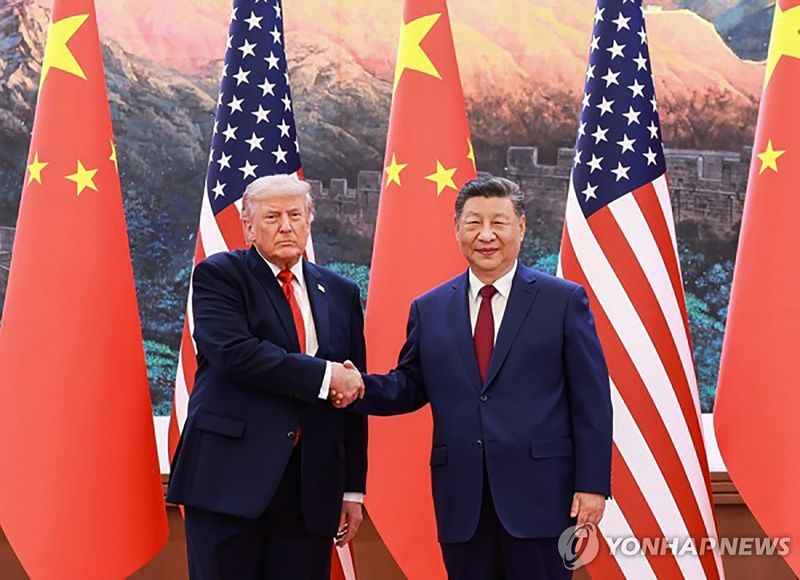
[Financial News, Tokyo = Seo Hyejin Correspondent] As the summit between U.S. President Donald Trump and Chinese President Xi Jinping ended on the 15th in Zhongnanhai, Beijing, major Japanese media welcomed the easing of tensions between the United States and China. At the same time, they expressed strong caution over the possibility that the two countries could move toward a 'G2' system in which they shape the international order. They also warned that the Taiwan issue could be reduced to a bargaining chip between Washington and Beijing.
Welcoming stability in ties, but wary of G2-style deal-making diplomacy
In an editorial on the 16th, The Asahi Shimbun said, "What this summit revealed was a structure in which China is portraying itself as a 'stable major power' while the Trump administration in the United States shows disregard for the postwar international order, including alliances, international law and the rule of law."
The Asahi Shimbun said stability in U.S.-China relations could reassure the international community. But it warned that a 'G2 situation,' in which the two powers recognize each other's spheres of influence and decide major issues on their own, would be troubling. It added that if Taiwan were used as a bargaining chip, the impact could be serious for East Asian security and for the credibility of U.S. diplomacy.
Nihon Keizai Shimbun also acknowledged the need for stable U.S.-China ties, but stressed that "the world should not be run by just the two countries."
The Nikkei said that a constructive strategic stability relationship should not mean stability for the United States and China alone. It should lead to global stability through international cooperation. It also argued that on global challenges such as artificial intelligence norms, climate change and nuclear arms reduction, the two countries must take the broader international community into account.
The Nikkei noted that President Trump highlighted expanded Chinese purchases of U.S. agricultural products and aircraft as achievements. It said this suggested an effort to secure visible results for voters ahead of the November midterm elections.
The conservative Sankei Shimbun said the two countries had not resolved their fundamental conflict, but had merely chosen to "stage temporary stability." The Mainichi Shimbun also said the new relationship between the United States and China was "closer to the product of mutual distrust than the result of mutual trust."
The Mainichi Shimbun in particular pointed to the political circumstances facing both leaders as the backdrop to the conciliatory mood. Trump is facing falling approval ratings and the midterm elections, while Xi also needs external stability amid a slowing economy and political pressure.
"Taiwan is not a bargaining chip" — concern grows over its emergence as a U.S.-China negotiating card
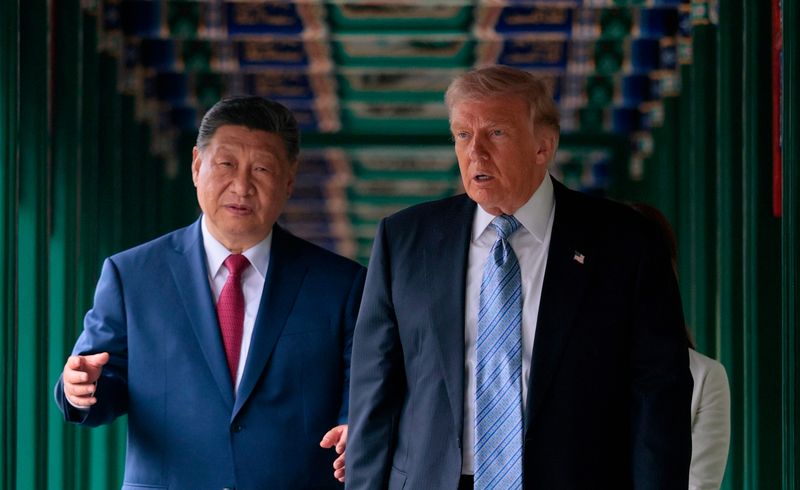
The issue that drew the sharpest reaction from Japanese media during the summit was Taiwan. They warned against a scenario in which Taiwan becomes a bargaining chip between the two countries in exchange for stabilizing U.S.-China relations.
The Asahi Shimbun noted that during the summit, Xi pressured the United States by saying that if Taiwan is handled incorrectly, U.S.-China relations could enter a "very dangerous situation." It then argued that it is China, not Taiwan, that is threatening peace and stability in the Taiwan Strait through repeated military drills and intimidation around Taiwan. It added that the views of the Taiwanese public, which harbors resentment and caution toward China, should not be ignored.
The Asahi Shimbun also stressed that "Japan needs to continue asking the United States, in coordination with Europe and Australia, to uphold order and the importance of the rule of law."
The Nikkei likewise drew a clear line, saying Taiwan should not be treated as a bargaining chip between Washington and Beijing.
It criticized Trump for saying before the summit that he might discuss the issue of U.S. arms sales to Taiwan, which China has long objected to, with Xi. The paper said this could run counter to the 'Six Assurances,' a core principle of U.S. policy toward Taiwan. That principle includes the U.S. commitment not to consult China in advance on arms sales to Taiwan.
The Nikkei said, "There must be no deal in which the United States makes concessions on Taiwan in exchange for China expanding purchases of U.S. goods."
The Sankei Shimbun criticized Xi's claim that "Taiwan independence and peace in the Taiwan Strait are incompatible," saying China should correct its dangerous stance of not renouncing military options. It also cited the Executive Yuan's response that "China's military threats are the very factor threatening security in the strait," and said the Taiwanese side's reaction was justified.
[email protected] Seo Hyejin Reporter