"Honey, the kids are bigger now. Isn’t it time to trade up to a bigger car?" ... How the 'family car' trap has ensnared fathers in their 40s [How Much Is Enough]
- Input
- 2026-05-17 13:23:59
- Updated
- 2026-05-17 13:23:59
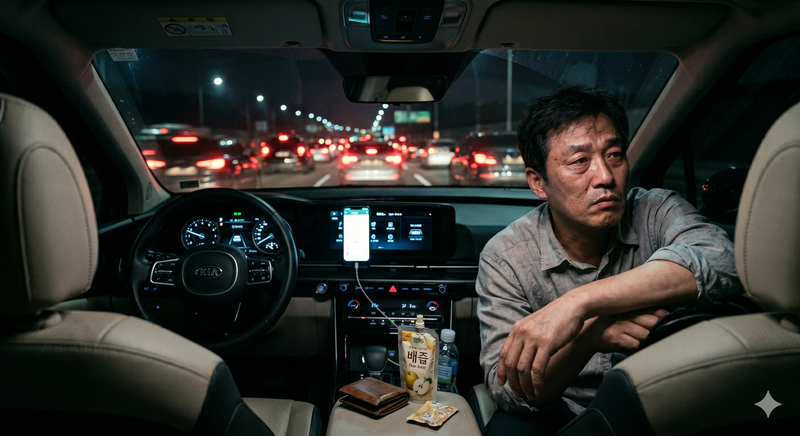
[Financial News] On the way home after a weekend outing, K, a father in his 40s, glances at the rearview mirror on a traffic-choked expressway. Seeing his two children asleep in the cramped back seat of a midsize sedan, he is overcome by a strange sense of guilt.
"Honey, the kids’ legs are getting longer, and the car feels way too small. We can’t even fit all the camping gear ... Isn’t it time we traded up to a bigger car like a Kia Carnival?"
After hearing his wife’s reproach from the passenger seat, K silently adjusted his grip on the steering wheel.
He has even given up the canned coffee and soda he used to enjoy after lunch, and now eases his tight budget with cheap pear juice packs from a convenience store as he tries to save up emergency cash. For him, a large family car costing tens of millions of won feels like an enormous barrier.
◇ "Add a few options and it hits 50 million won" ... The suffocating inflation of car prices
As their children enter elementary school, many fathers in their 30s and 40s in South Korea seem to fall, almost by agreement, into the trap of large vans or large SUVs.
These big cars, often called the "Porsche of dads," are now seen as a must-have for four-person families and a badge of honor that proves one is a good father.
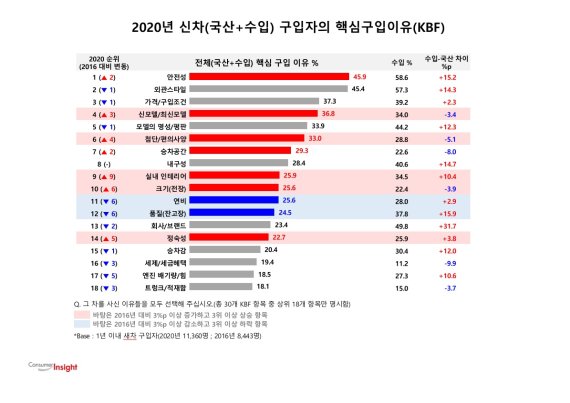
The problem is the steep rise in car prices. According to data from the Korea Automobile & Mobility Association (KAMA), the average selling price of a passenger car in South Korea has already climbed well above 40 million won, setting a new record.
Just five or six years ago, a decent midsize car could be bought for the 30 million won range. Now, however, even a few so-called family options such as rear-seat monitors for children and safety features on a mid-trim large family car can easily push the price past 50 million won.
Add several million won more for acquisition and registration taxes, along with sharply higher auto insurance premiums, and the bill becomes even heavier.
◇ "1 million won disappears every month" ... Experts warn of a new kind of 'car-poor father in his 40s'
In the end, fathers in their 40s who do not have enough cash saved have little choice but to turn to high-interest auto loans.
For example, if someone puts down 30% on a 40 million won car and finances the remaining 35 million won over five years, or 60 months, then depending on the interest rate, between 700,000 won and as much as nearly 1 million won a month will steadily disappear from the bank account.
Experts warn that this is a new kind of financial threat.
One financial expert, who asked not to be named, drew a line under the idea that only young people who buy expensive imported cars become car-poor.
He said, "There is a clear increase in fathers in their 40s who buy large family cars with long-term, high-interest financing that exceeds their income level, citing family comfort and convenience as the reason." He added, "On the surface, it may look like a happy household, but in reality it is a typical route to becoming a 'working-class car-poor father in his 40s,' because it drastically reduces disposable income and makes retirement planning and emergency savings nearly impossible."
◇ My own tastes disappear, and I end up acting as the family's chauffeur

In his 20s, K’s dream car was a sleek sports sedan with a roaring exhaust note that made his heart race.
But now that he is a father of two, his dream has sadly shrunk to nothing more than "a car with a spacious back seat so the kids can stretch out" and "a car whose trunk can somehow fit a stroller and camping gear like a game of Tetris."
With his own preferences completely erased, he simply walks on in silence, wearing the shackles of a 1 million won monthly installment while playing the role of a dutiful chauffeur for his family.
Behind a father’s satisfied smile as he listens to the peaceful breathing of children sleeping soundly in the roomy back seat of a family car lies a deep sigh over a heavily burdened bank balance and his own retirement clock, which is slowly coming to a stop.
[email protected] Jeon Sang-il Reporter