The U.S. Focuses on Trade, China on G2 Status... U.S.-China Talks to Continue with Taiwan as a Bargaining Chip
- Input
- 2026-05-17 10:32:06
- Updated
- 2026-05-17 10:32:06
Still, analysts say the two leaders achieved some progress by reaffirming their willingness to avoid further direct confrontation and keep negotiations going. The two sides are expected to continue follow-up talks based on the cards they secured in this meeting, including expanded purchases of U.S. products and issues related to Taiwan.
The U.S. Emphasized 'Results,' but the Market Remained Cold
The summit drew global attention even before it began, but it fell short of delivering the clear results many had hoped for. As he left Beijing, Trump said, "We made a fantastic trade deal." U.S. media reported that China had agreed to buy 200 Boeing aircraft and was also considering additional purchases. There were also reports that China may buy more than $10 billion worth of U.S. agricultural products. Possibilities were also raised that China could increase imports of U.S. energy.
During the summit, U.S. Treasury Secretary Scott Bessent said in a CNBC interview, "China discussed ways to expand energy purchases, and Alaska energy would be a natural choice for China." Jamieson Greer, the U.S. Trade Representative, also said China’s purchases of U.S. agricultural products would rise sharply over the next three years.
The market, however, reacted coolly. The Boeing purchase volume fell far short of the 500 aircraft initially mentioned, and no detailed agreements were disclosed on the other issues. China also remained cautious about specifics, confirming only the principle of "future negotiations."
Wendy Cutler, vice president at the Asia Society Policy Institute (ASPI), said, "The economic results so far fall far short of expectations," adding, "Given that President Trump made economic and trade issues his top priority, failing to produce bigger outcomes is disappointing."
China Highlights 'G2 Diplomacy' Through Taiwan and the Thucydides Trap
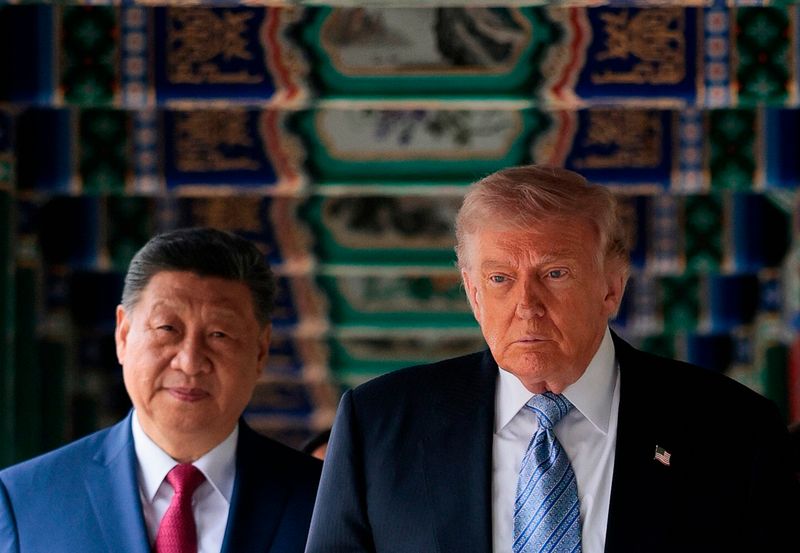
By contrast, China used the summit to underscore its diplomatic presence by actively raising the Taiwan issue. Xi warned at the summit that mishandling the Taiwan issue could put U.S.-China relations in serious danger. That effectively made clear that Taiwan was the central agenda item for China in the summit. Beijing is calling on Washington to stop selling weapons to Taiwan and to state more clearly its opposition to Taiwan independence.
Trump responded, "I spoke with President Xi at length," and added, "I don't think we have a dispute with China. I made no promises to President Xi." When asked whether the United States would defend Taiwan if China attacked, he maintained strategic ambiguity, saying, "President Xi asked me the same question, but I did not answer."
Xi also said the two countries should avoid the "Thucydides Trap." The term refers to the historical pattern in which an established power and a rising power collide. Analysts say China’s simultaneous mention of Taiwan and the Thucydides Trap reflects an effort to project itself as a G2 power on par with the United States. Trump is also said to have used the term "G2" several times during the talks.
Follow-up Talks to Continue with Taiwan and Iran as Bargaining Chips
The two countries plan to form a trade commission to discuss issues such as tariff cuts on key items. MOFCOM said, "The two sides agreed in principle to discuss tariff reductions on related products through the trade commission and to lower tariffs on items each side considers important in equal measure." Aircraft, dairy products, beef, and agricultural goods are expected to be among the main topics.
Paradoxically, the summit also gave both sides cards that could strengthen their bargaining power. The United States secured Taiwan as a negotiating lever, while China gained leverage through purchases of U.S. products and the Iran issue.
In a Fox News interview released on the 16th, Trump said, "I am temporarily holding off on approving arms sales to Taiwan, and that depends on China," adding, "That is a very good bargaining chip for us." He effectively acknowledged that the roughly $12 billion Taiwan arms sale issue is being used as leverage in talks with China.
China also maintained strategic ambiguity by not giving a clear answer on expanding purchases of U.S. products. It was also reported that Beijing did not spell out its position on the U.S.-requested pressure to end the war in Iran.
George Chen, a partner at Asia Group, said, "If President Trump approves a large-scale arms sale to Taiwan before Xi’s state visit to the White House, Xi will feel considerable pressure about visiting the White House."
[email protected] Lee Byung-chul Reporter