"Money and Redistricting": Trump's Strategy for a Midterm Election Comeback?
- Input
- 2026-05-17 03:52:49
- Updated
- 2026-05-17 03:52:49
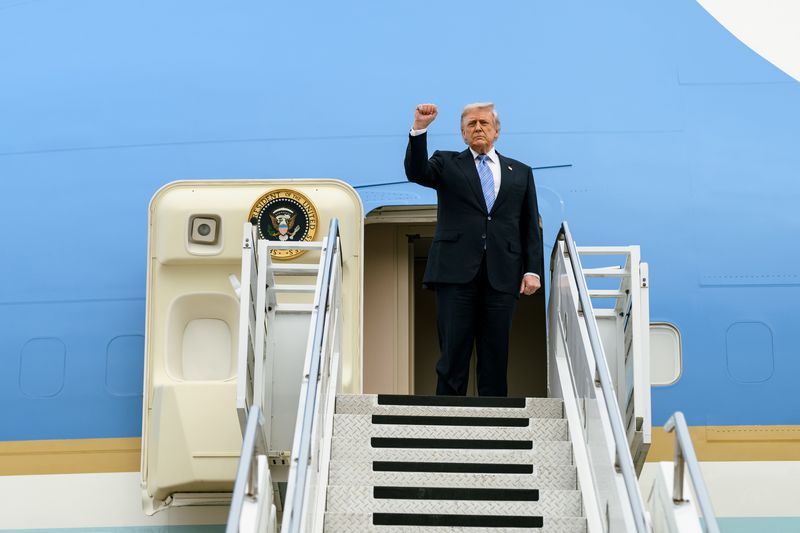
With the United States midterm election just six months away, the Republican Party appeared headed for defeat. But The Wall Street Journal reported on the 16th that several recent developments could help reverse the tide.
Massive political funding and redistricting favorable to the Republican Party, known as gerrymandering, are seen as the basis for a turnaround.
The Republican Party had been mired in a sense of defeat, as it faced a major obstacle in the form of severe inflation triggered by the Iran War launched by President Donald Trump. The president's low approval ratings, along with the historical tendency for midterm elections to favor the opposition, were also working against the party.
Still, the Republican Party's political map, which controls more than half of the 50 states, and its vast financial resources are emerging as decisive factors that could reshape the race.
Turning the race with money
The Republican Party is expected to use the huge sums it has secured through the MAGA supporters to block Democratic momentum.
As of the end of March, the Republican National Committee (RNC) held $116 million in cash.
By contrast, the Democratic National Committee (DNC) had only $14 million in cash and was also carrying debt.
The $347 million war chest held by Trump's super PAC, MAGA Inc., is also backing the Republican Party.
The Republican Party's strategy is to use that enormous amount of money to flip the election.
It plans to flood the airwaves with ads and use the funds to reach Republican-leaning voters and drive turnout.
Through an aggressive publicity campaign, it aims to prevent the election from becoming a midterm referendum on the Trump administration's failures. In particular, it plans to push messages such as, "If Democrats win and Congress is split, only gridlock will follow," and "Remember the high inflation, crime, and surge of illegal immigration at the southern border during the Joe Biden administration," while urging voters not to "turn back the clock."
Redistricting
At the heart of the Republican Party's strategy to change the race is political money, along with redistricting favorable to the party, or gerrymandering.
While Democratic gerrymandering efforts have been blocked in court, Republican-led redistricting has gained momentum after final approval from the U.S. Supreme Court.
In Louisiana, where the Republican Party is in control, a rollback of voting rights law was ruled not illegal by the Supreme Court, making it possible to redraw districts in a way that artificially reduces the number of Democratic-leaning seats.
By contrast, Virginia's top court ruled that a districting plan designed to create more Democratic seats was illegal, dealing a blow to Democrats.
In the United States, district boundaries are adjusted by each state, so which party controls the 50 states determines whether gerrymandering can be used effectively.
The Republican Party has a clear advantage over Democrats when it comes to controlling local power.
Of the 50 states, 26 have Republican Governors, and Republicans control 28 of the 50 state legislatures.
There are also 23 states where Republicans control both the governor's office and both chambers of the state legislature. Democrats hold only 16.
With Republicans in control of local governments, it is increasingly possible that they could overcome President Trump's low approval ratings through massive funding and favorable redistricting and win the midterm election in November.
[email protected] Song Kyung-jae Reporter